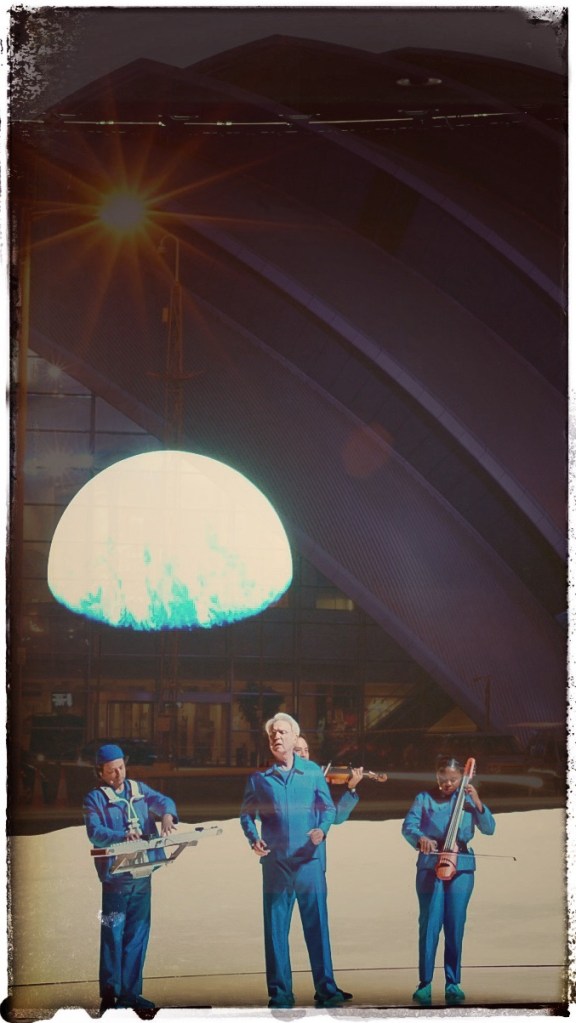
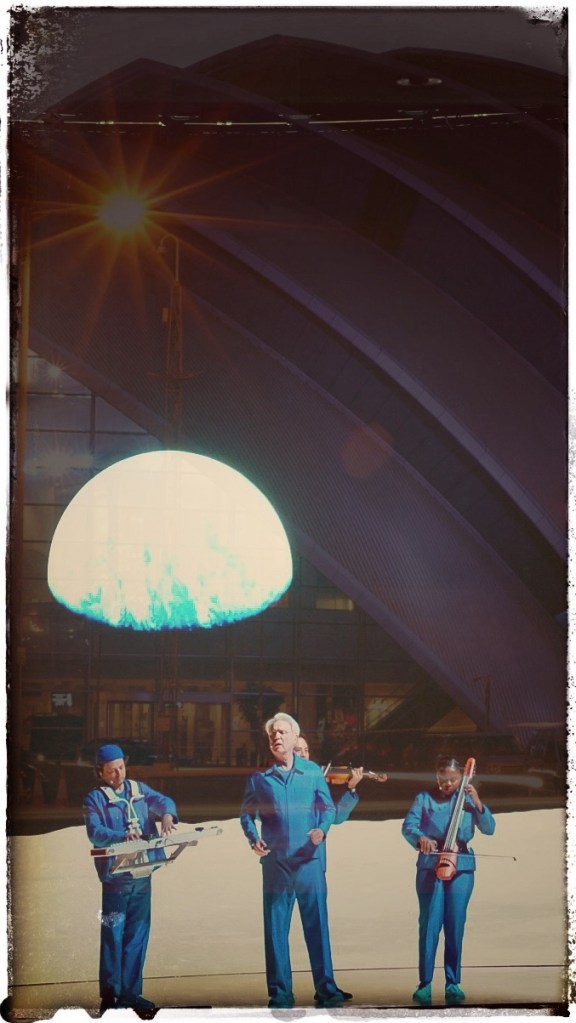
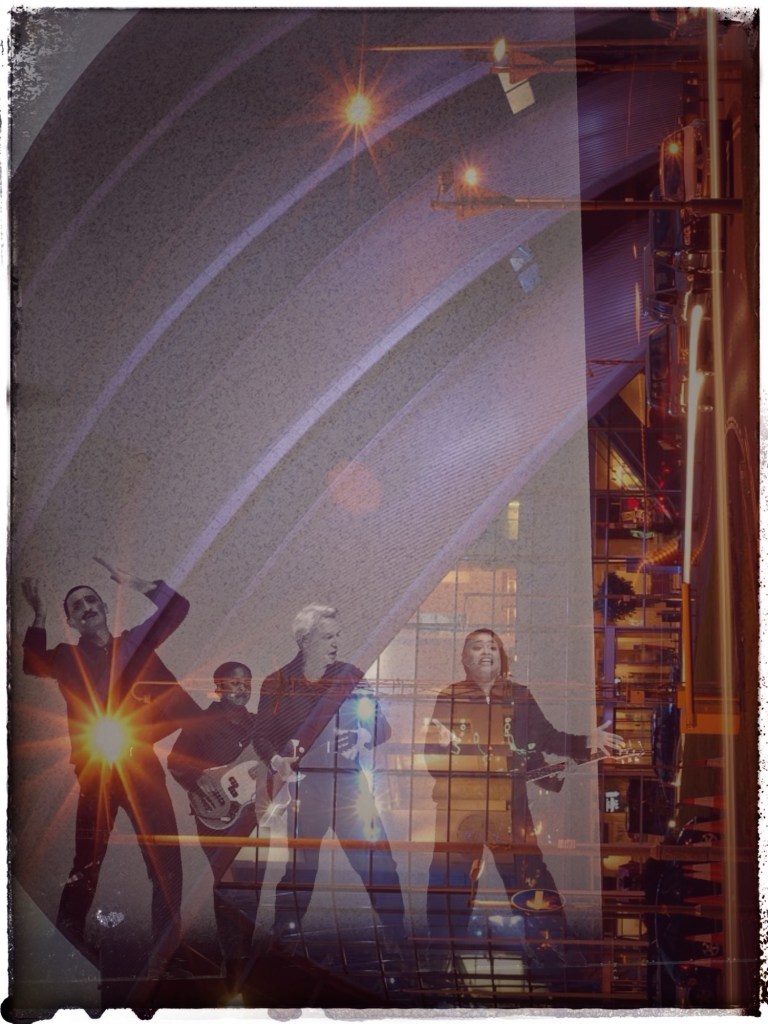
The SEC Armadillo looks like the sort of building that might hatch if you left a pile of silver hubcaps alone too long. A gleaming, alien mollusc on the banks of the Clyde. And inside it tonight stands a man who, to some of us, might as well be responsible for inventing the nervous system itself: David Byrne.
I should probably explain how I got here, spiritually speaking…
Long before the Armadillo, before polite theatre seating and tasteful stage lighting, there were sticky-floored clubs where your shoes tried to escape your feet like prisoners tunnelling out of Alcatraz. My baptism into Talking Heads happened in those murky temples of indie sweat — most memorably Funhouse at Barfly (God rest its soul) back in the very early noughties, when the DJ’s job description was essentially “play Psycho Killer and watch the dancefloor convulse.”
And convulse it did.
Psycho Killer was my personal call to arms — or legs, at least. I’d dance to it like a malfunctioning robot: shoulders frozen, limbs jerking about as if I’d been assembled from spare Ikea parts and cheap lager. Around me were the usual indie club fauna: art students, eyeliner casualties, men who looked like they’d been crying into their Smiths records. But when that bassline kicked in, we were all temporarily united in twitchy funk.
From there the descent was inevitable. The back catalogue opened up like a particularly stylish rabbit hole. Soon I was devouring everything — the jittery paranoia, the grooves that sounded like they’d been smuggled out of a science lab.
The real tipping point came when I saw Stop Making Sense at Glasgow Film Theatre. Watching Byrne expand from lone nervous nerd in a big suit into a full-blown prophet of rhythm was like witnessing evolution in real time. After that, I was hooked. Completely.
I’d actually had the privilege of photographing Byrne before — the last time being when he played the Royal Concert Hall during the 2013 tour for Love This Giant, his glorious brass-heavy collaboration with St.Vincent. That show was its own kind of controlled chaos: Byrne and Annie Clark bouncing off each other like two art-school geniuses who’d discovered funk and decided to weaponise it.
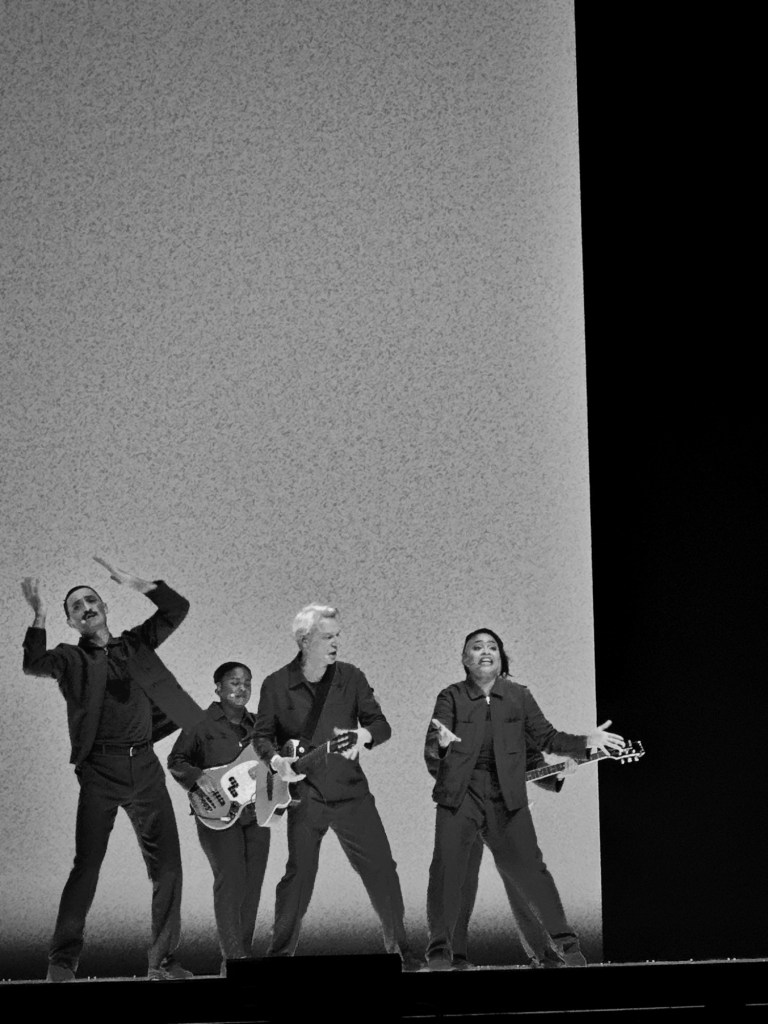
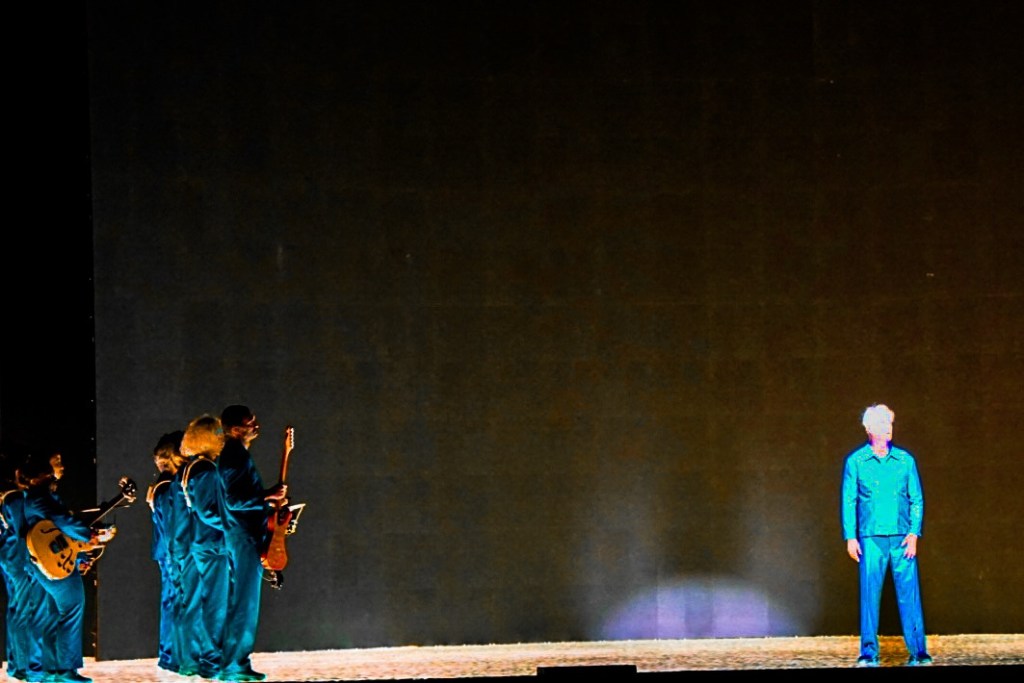
So when Byrne walks out onto the stage at the Armadillo tonight — boilersuit immaculate, energy slightly mischievous — I have the strange, slightly embarrassing sensation that I’m standing in the presence of a god. Not one of those thunderbolt-chucking Greek ones, mind you. More like the patron saint of anxious dancing and intellectual groove.
The evening begins gently enough with Heaven, Byrne easing us into the set like a genial host guiding you through a particularly clever dinner party. The songs tumble out in a beautifully curated sequence — And She Was, Houses in Motion, (Nothing But) Flowers — each greeted like an old friend who’s aged suspiciously well.
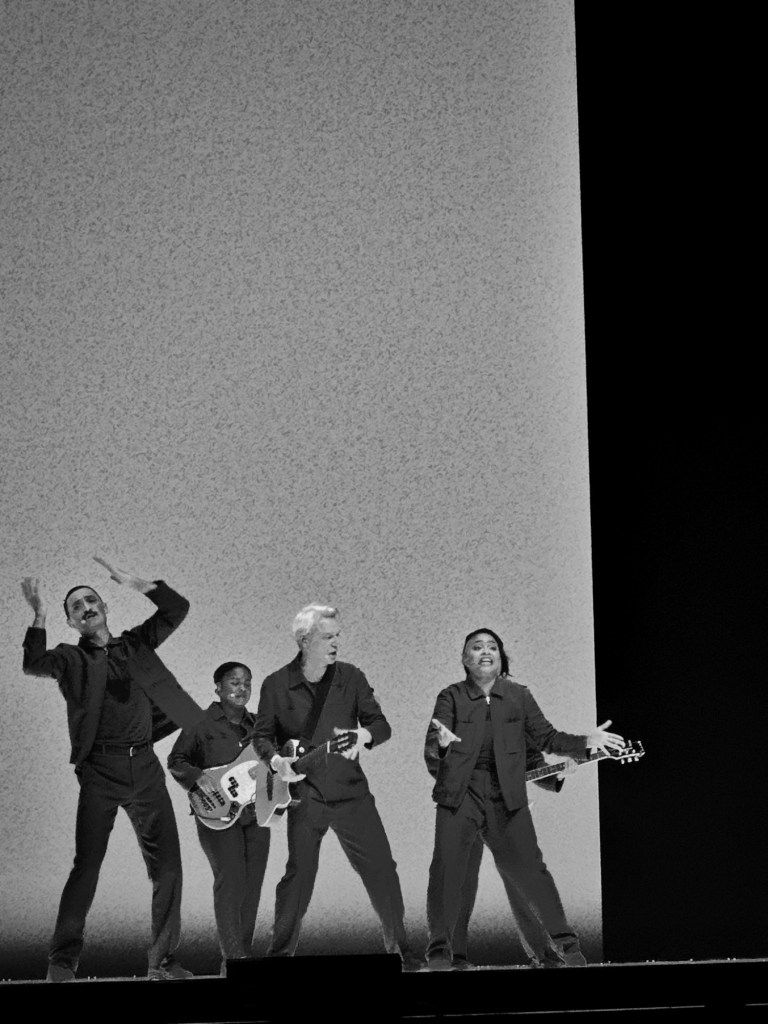
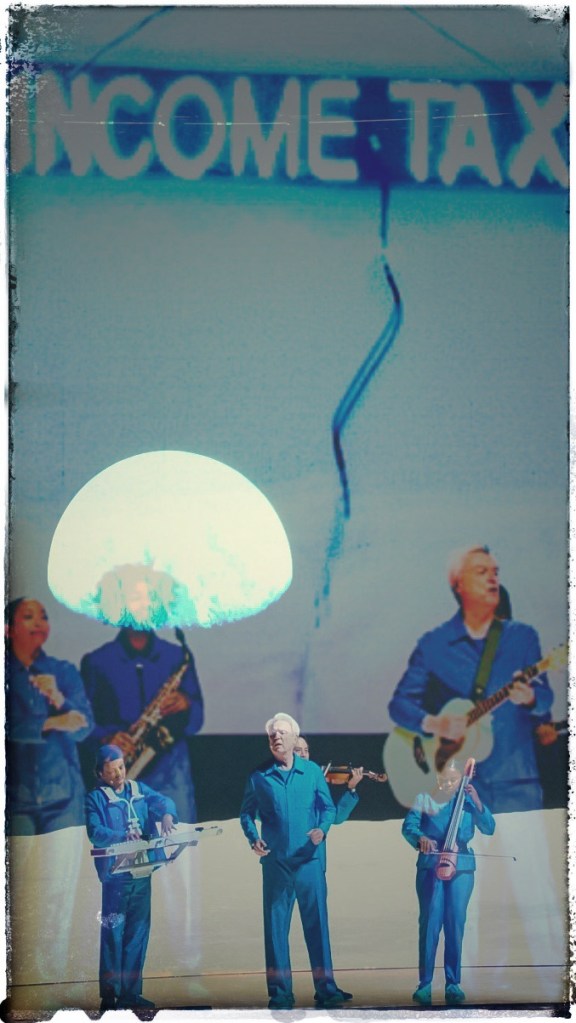
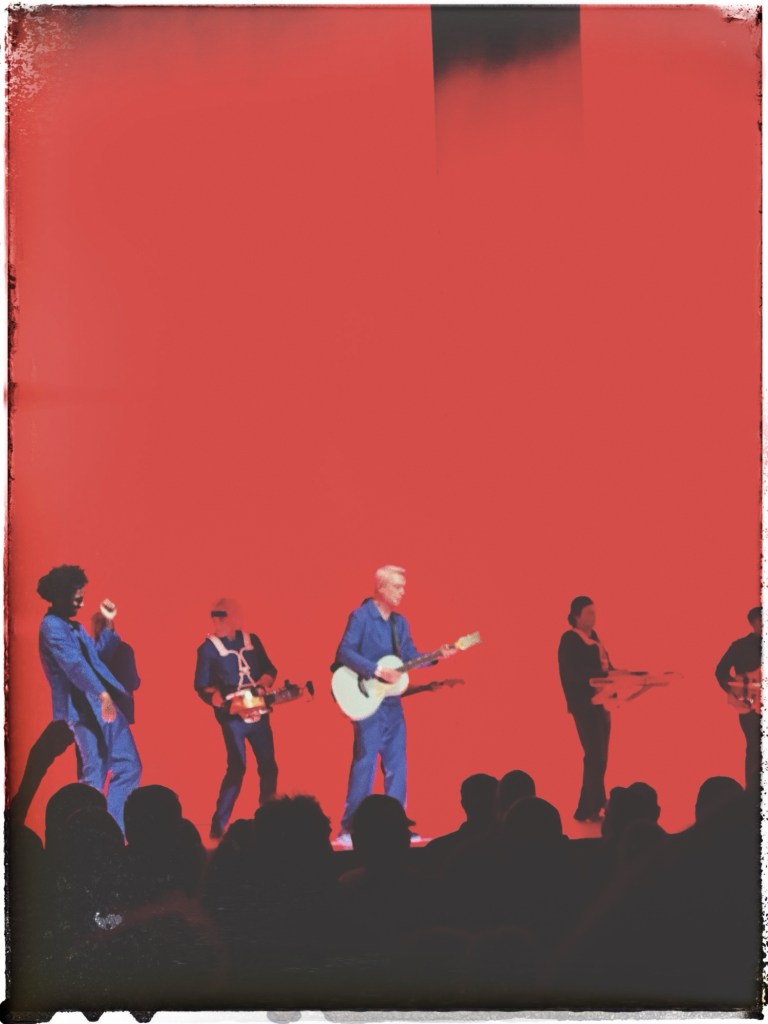
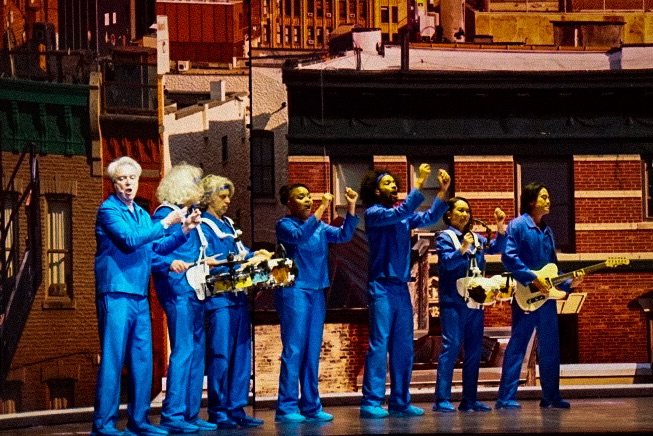
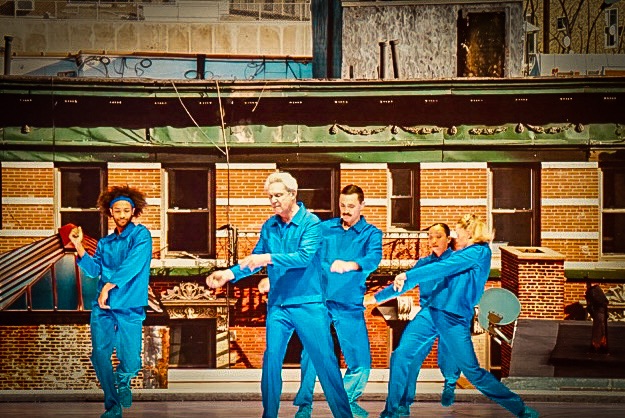
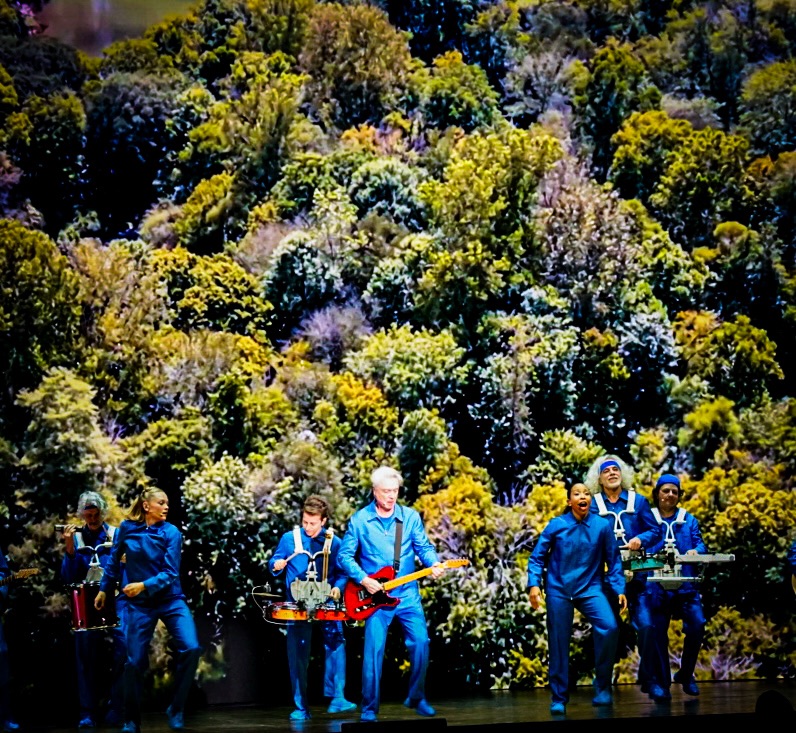
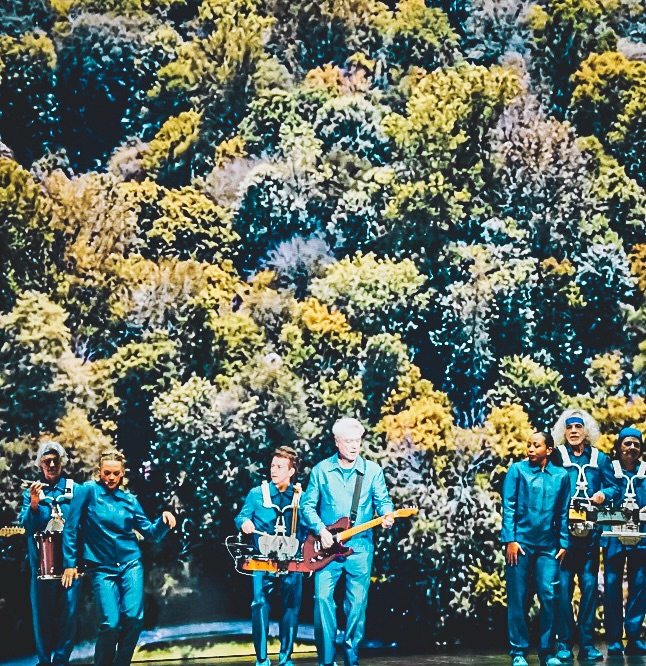
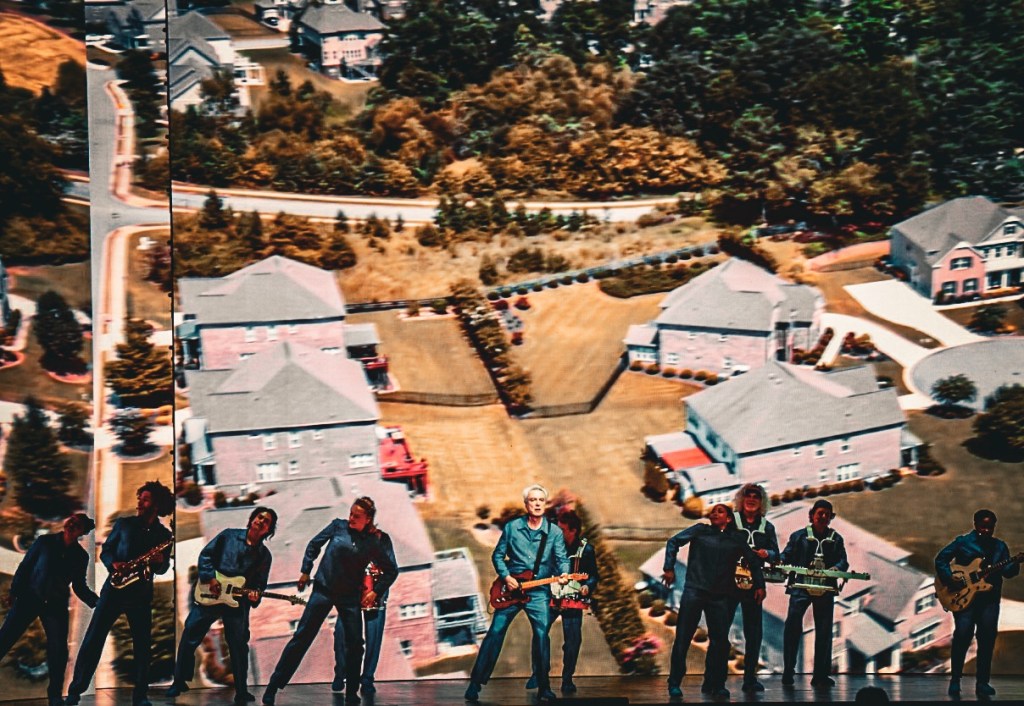
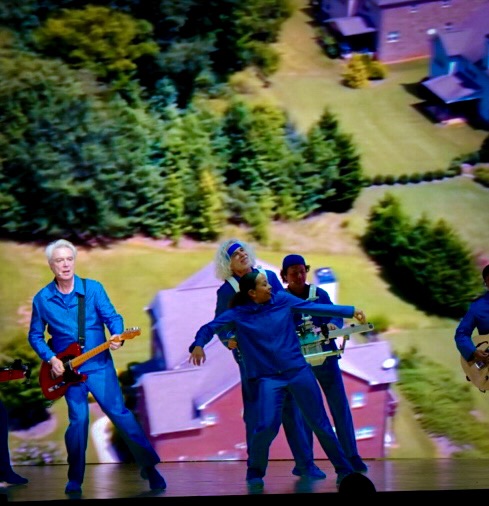
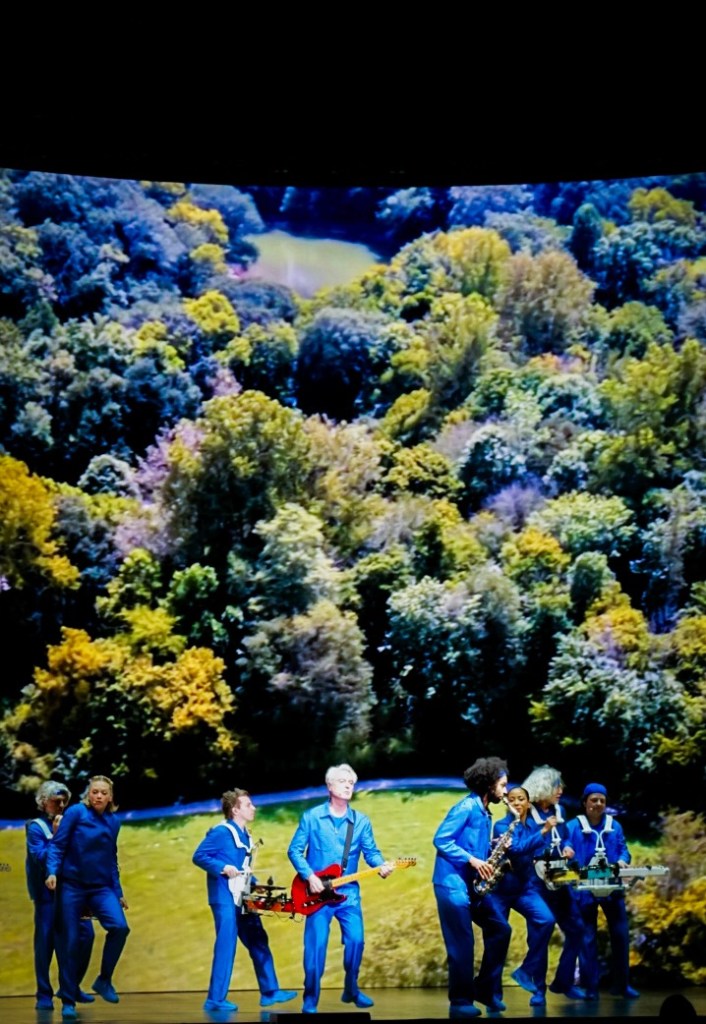
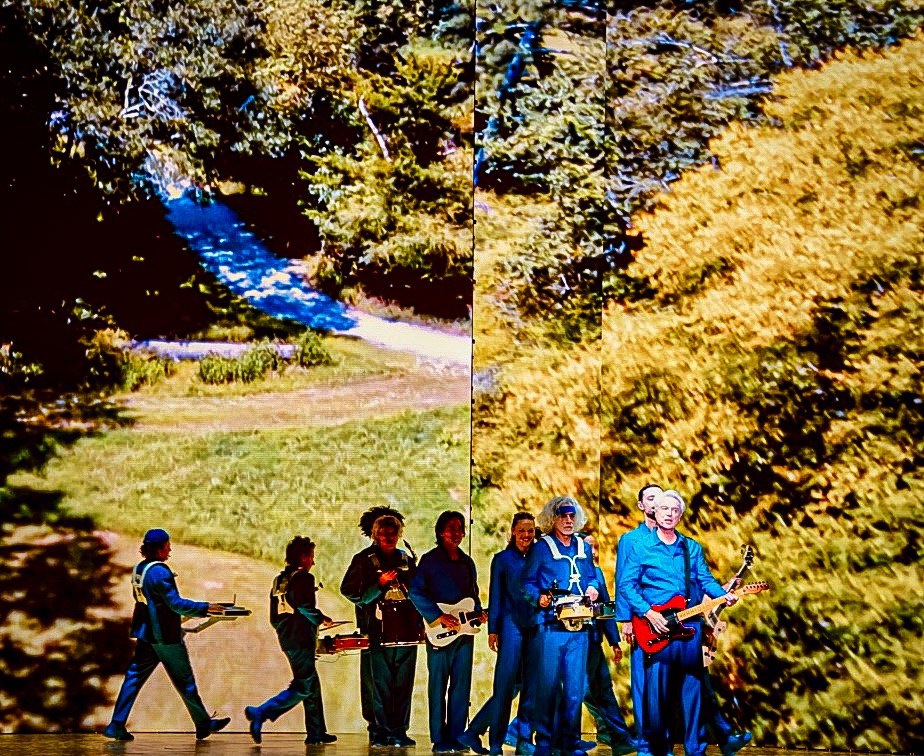
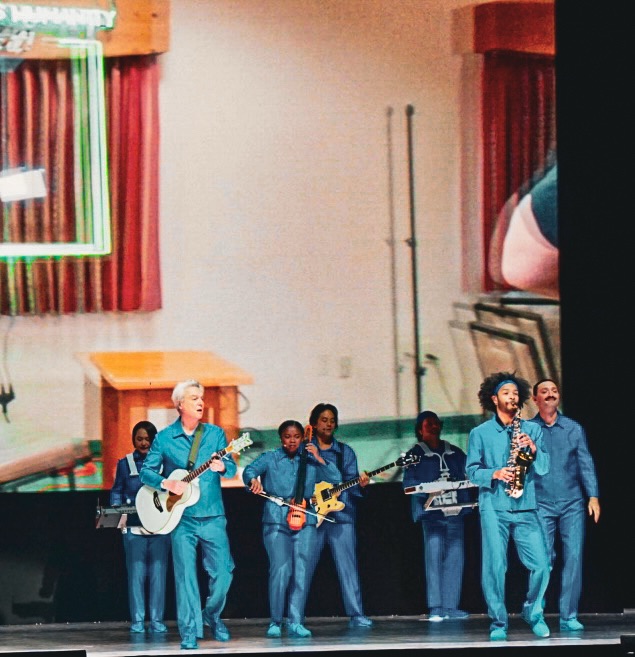
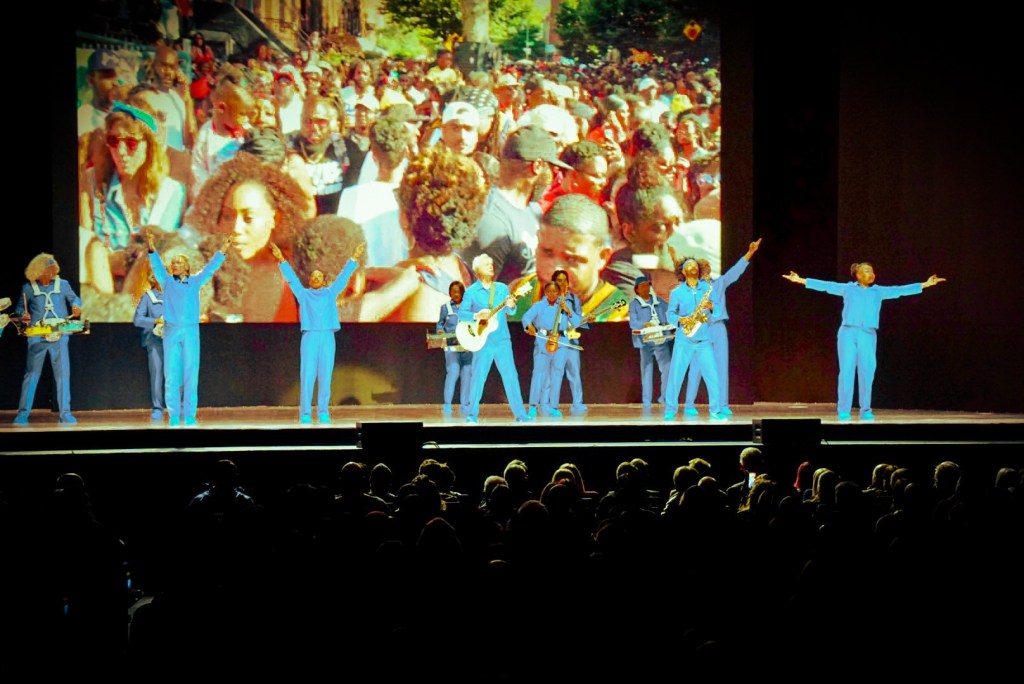
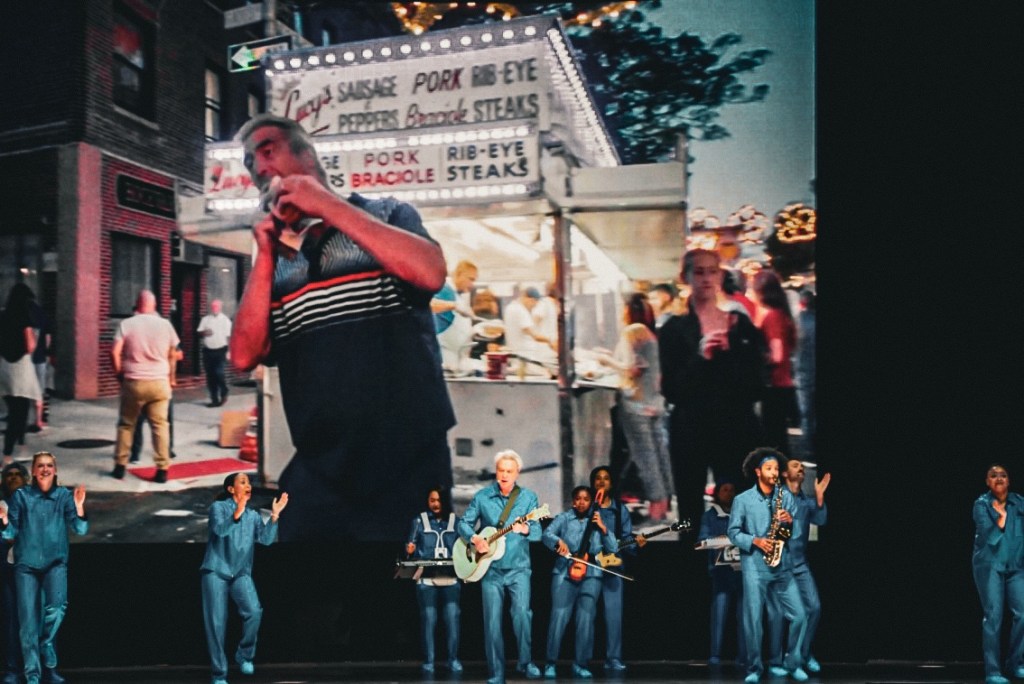
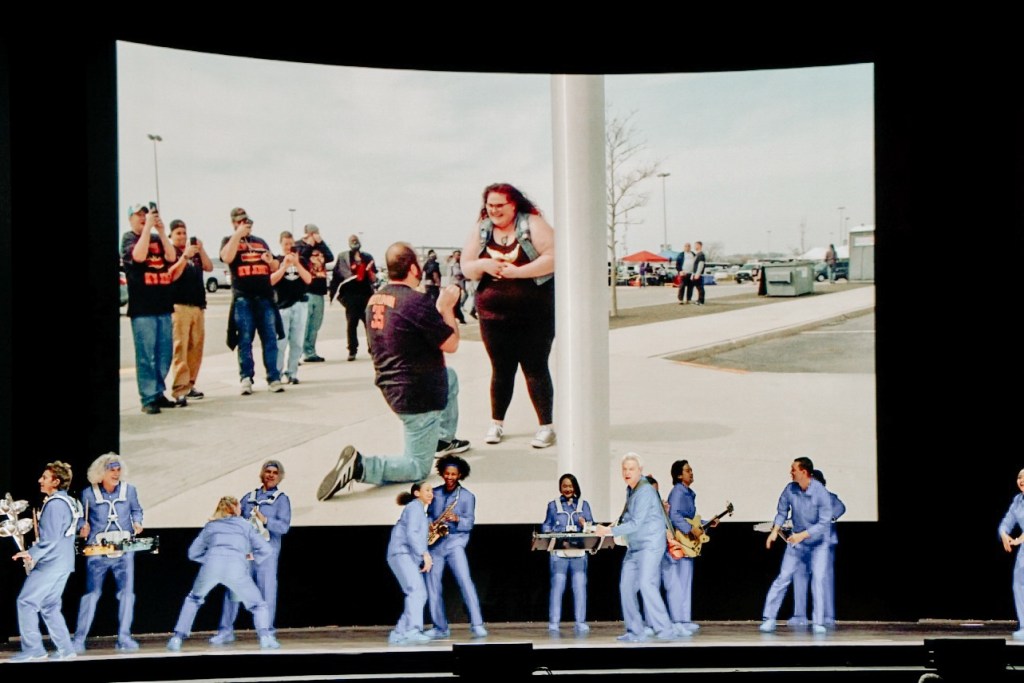
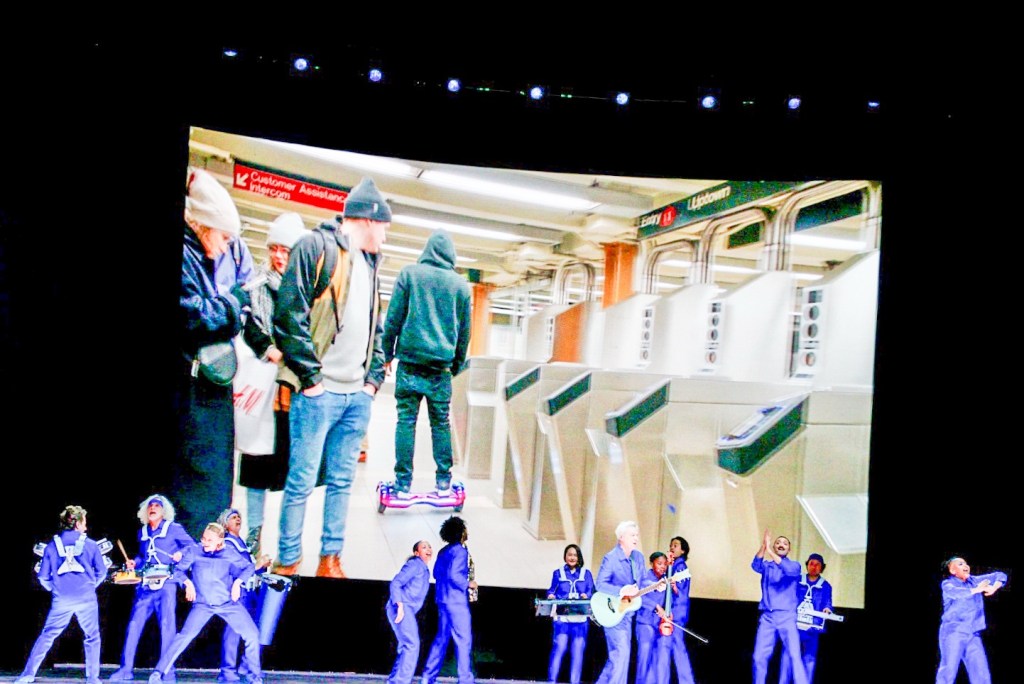
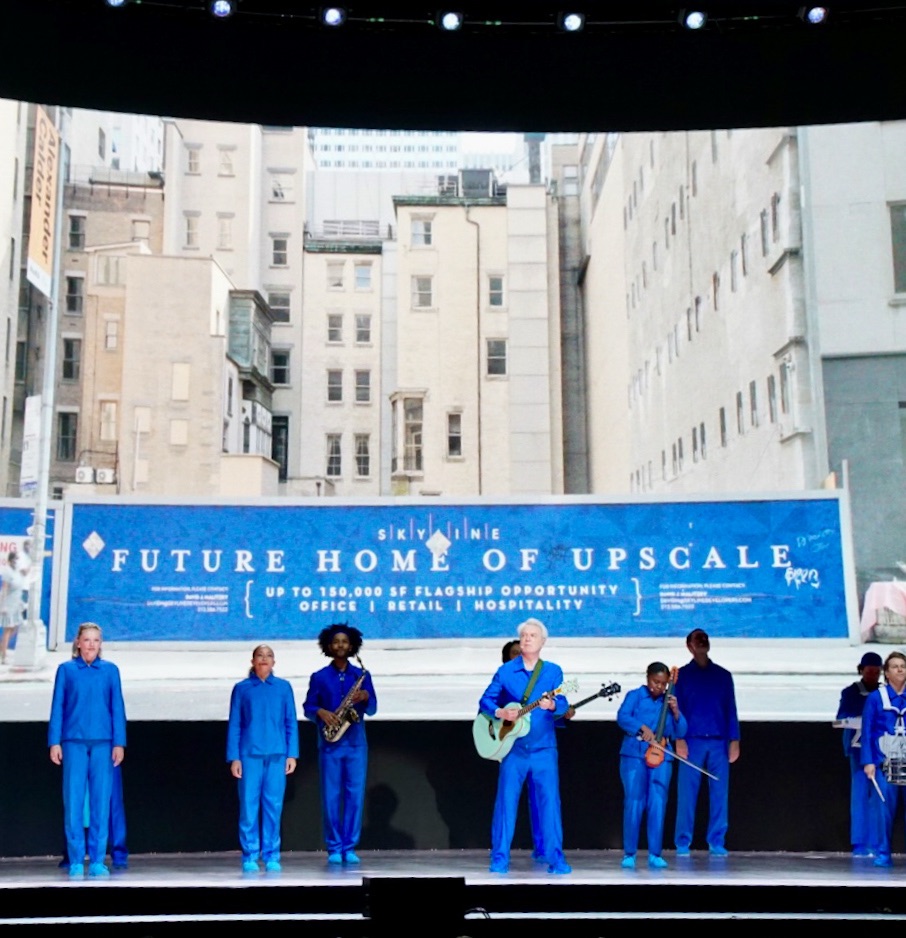
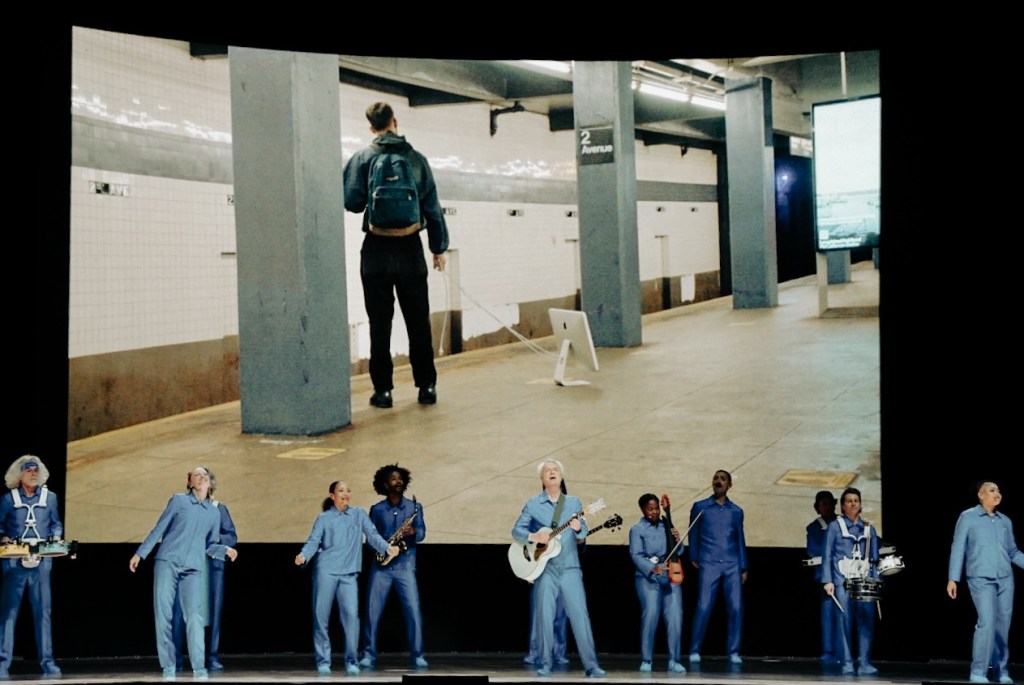
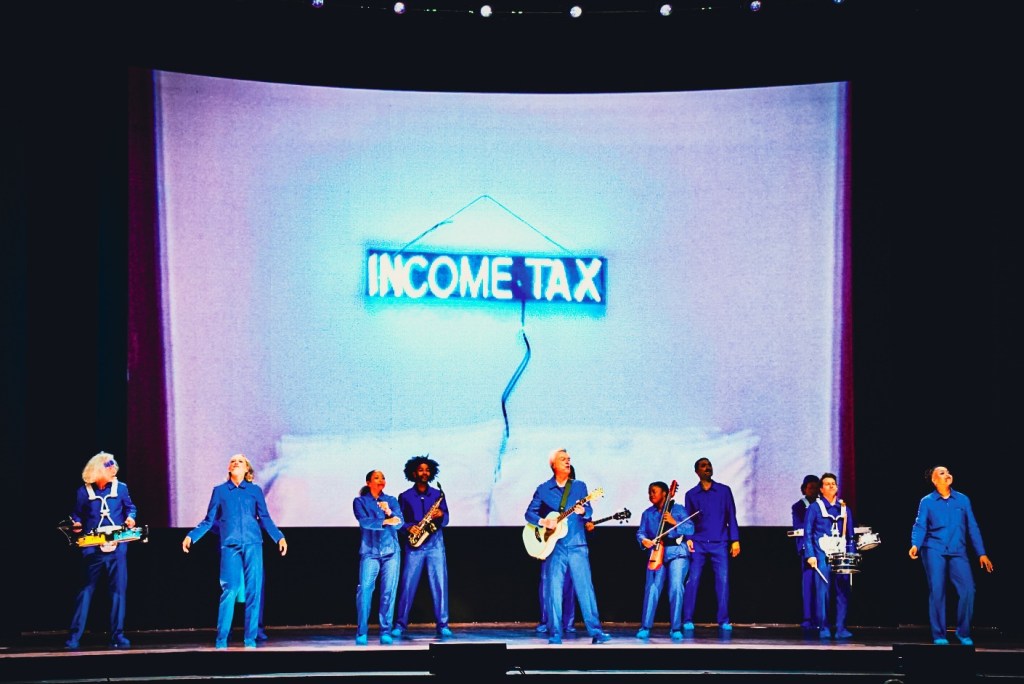
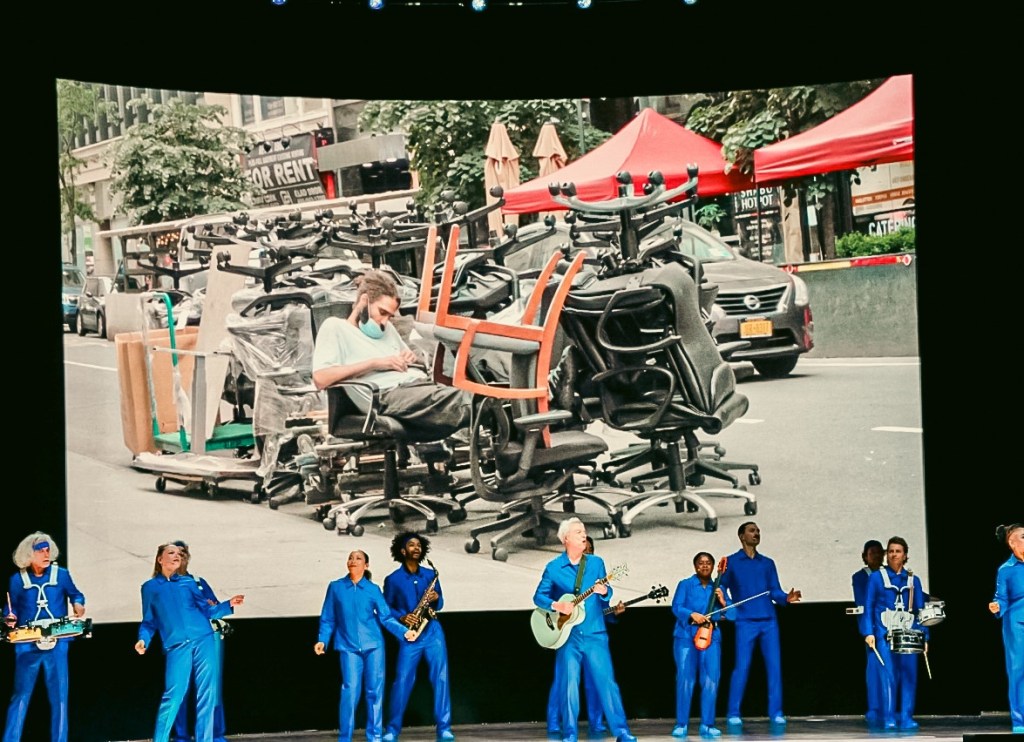
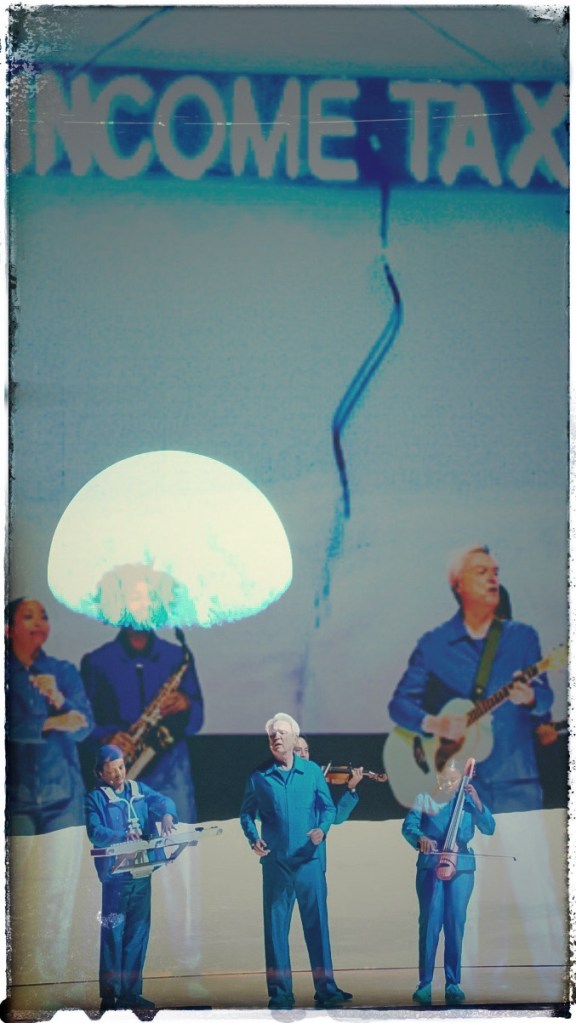
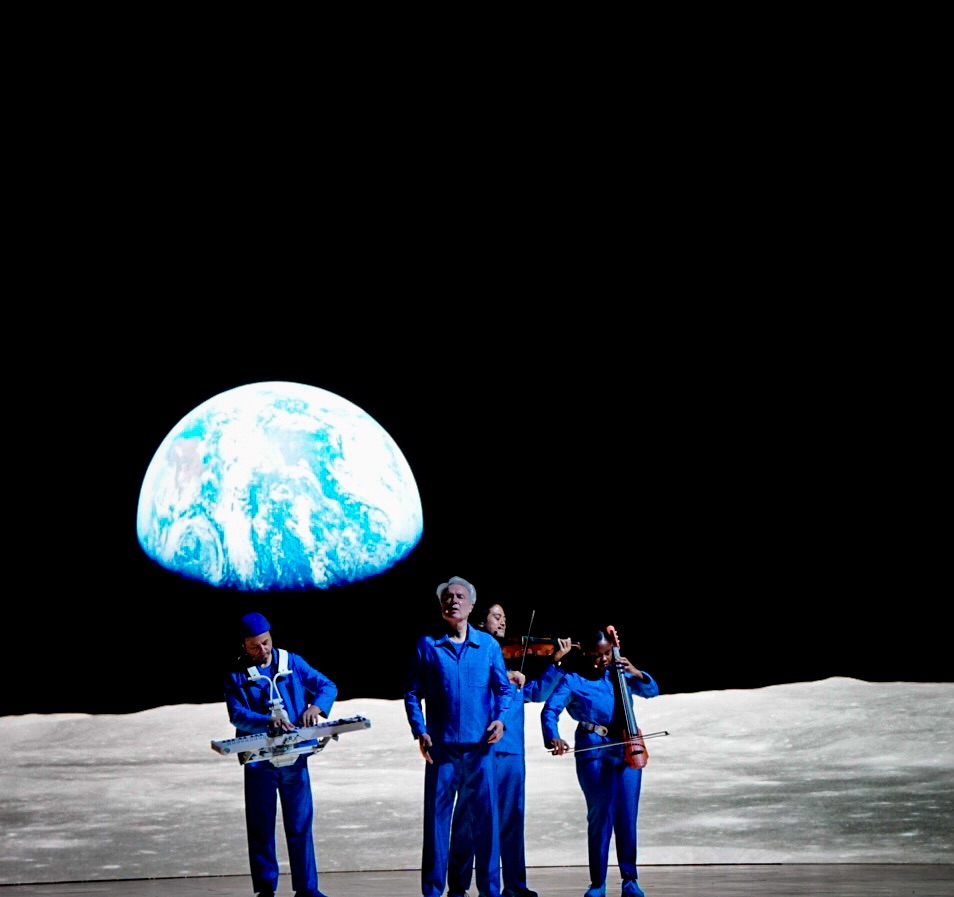
Visually, it’s a knockout. Dressed in effortlessly cool electric-blue boiler suits, Byrne and his dancing troupe manoeuvre around the stage with the fluid precision of a troupe who’ve clearly rehearsed somewhere between a modern dance studio and a particularly funky laboratory. The genius of the staging is that everyone carries their own instruments, allowing them to strut the full width of the stage like a parade of rhythm scientists.
Guitars and basses hang from harnesses, snare drums are slung marching-band style, tambourines and hand percussion flash through the choreography, while keyboards, melodicas and portable synth rigs pop up like strange electronic wildlife. At various points you spot a trumpet, a trombone, auxiliary percussion and a clutch of rhythm gadgets that look like they’ve been borrowed from a particularly experimental school music cupboard.
The result is movement — constant, joyful movement. No one is rooted to the spot like a traditional band. They roam, dance, pivot, glide. The whole show breathes.
But the real joy is Byrne himself: part raconteur, part professor, part slightly eccentric uncle who once tried to explain postmodernism using fridge magnets.
At one point he launches into a story about being born in Dumbarton, which — in the grand scheme of mythology — is probably the least rock-star origin story imaginable. Not New York, not London. Dumbarton. Just up the road from Overtoun Bridge.
Yes, that bridge.
The haunted one.
The one where — as Byrne cheerfully reminds us — over fifty dogs have apparently hurled themselves into the void, as if seized by some unseen spectral command to embrace the afterlife. It’s not often that a pop icon casually segues from funk grooves into canine paranormal tragedy, but Byrne does it with such warmth that the story feels less like a ghost tale and more like a warm hug from a very clever, slightly spooky friend.
Good to know that David Byrne and I share a taste for the macabre.
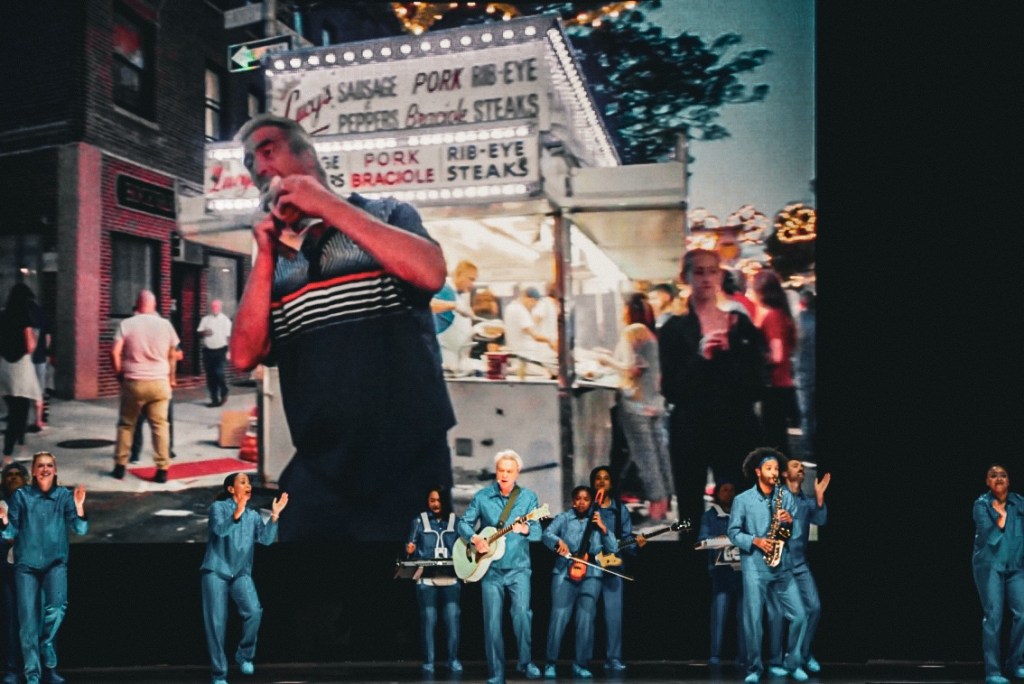
Between songs, huge immersive visuals bloom across the stage — swirling graphics, photographs, fragments of memory. At one point Byrne shows pictures of his own flat during lockdown, talking about how home became a sanctuary when the outside world briefly turned into a dystopian theme park.
And suddenly it clicks.
Home.
It’s everywhere in the setlist if you think about it. This Must Be The Place (Naive Melody) – my personal favourite , My Apartment is my Friend, Everybody’s Coming to My House — songs that circle around belonging, space, and the strange intimacy of the places we inhabit.
Even Once in a Lifetime, when it arrives, still feels like the ultimate existential house inspection: Well… how did I get here?
The crowd, by this point, are completely besotted.
When Psycho Killer finally drops, the Armadillo transforms into the world’s most polite nervous breakdown. Thousands of Glaswegians attempt Byrne-style choreography with varying levels of success. Somewhere inside me, the ghost of that early-noughties club kid reappears — still dancing like a robot penned in at my seat, still convinced this is the best song ever written about the joys of mild psychosis.
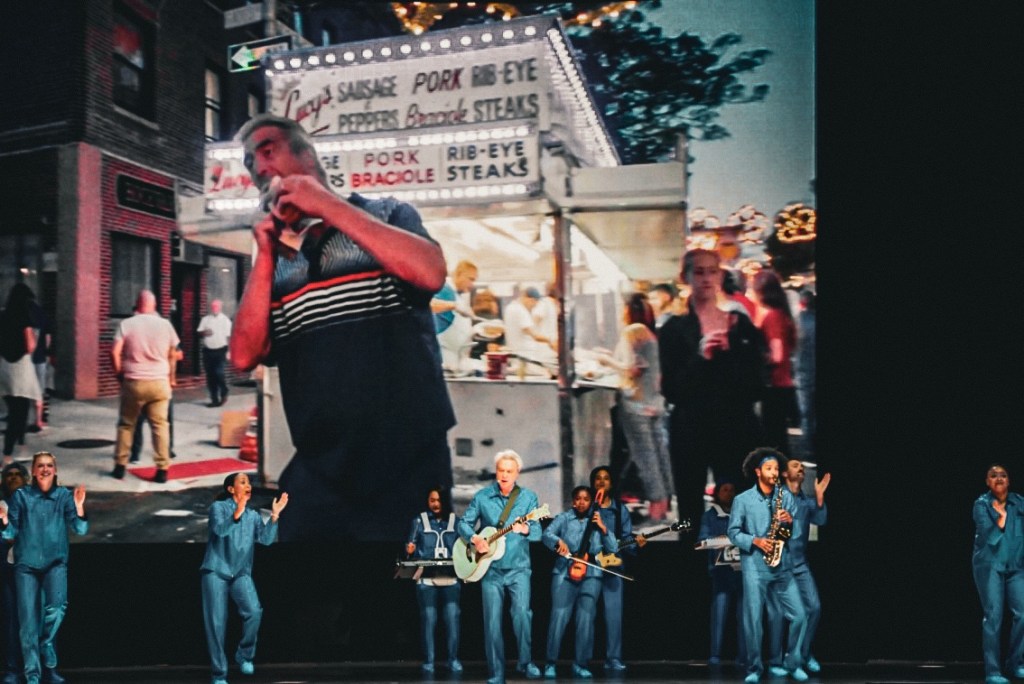
Then comes the glorious closing run: Life During Wartime, Once in a Lifetime, and an encore featuring Burning Down the House — which detonates like the world’s most intelligent fireworks display.
By the end, Byrne bows with the modesty of someone who seems genuinely surprised that thousands of people have turned up to celebrate his strange, brilliant brain.
Walking out into the Glasgow night, the Clyde glinting nearby, it strikes me that Byrne has always done something remarkable. He took anxiety, alienation, awkwardness — all the things most of us try desperately to hide — and turned them into groove.
Into joy.
Into community.
And somewhere deep in the Armadillo tonight, among the ghosts of dancing robots and haunted dogs from Dumbarton, it felt like home.
Article: Angela Canavan
 The Golden Bough