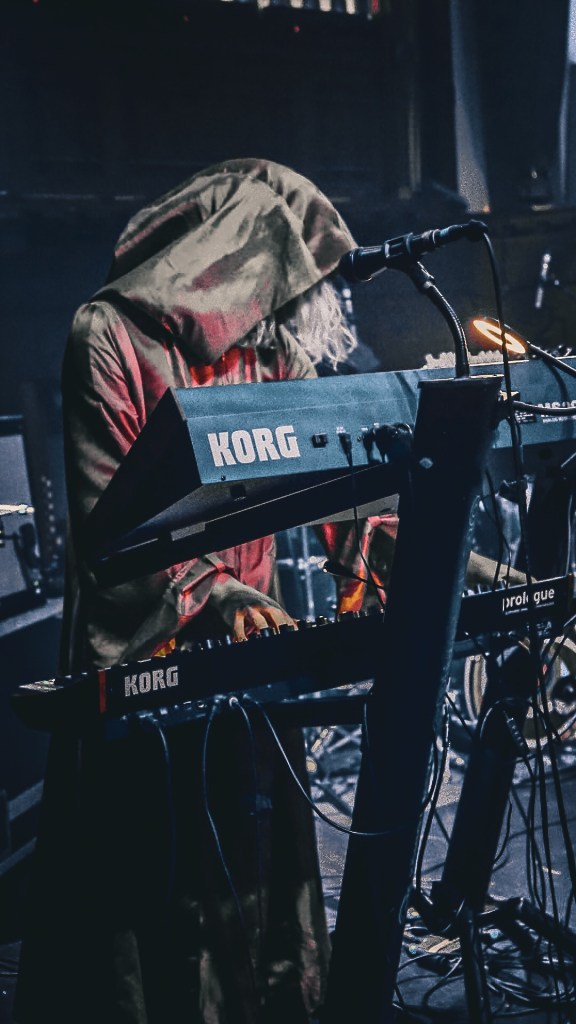
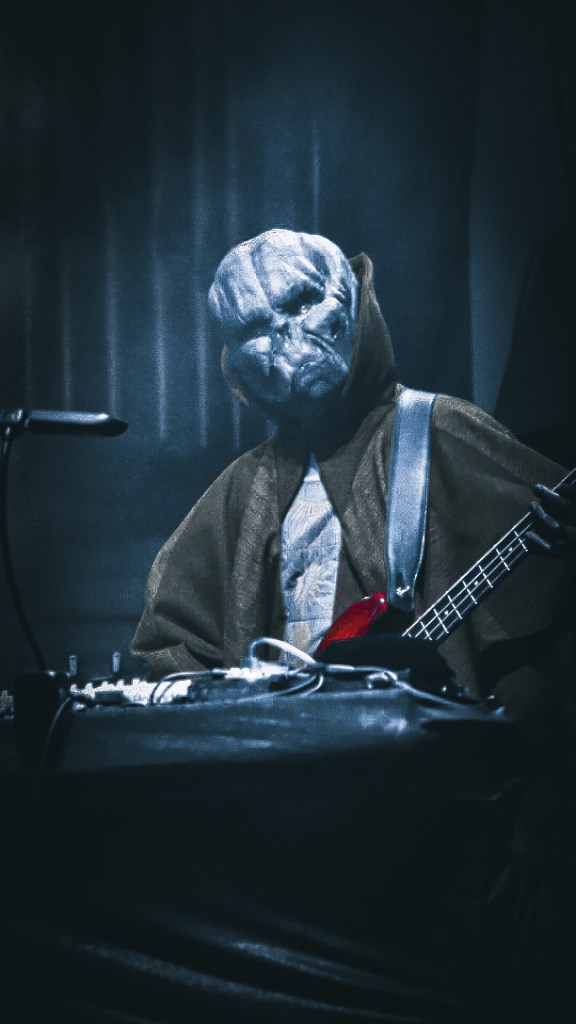
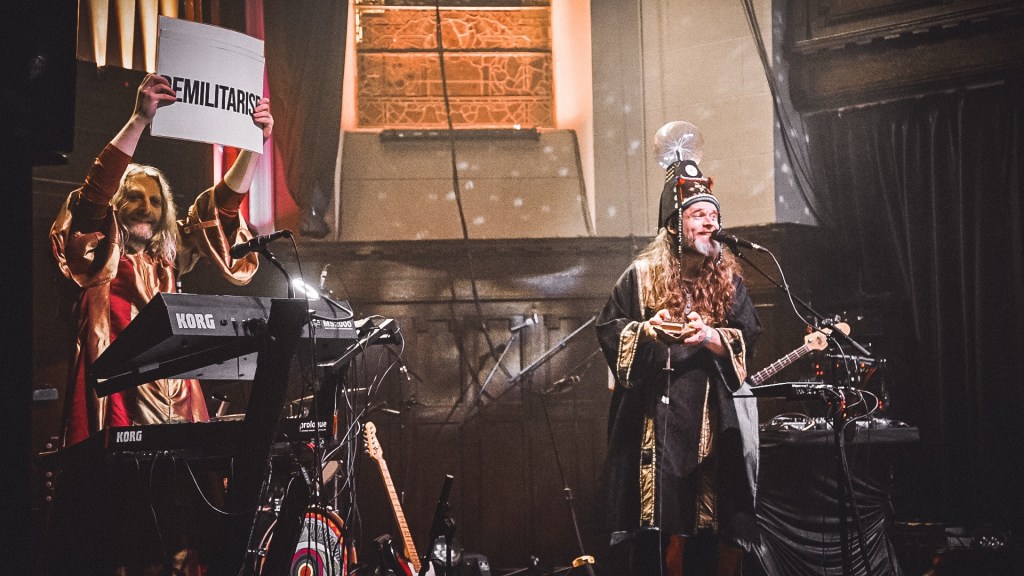
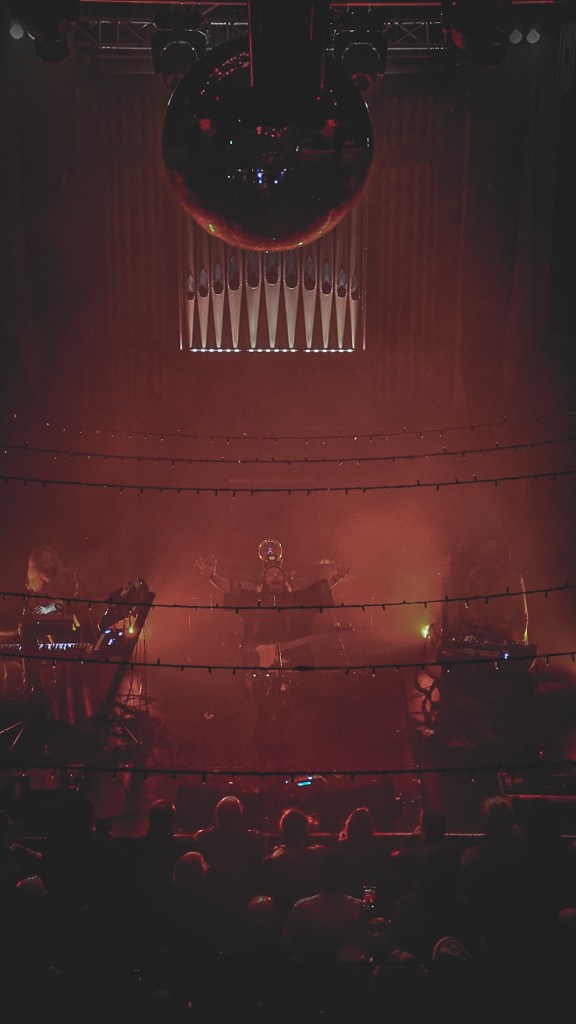
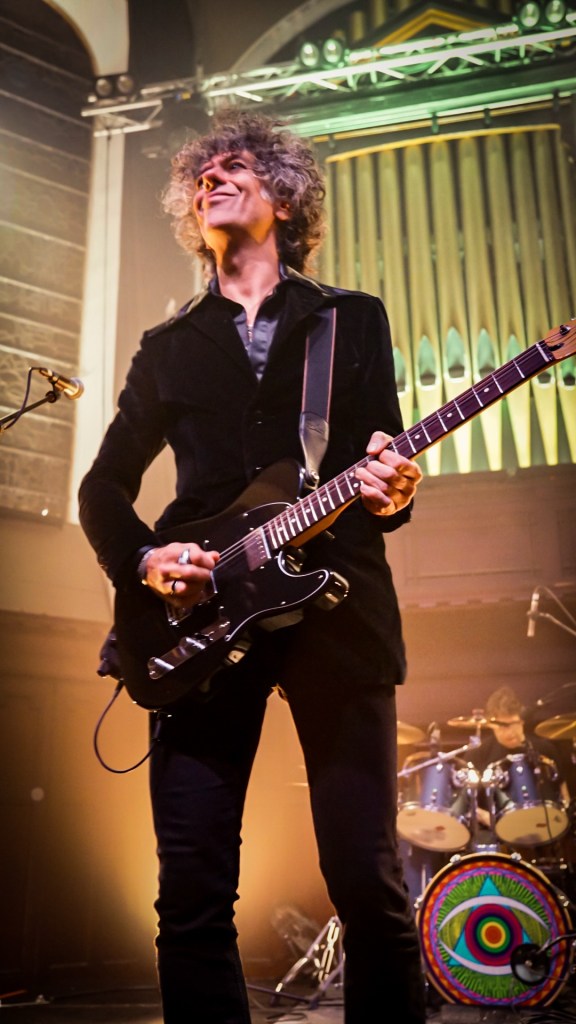
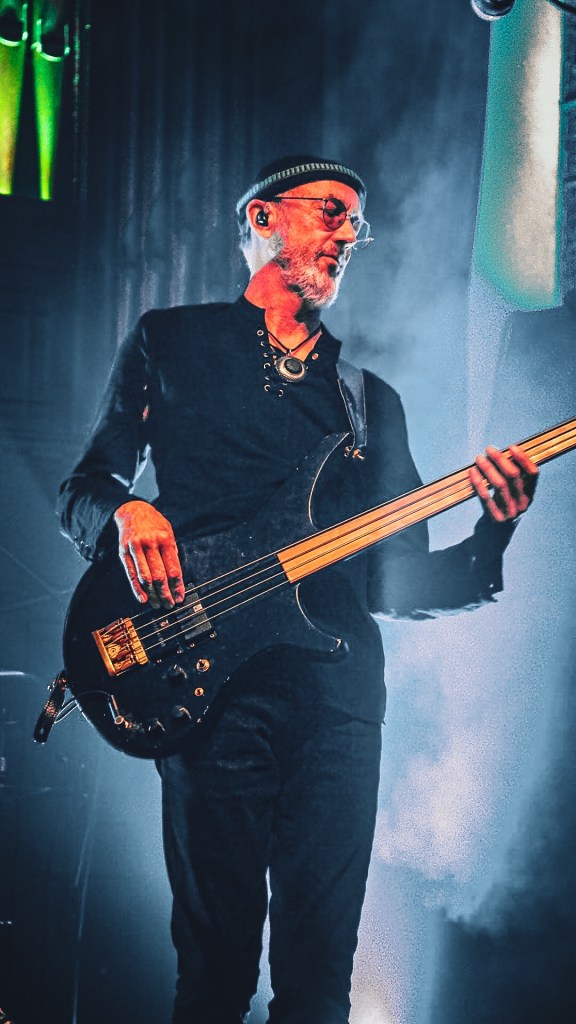
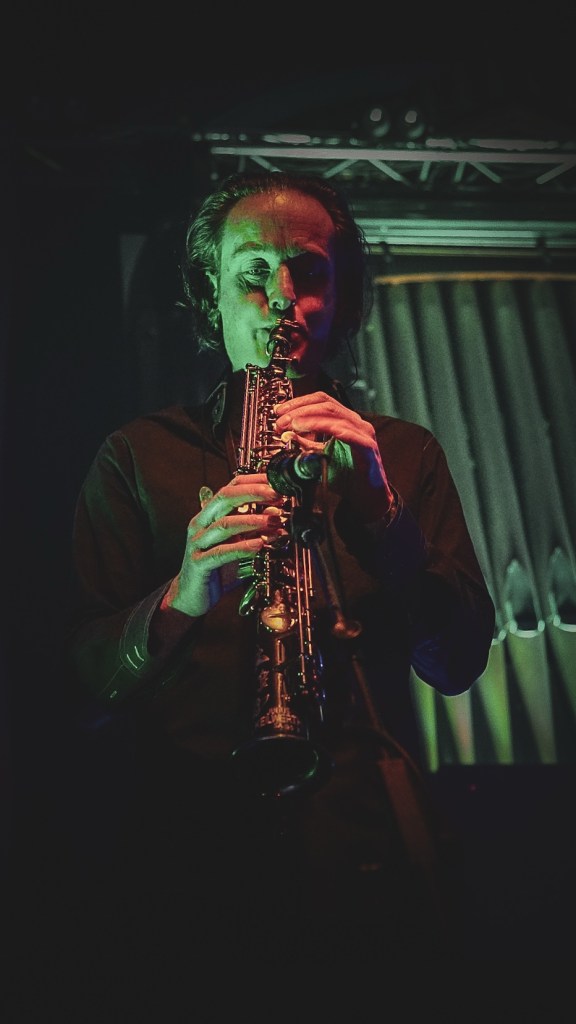
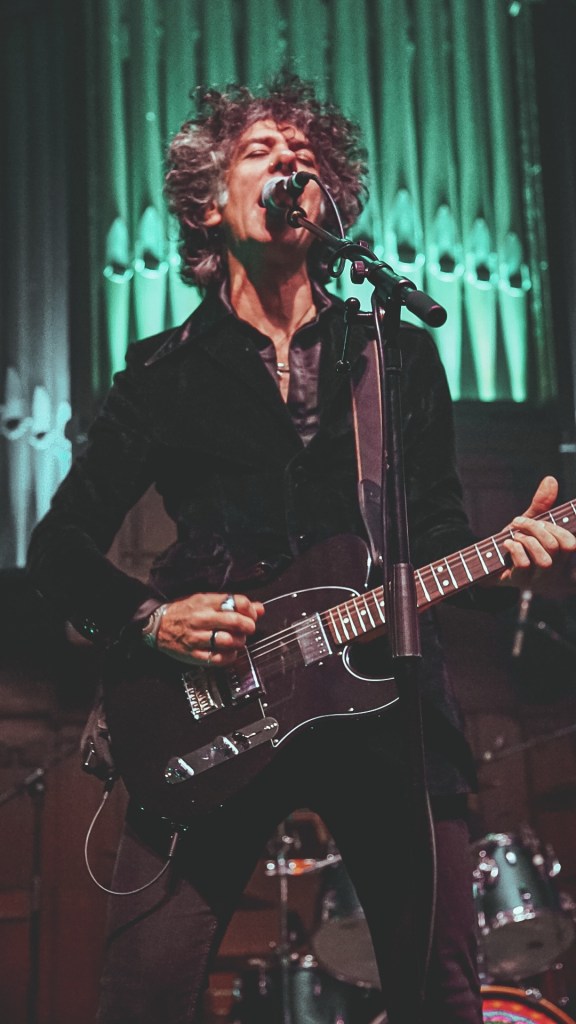
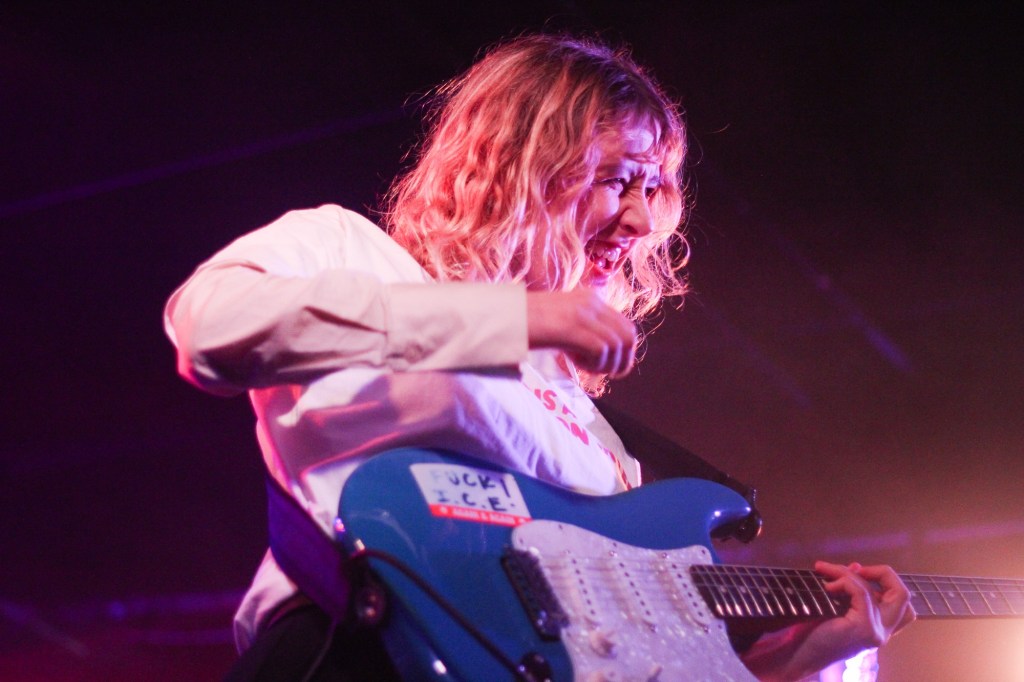
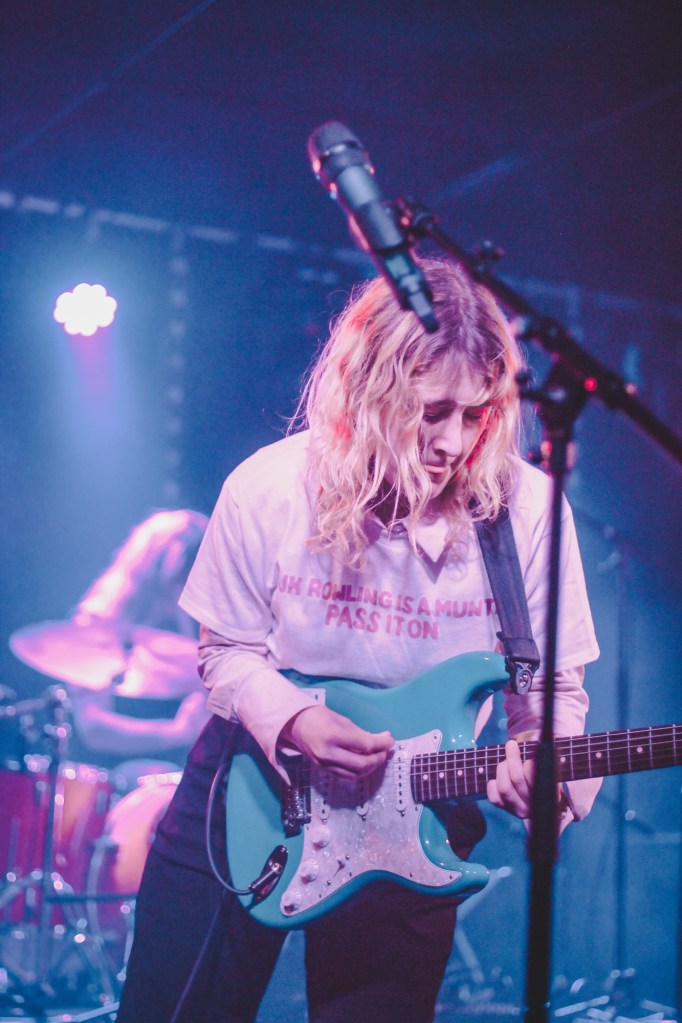
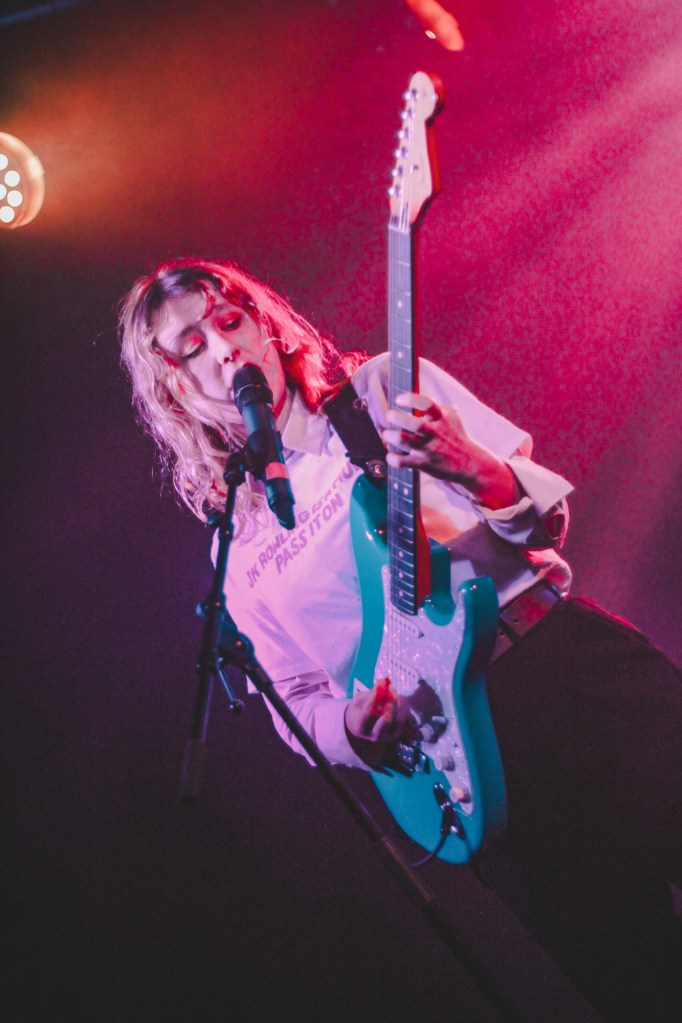
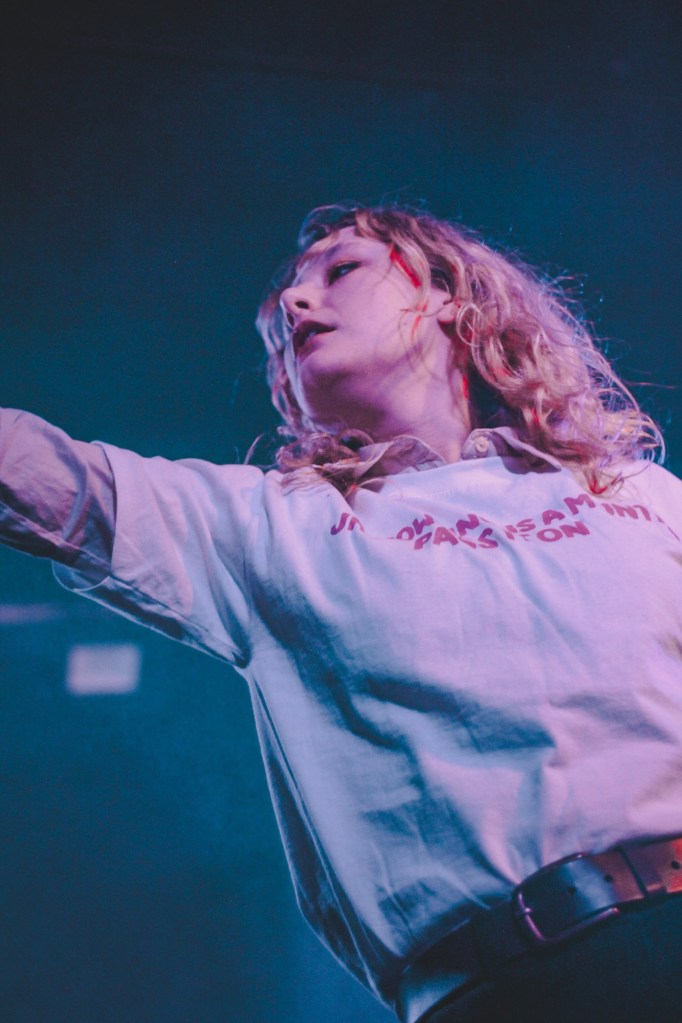
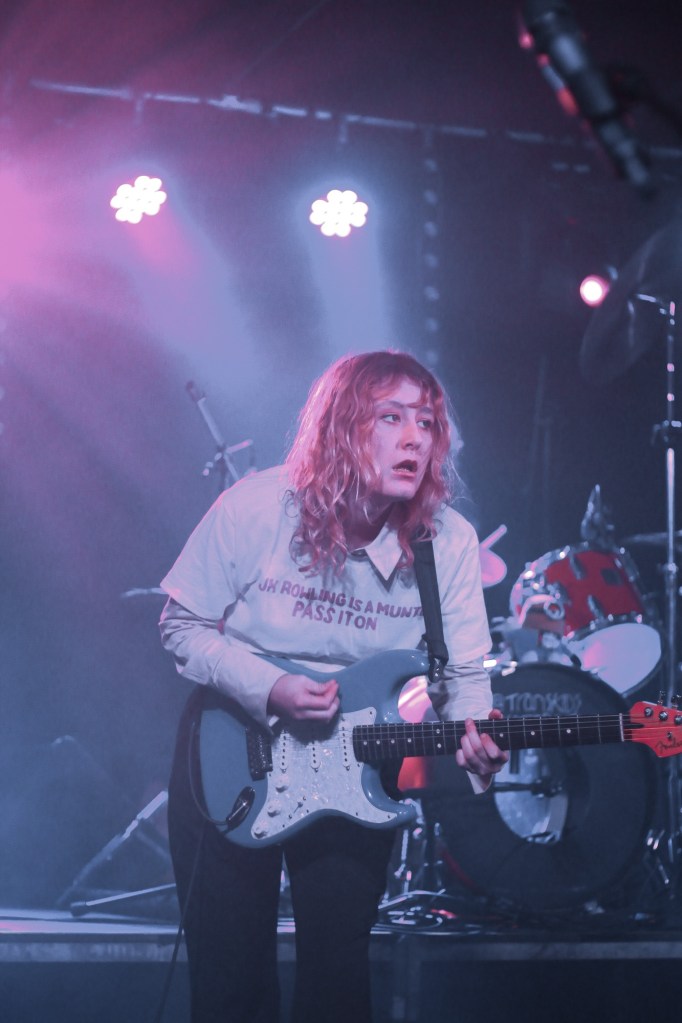
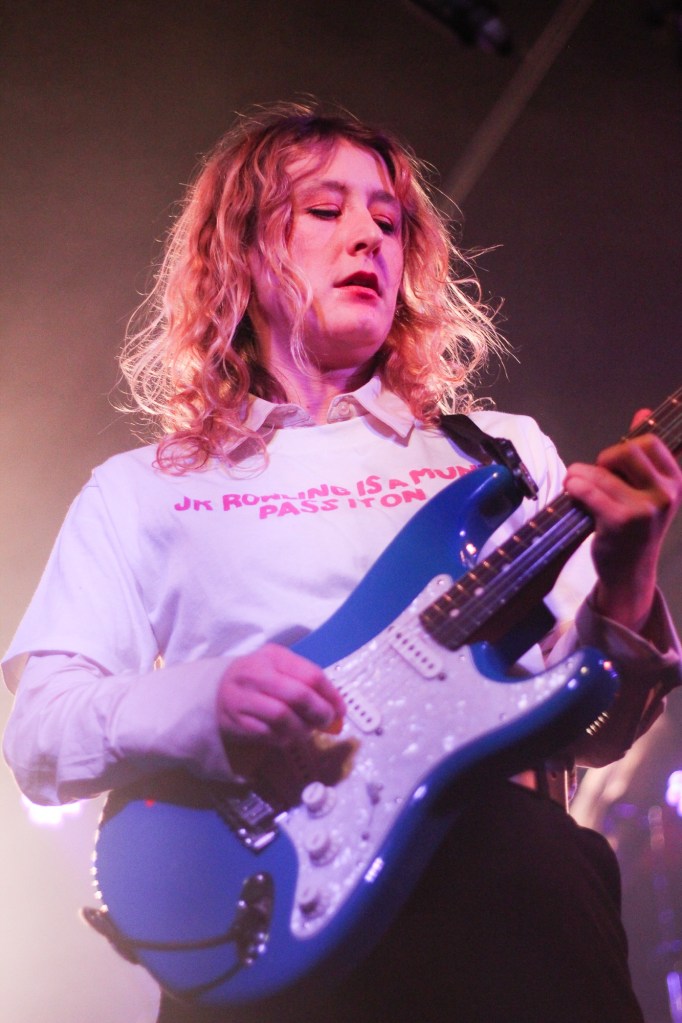
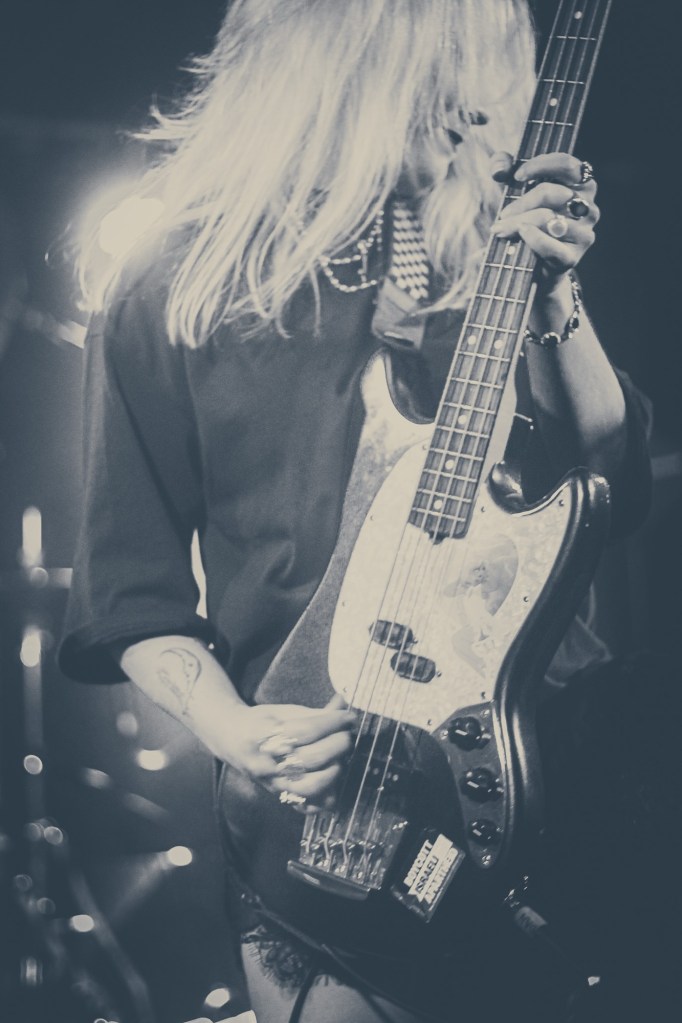
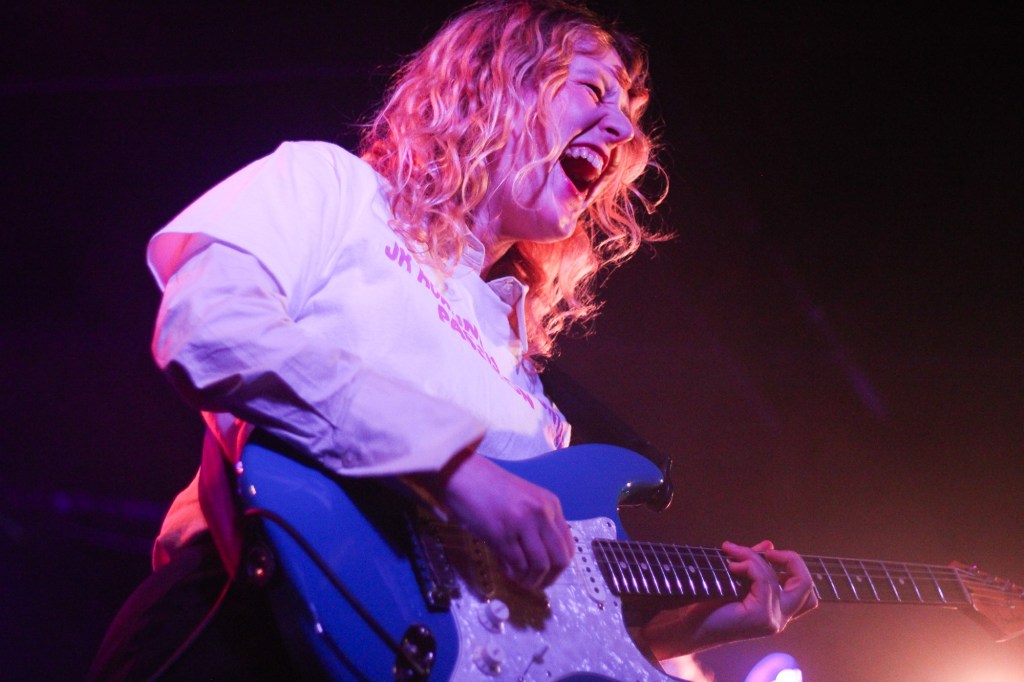
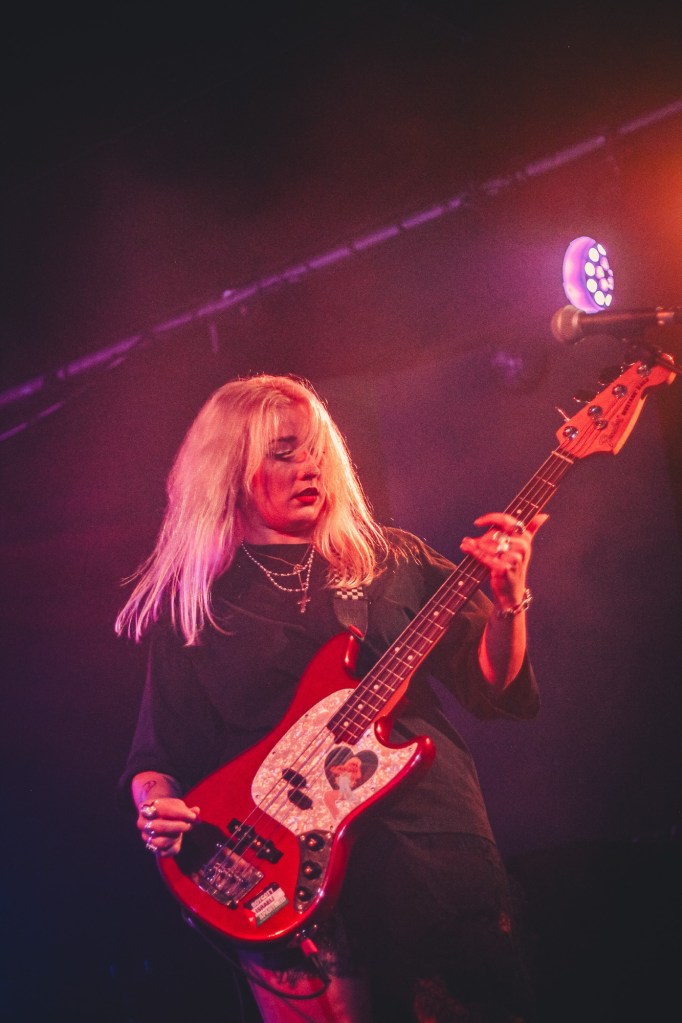
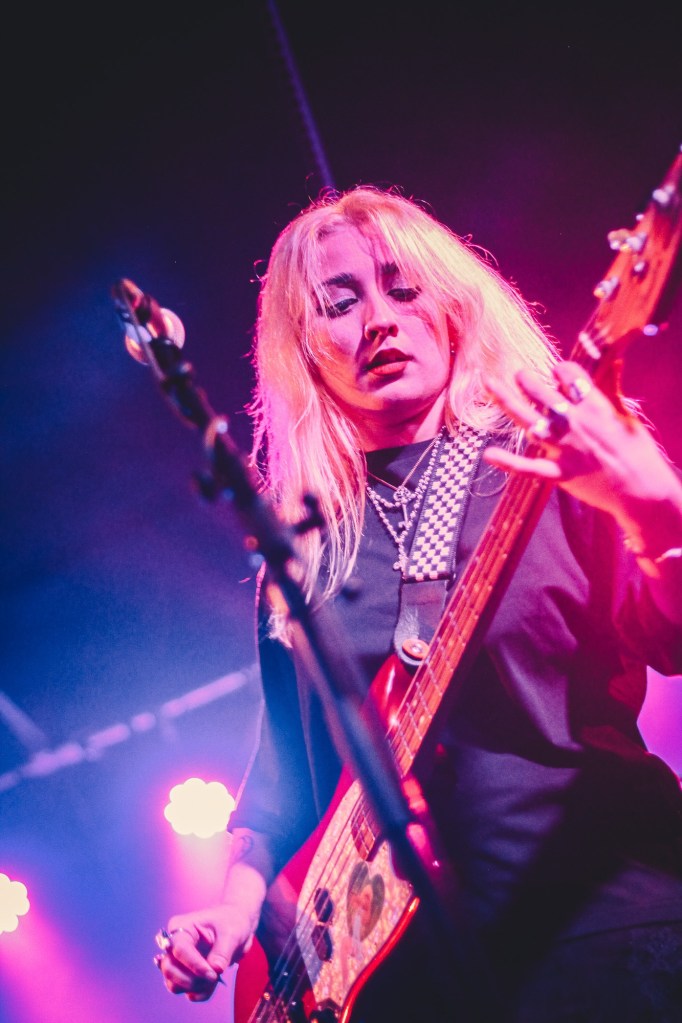
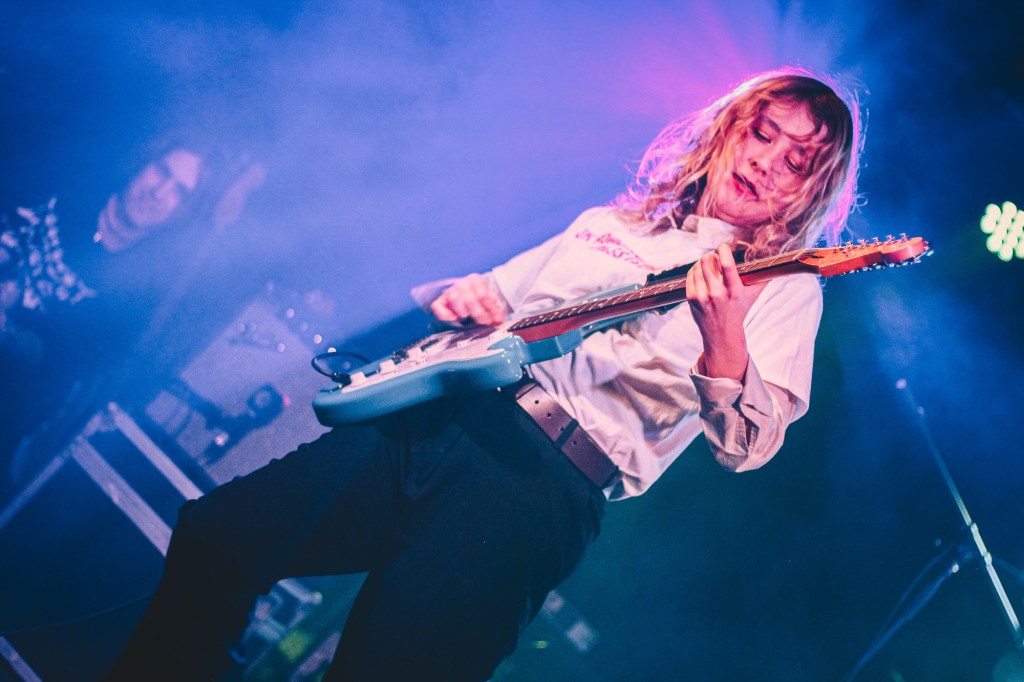
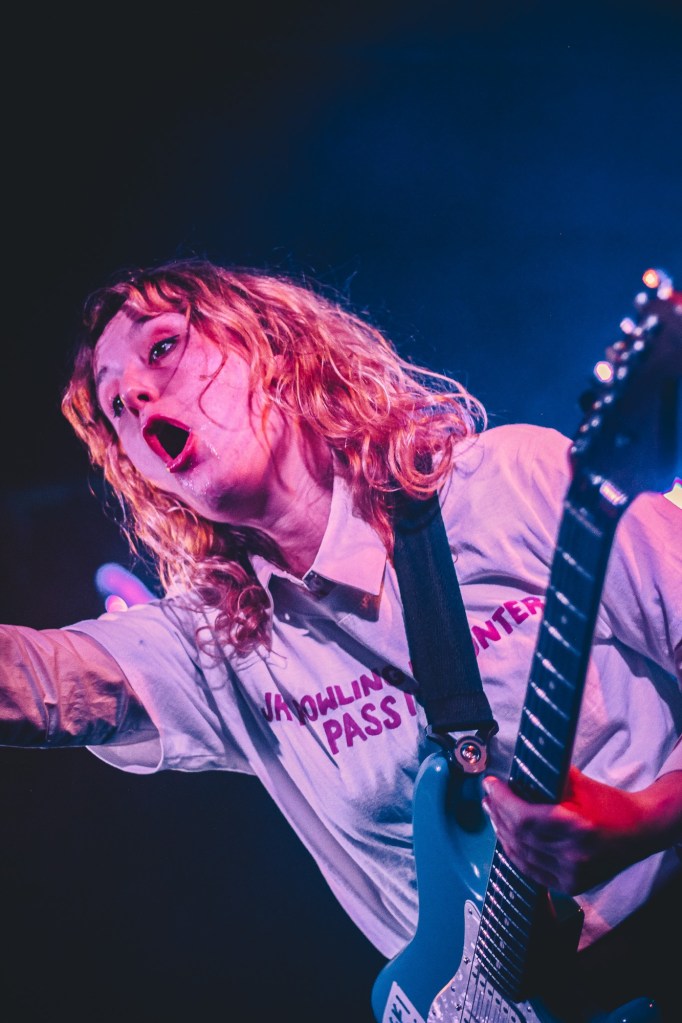
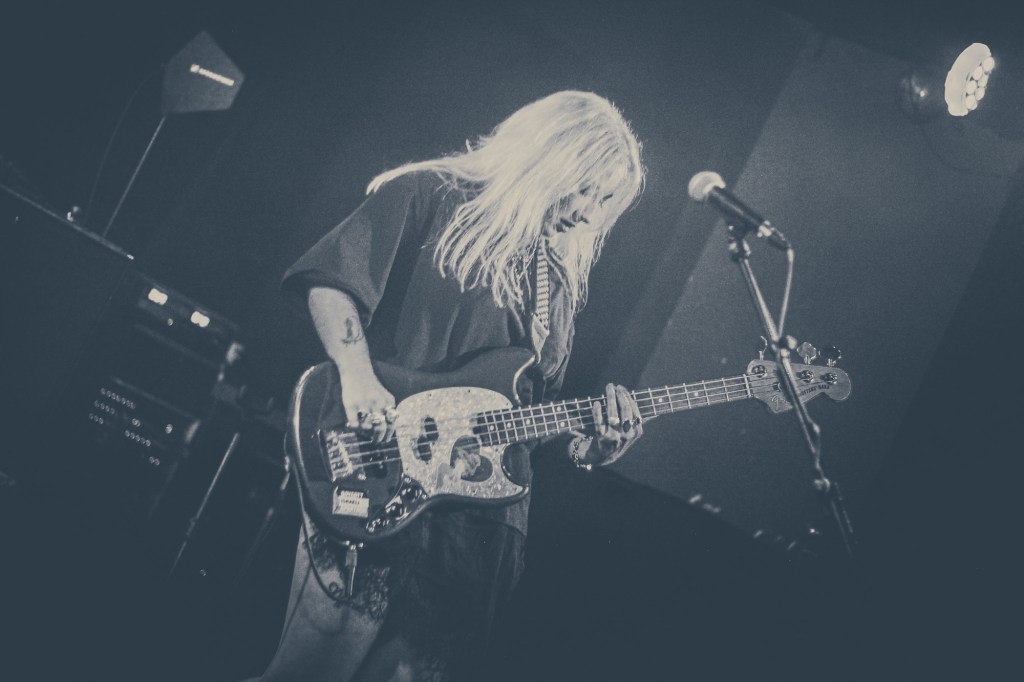
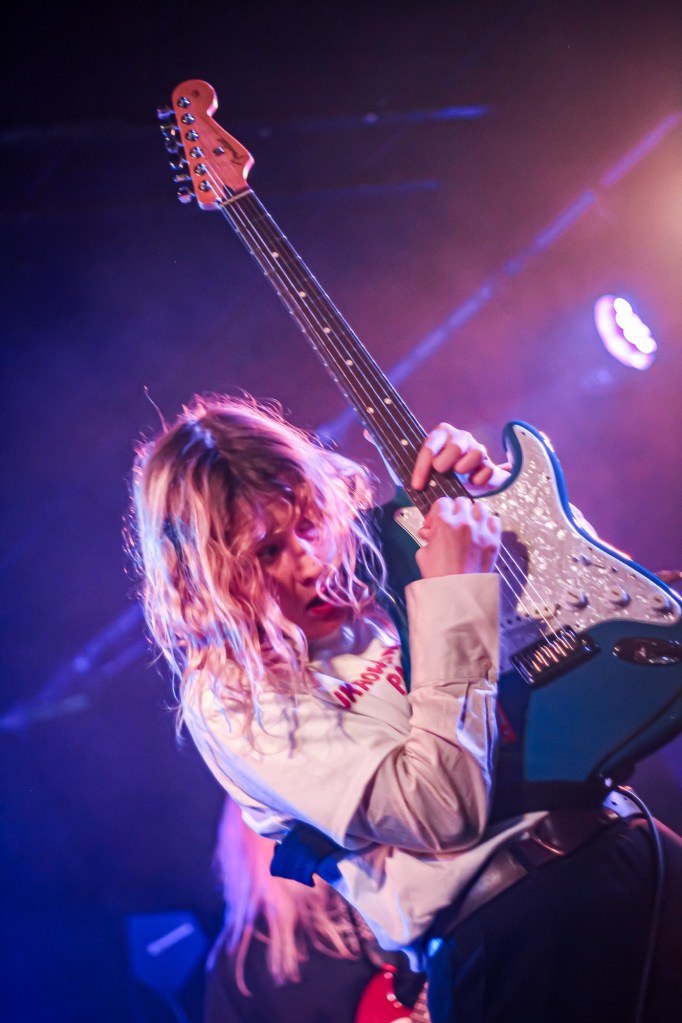
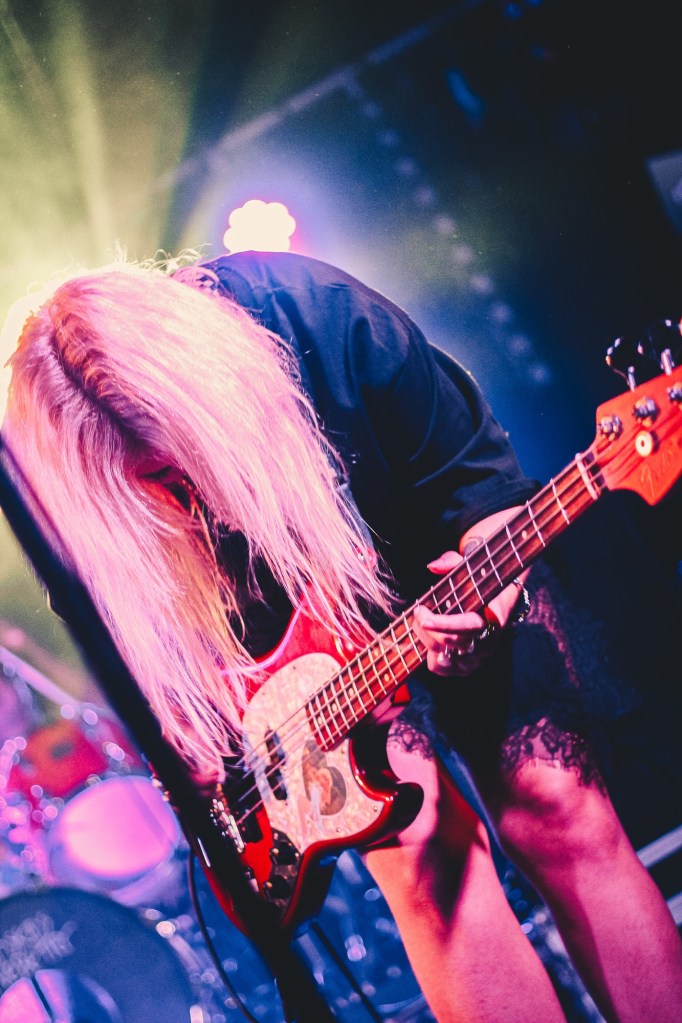
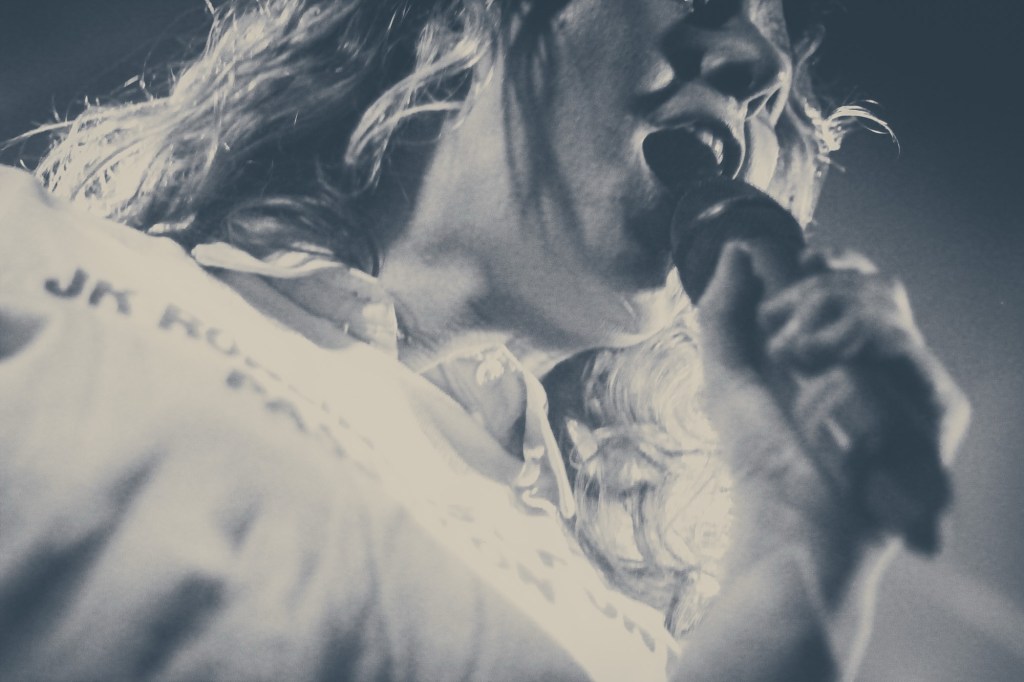
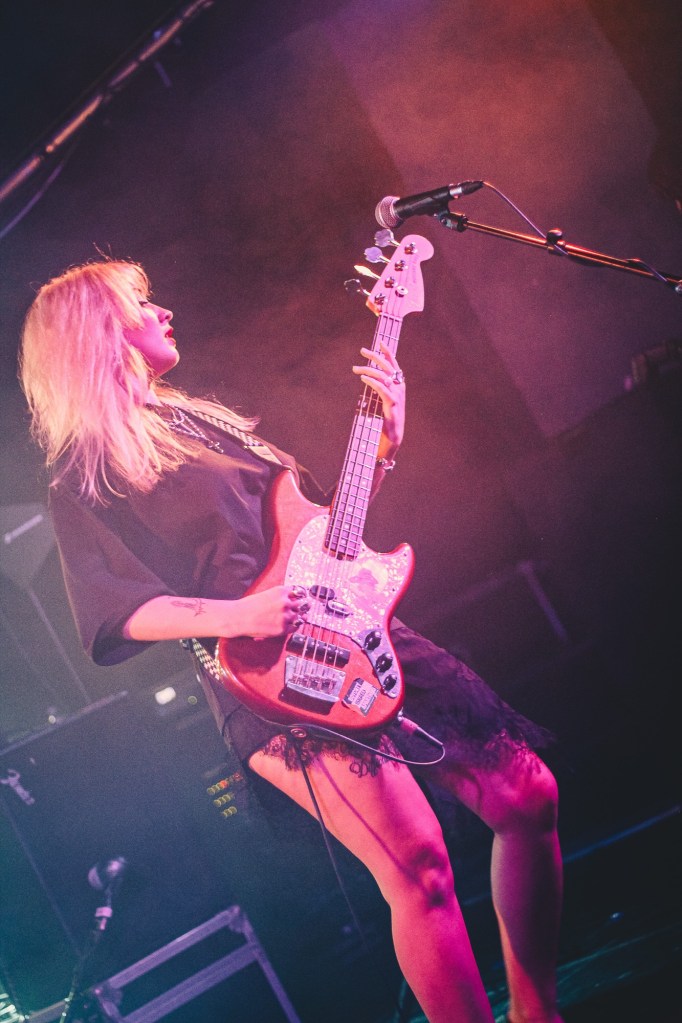
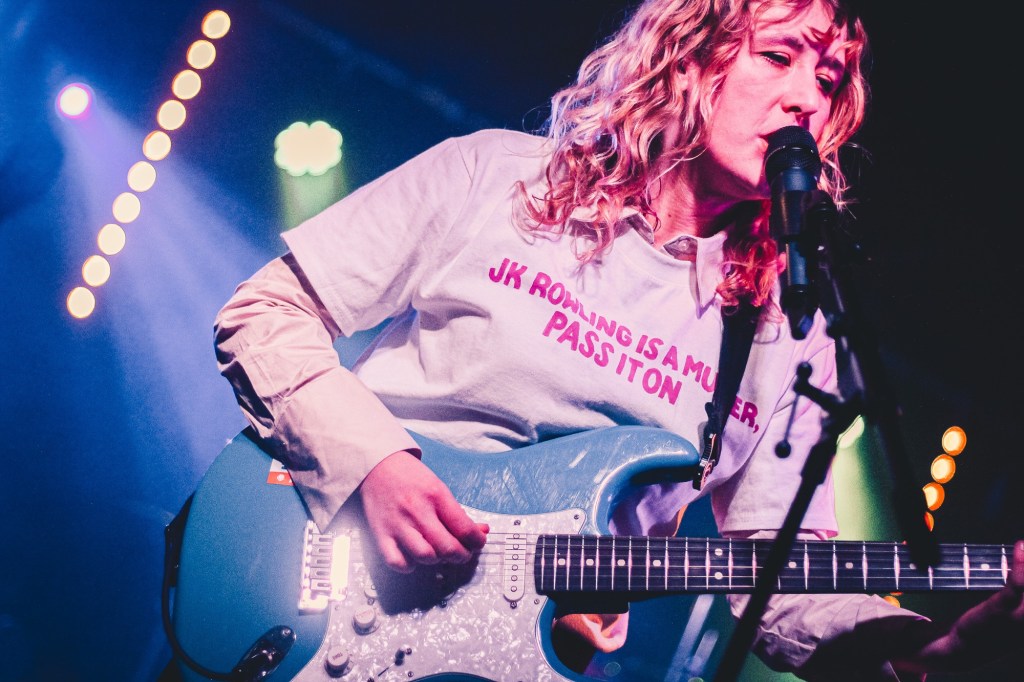
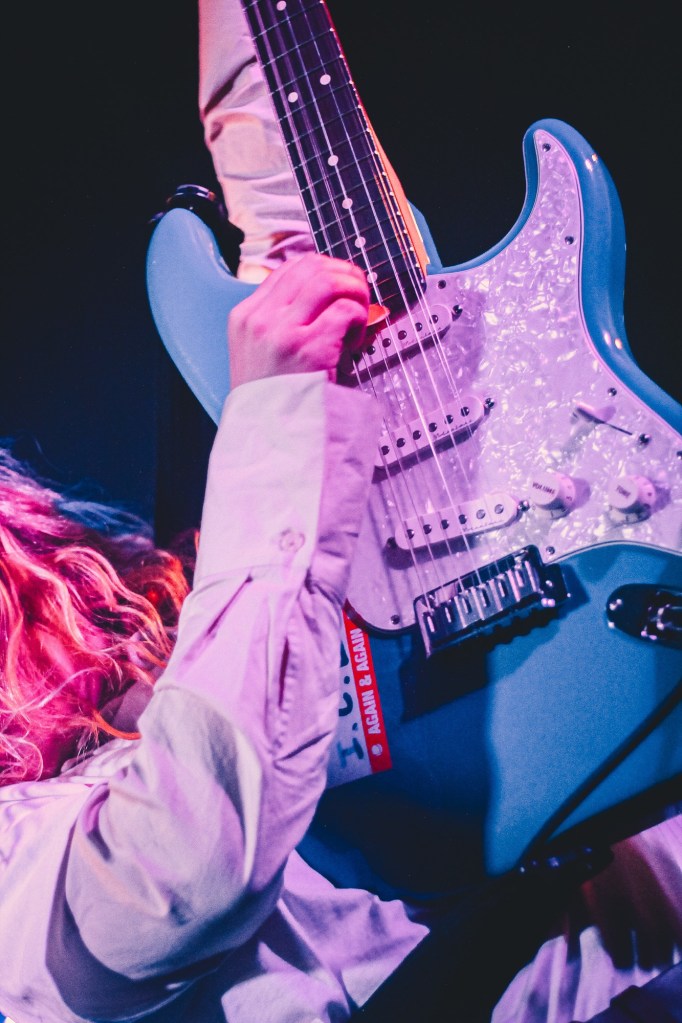
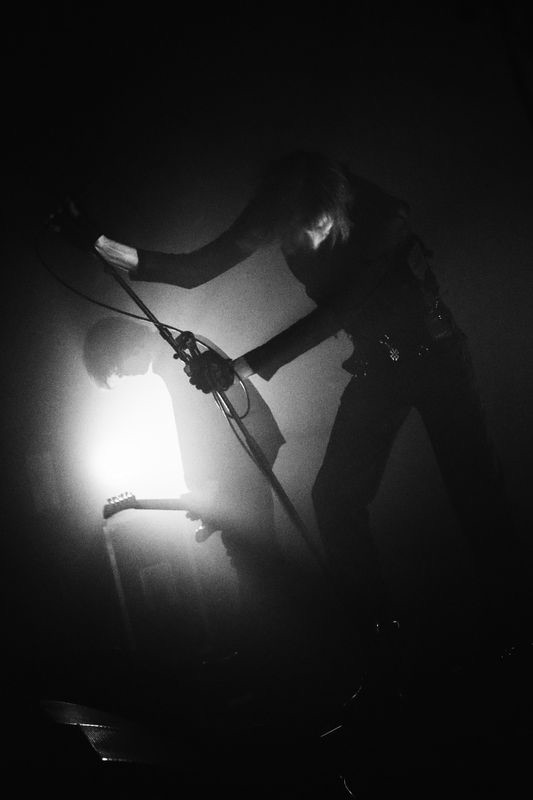
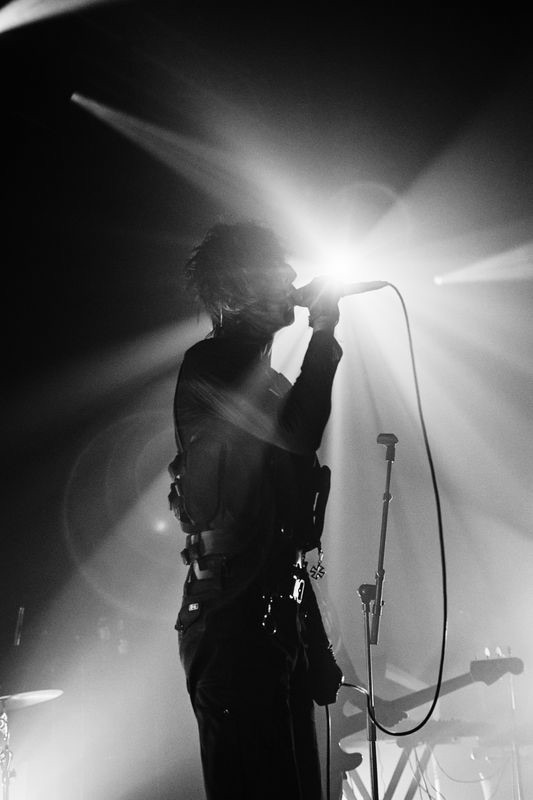
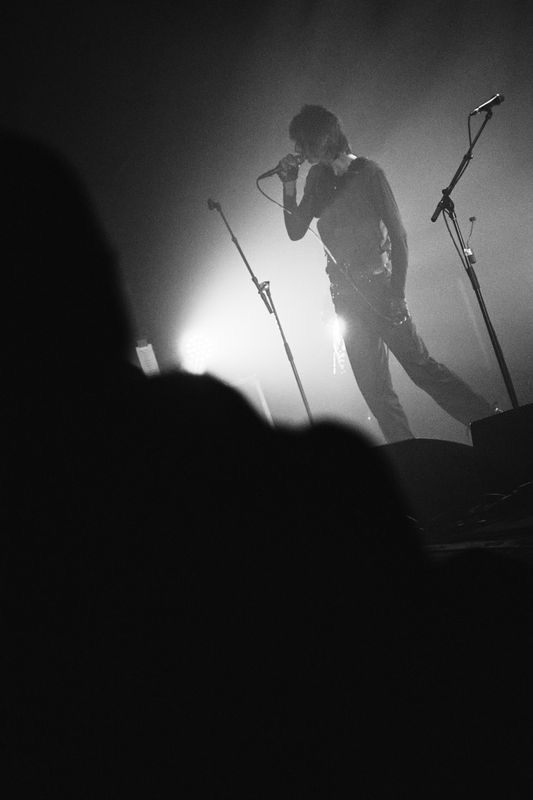
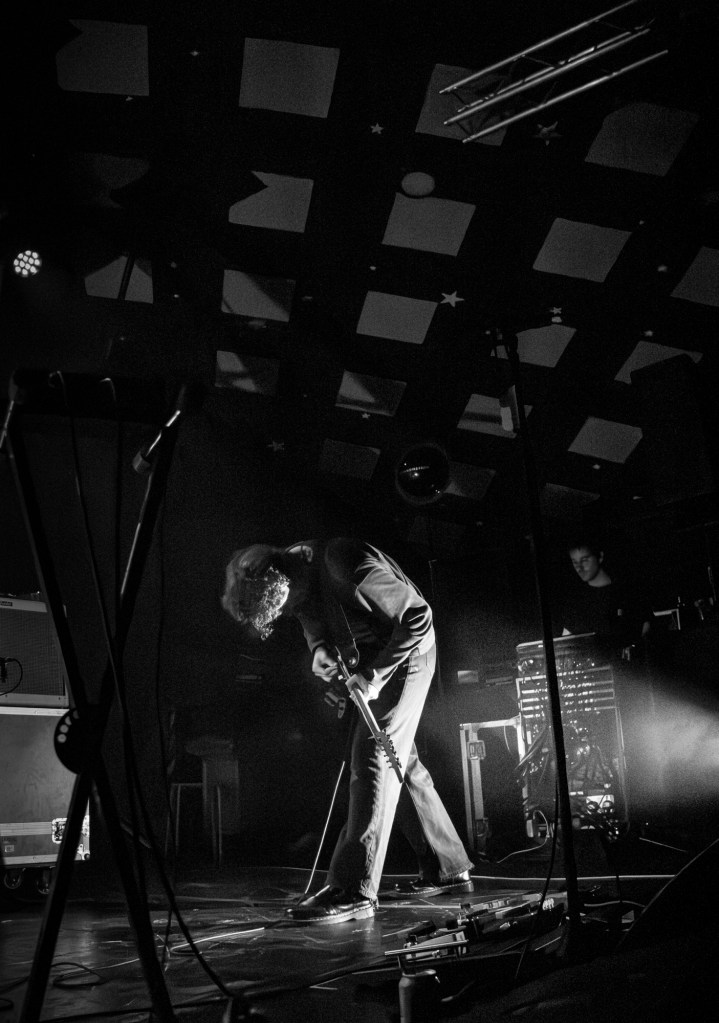
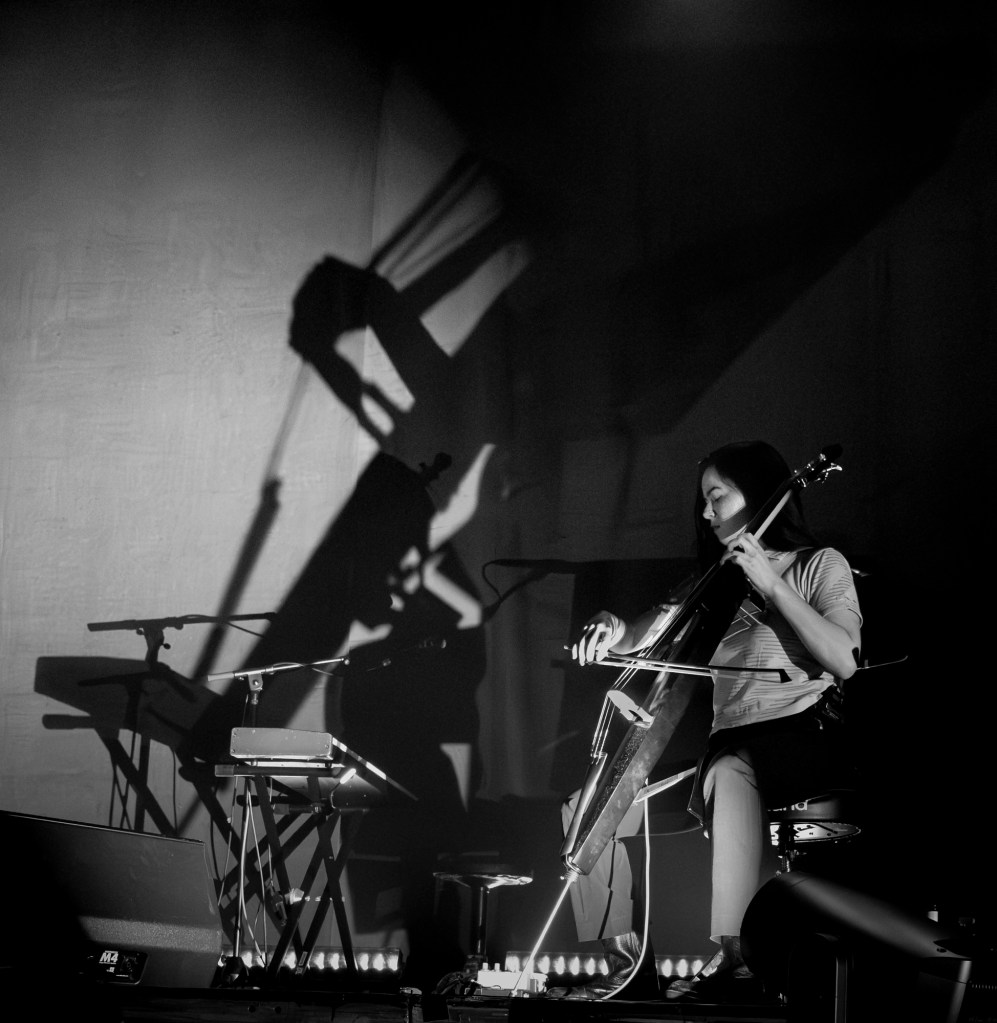
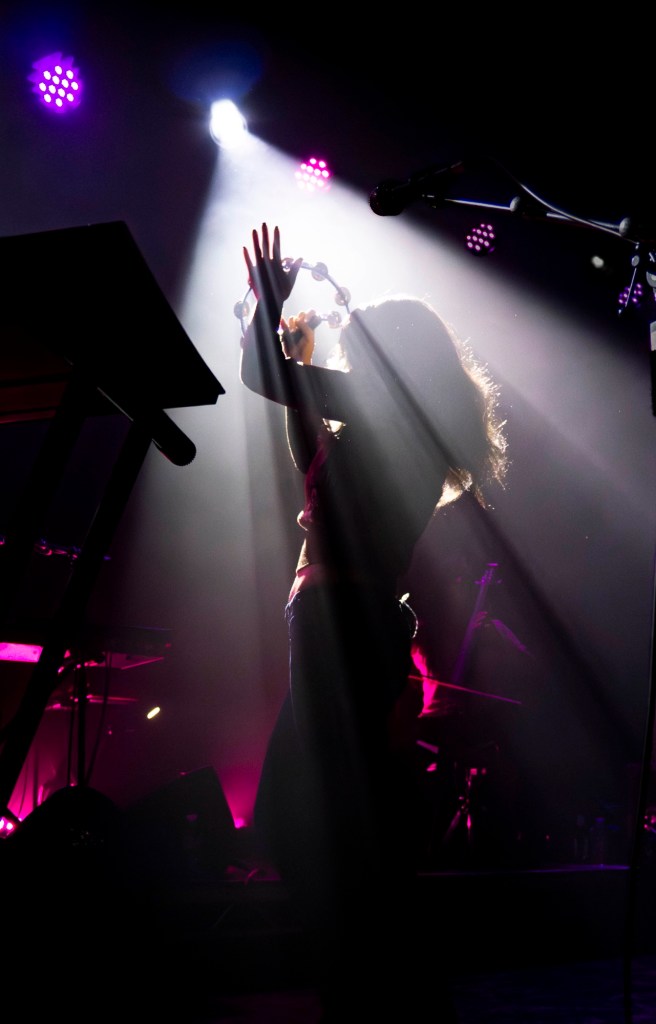
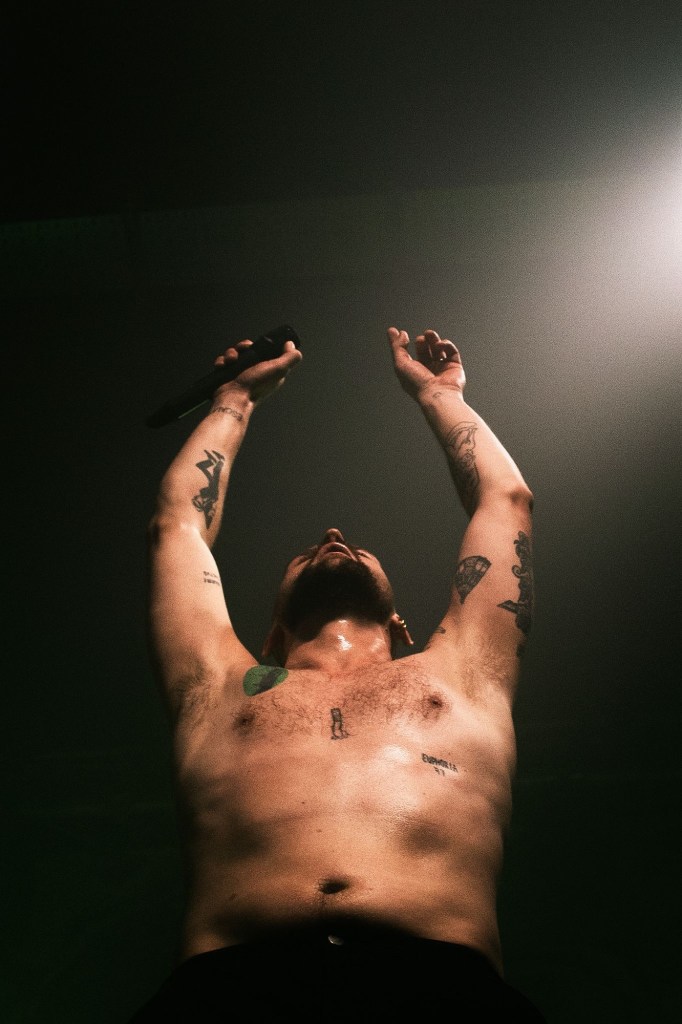
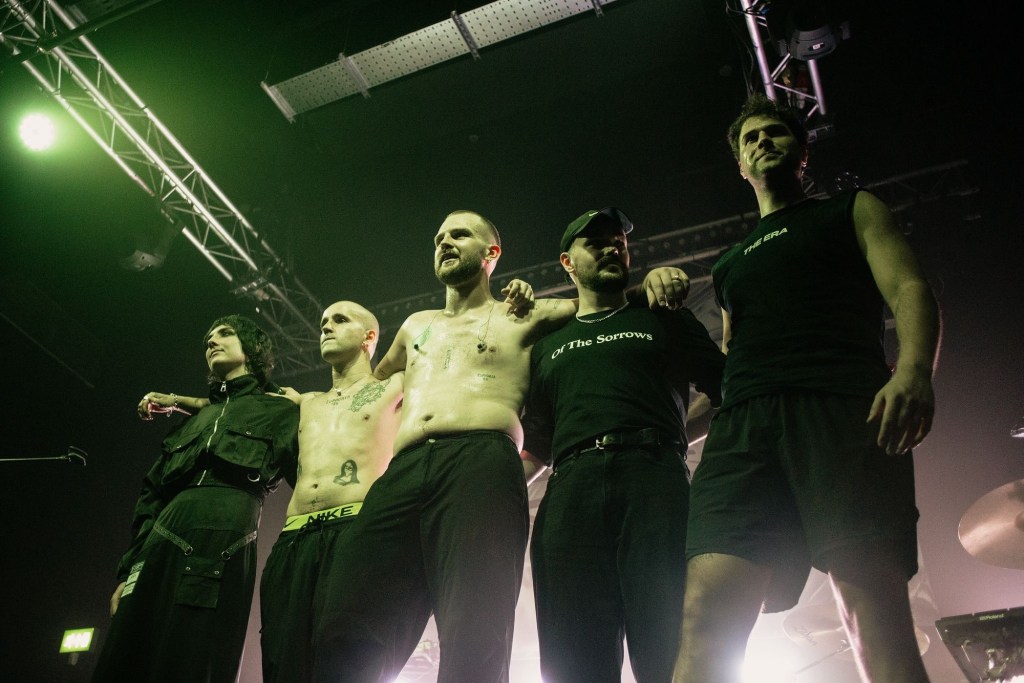
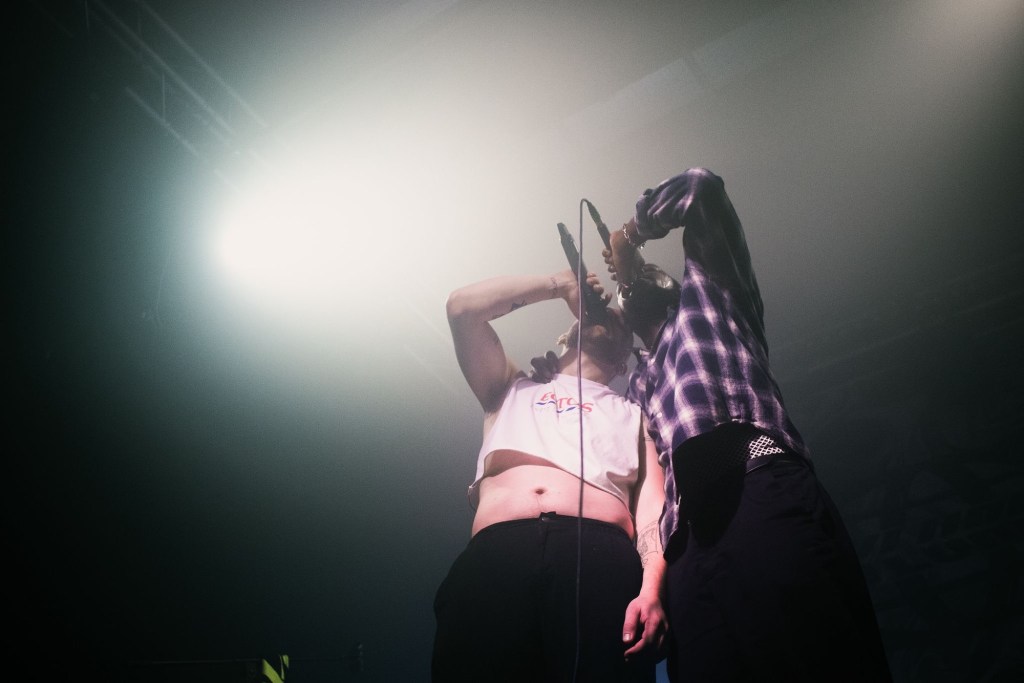
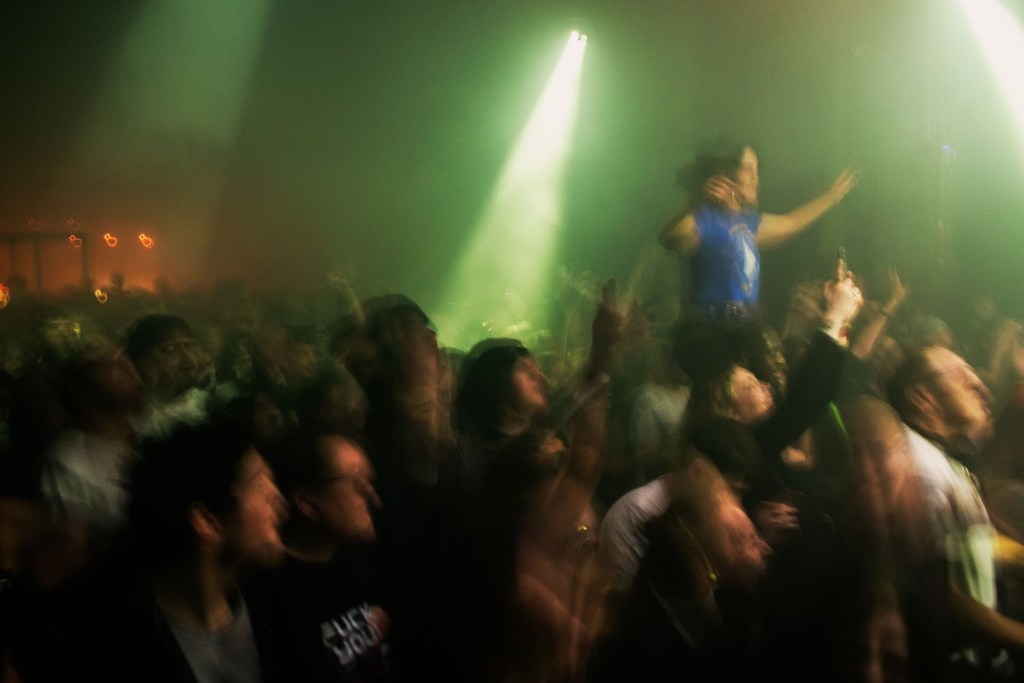
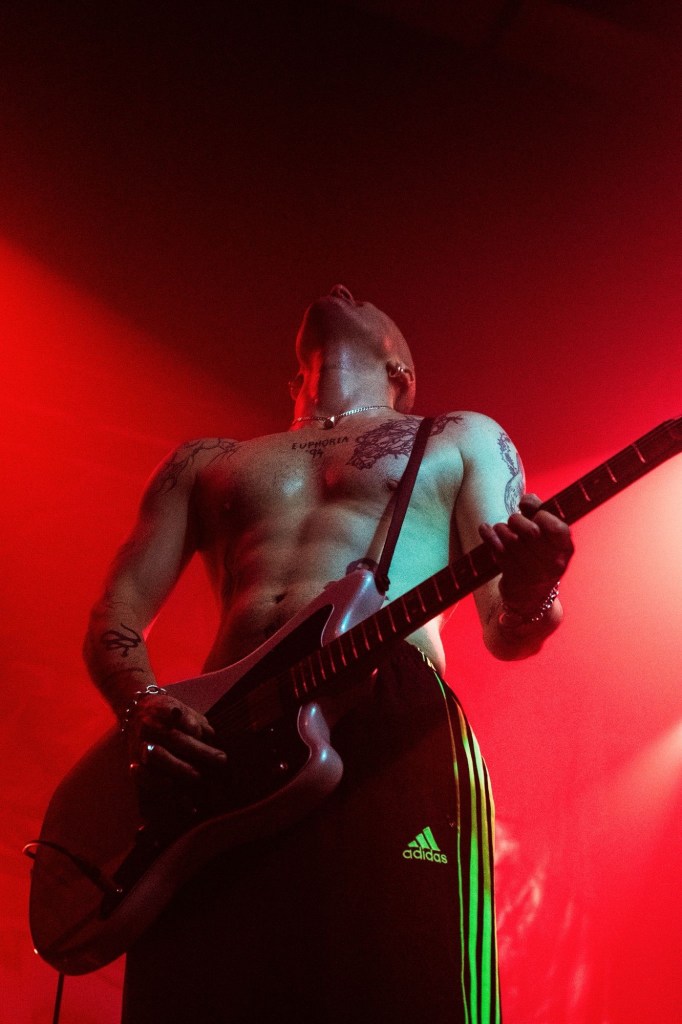
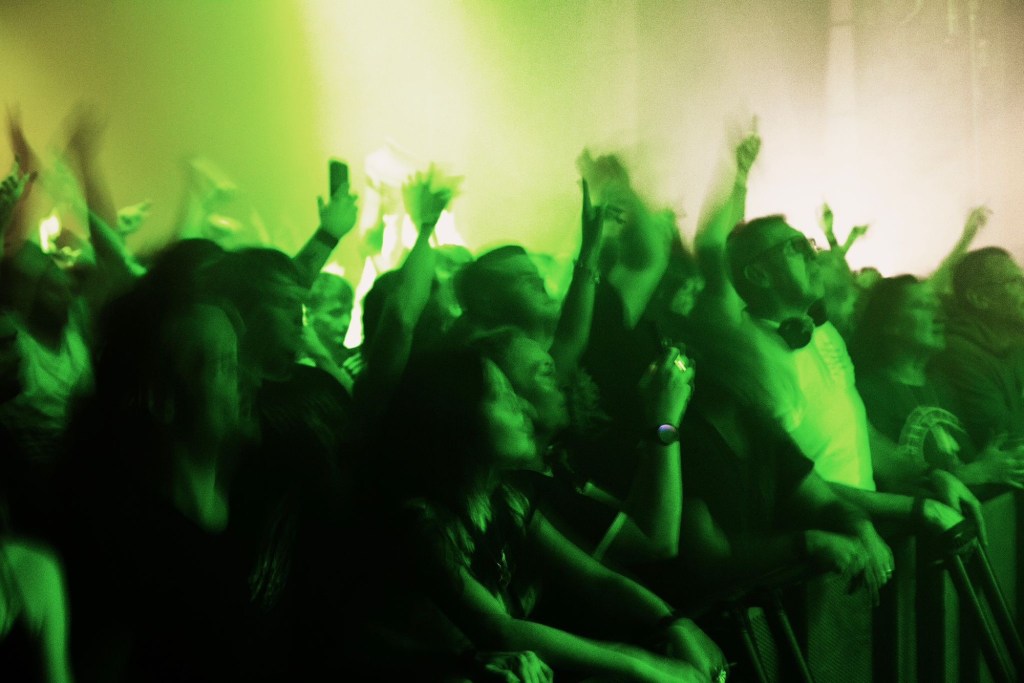
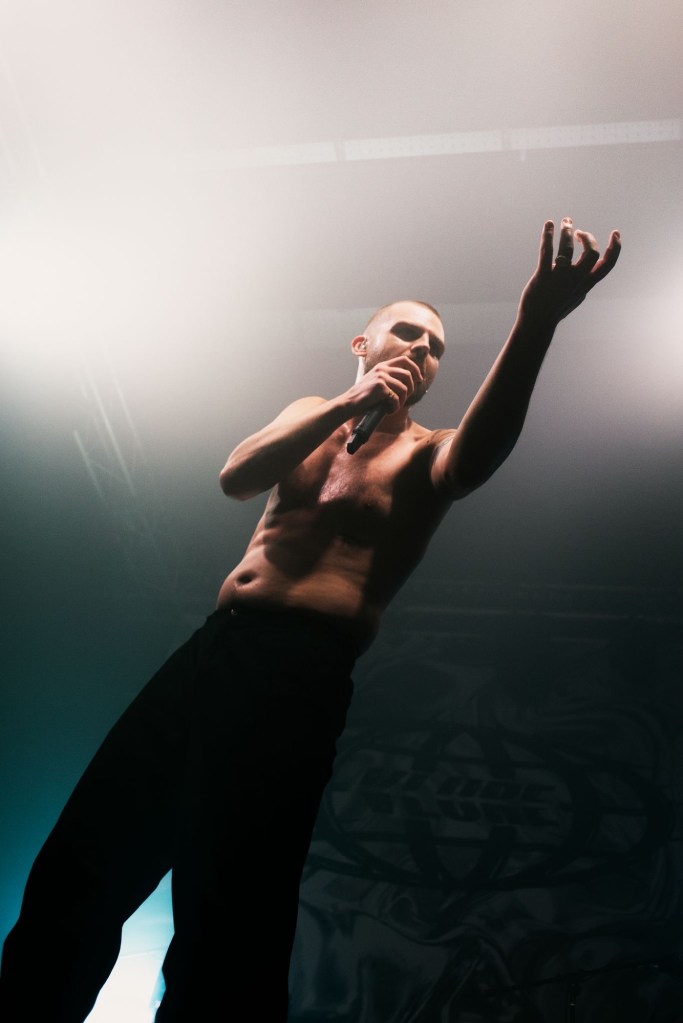
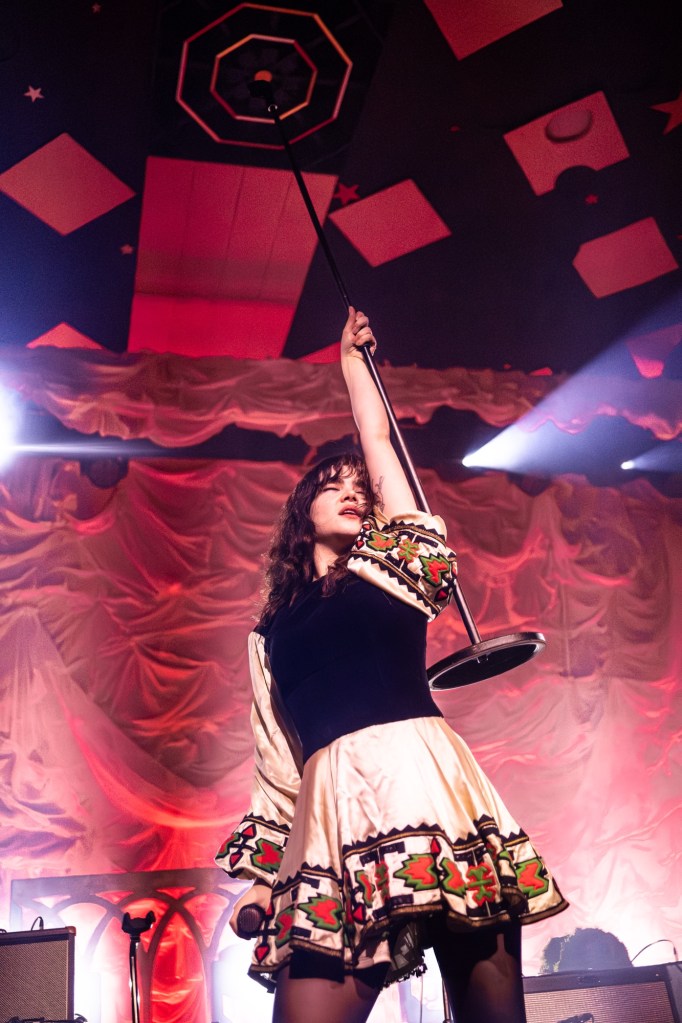
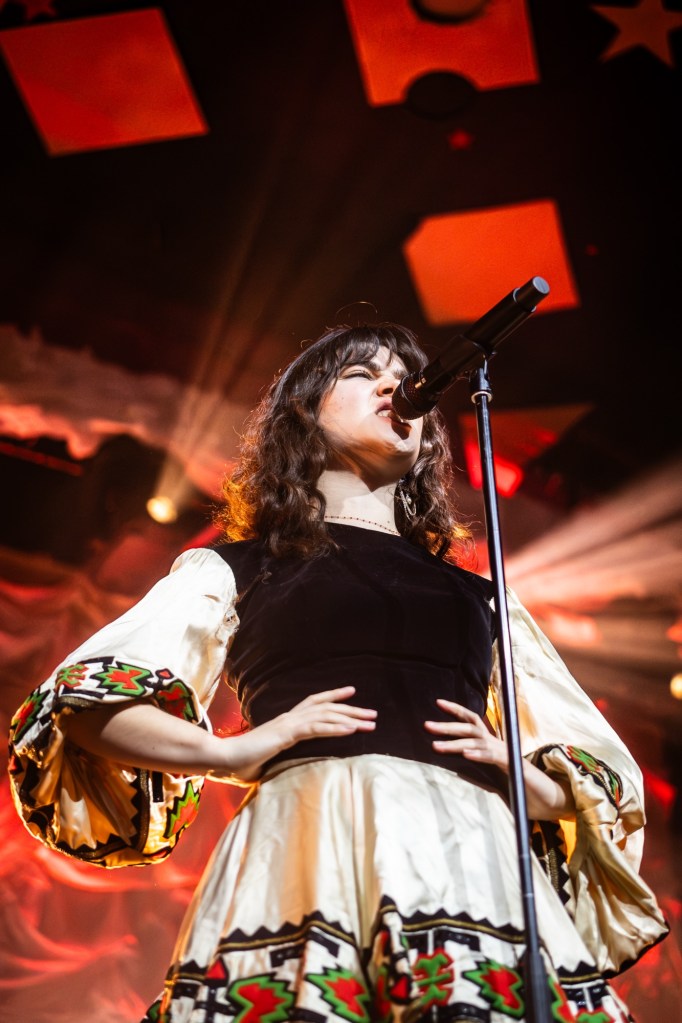
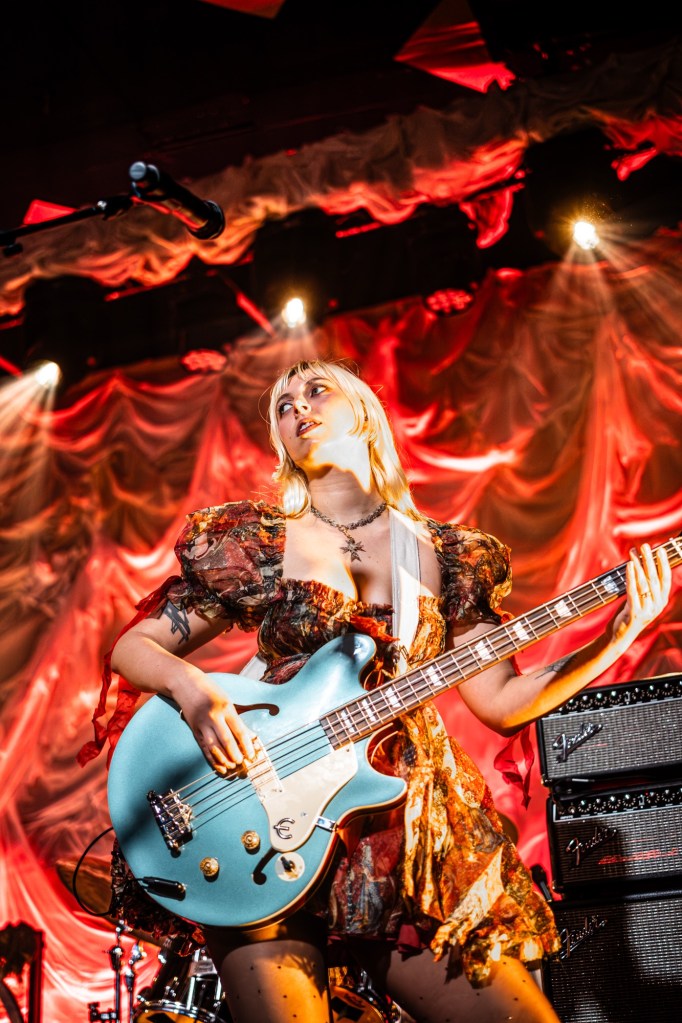
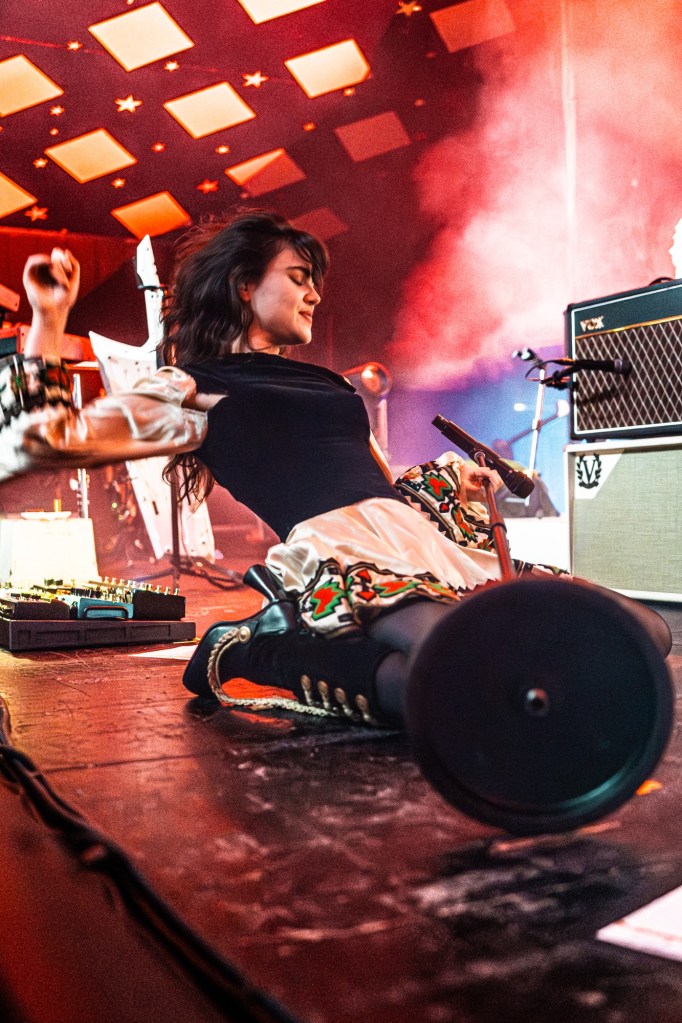
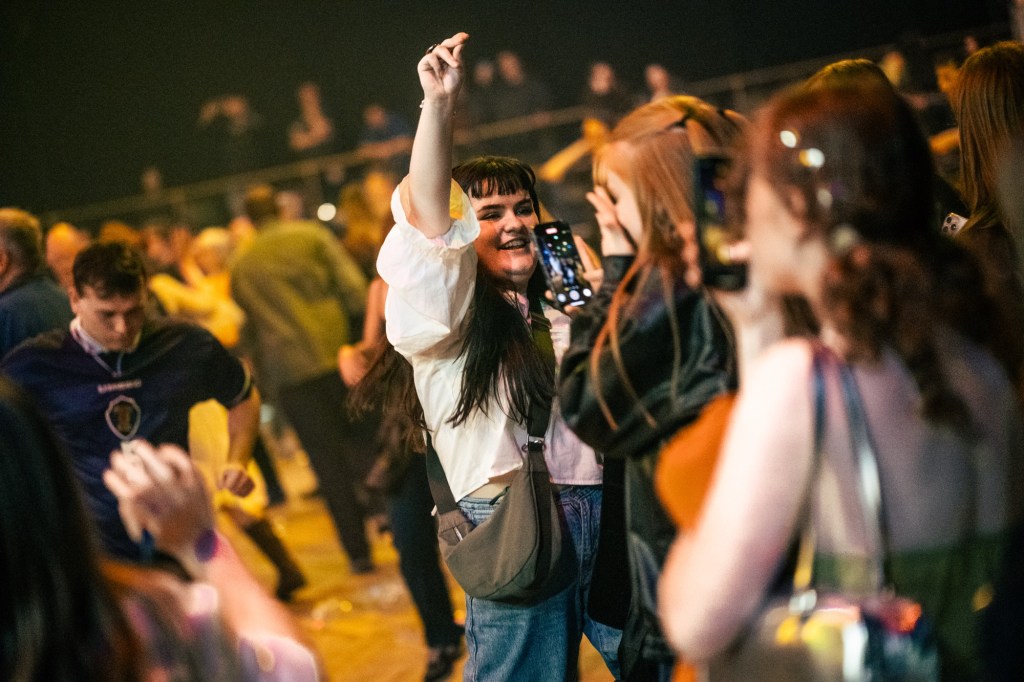
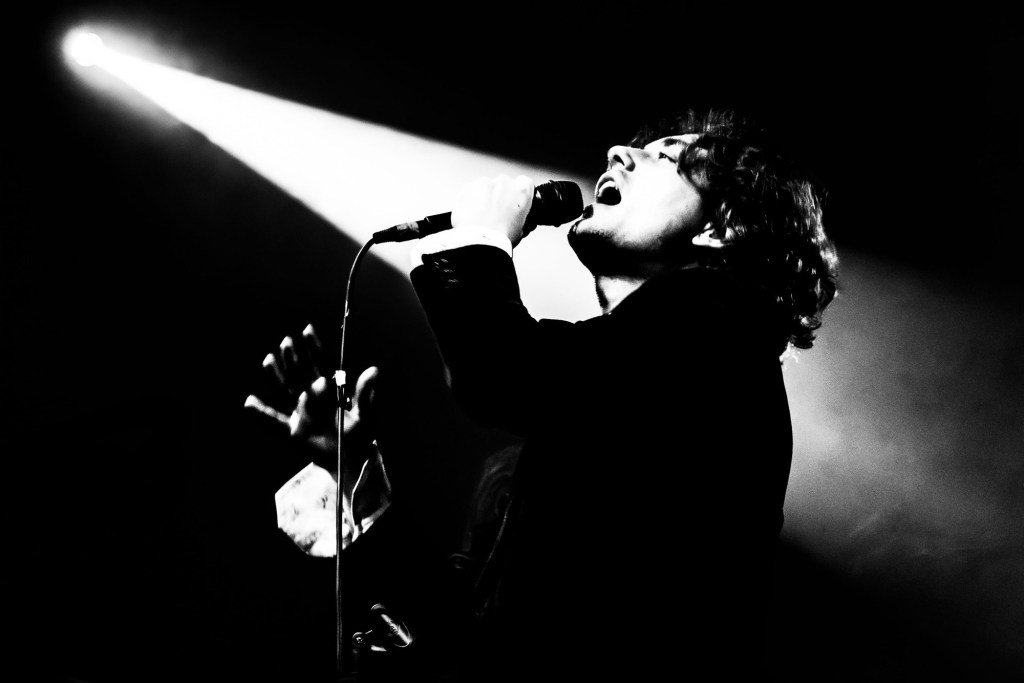
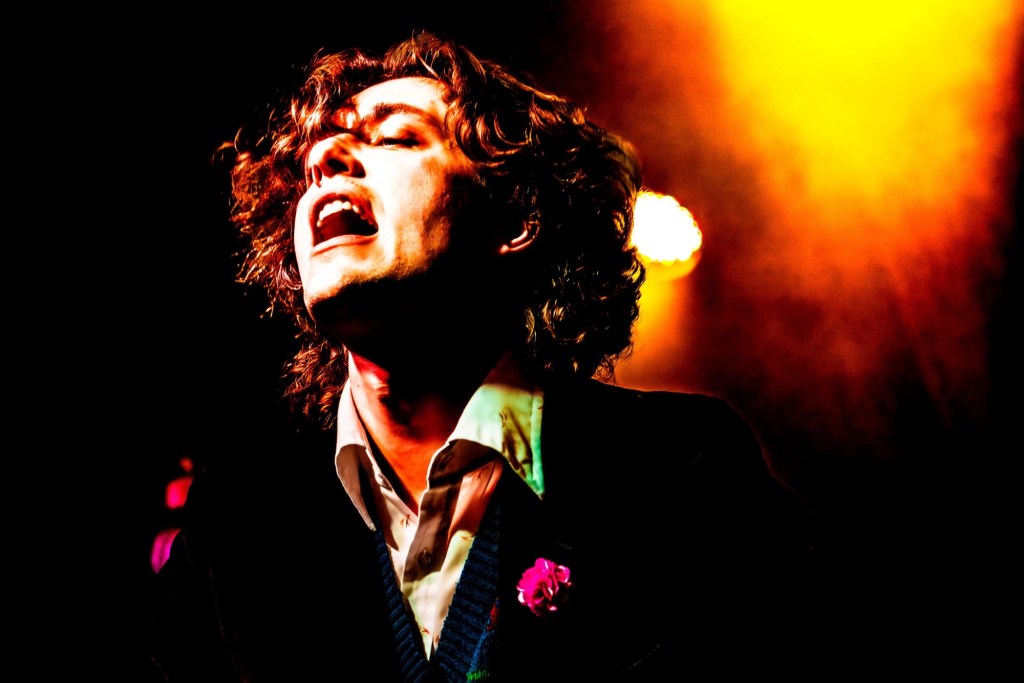
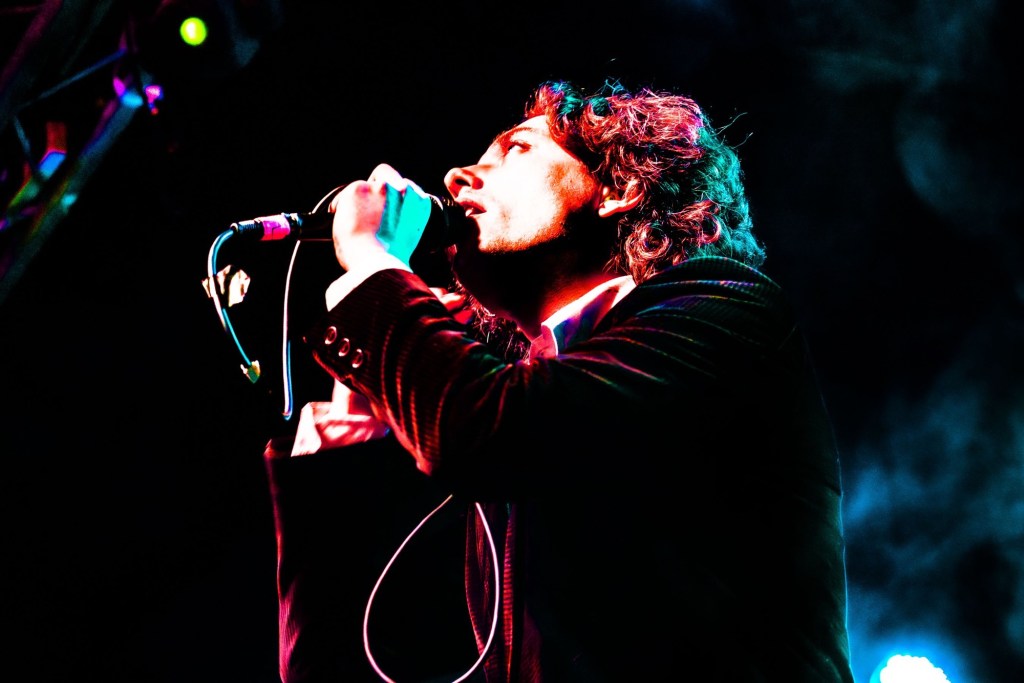
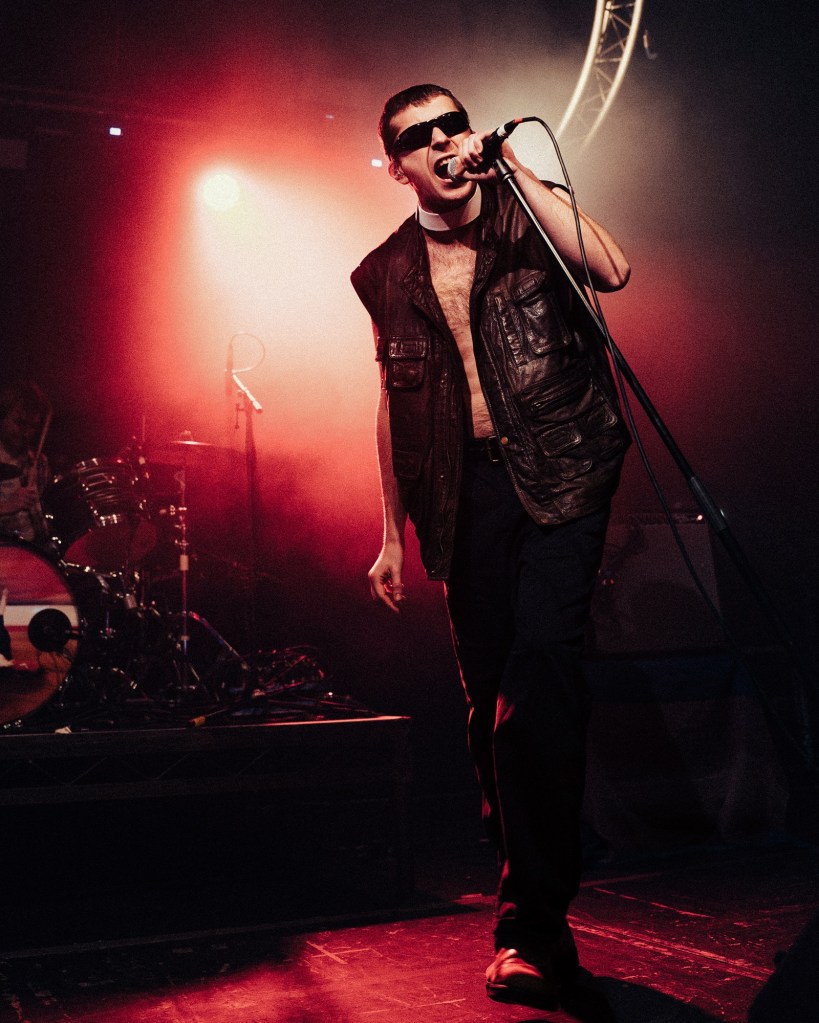
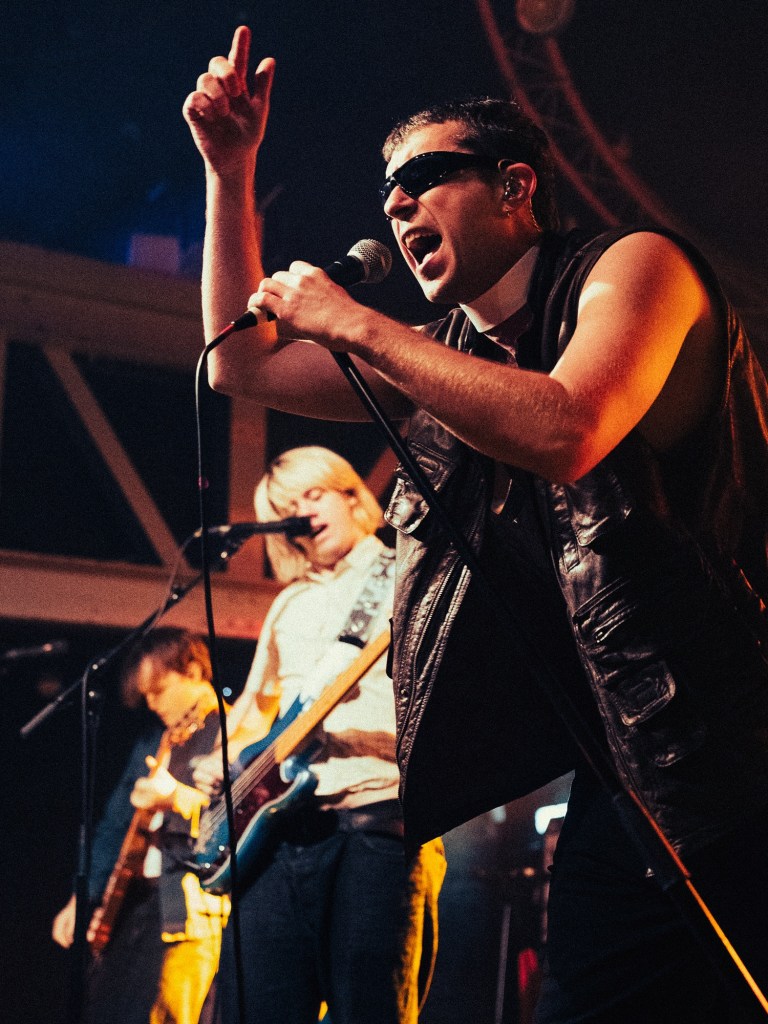
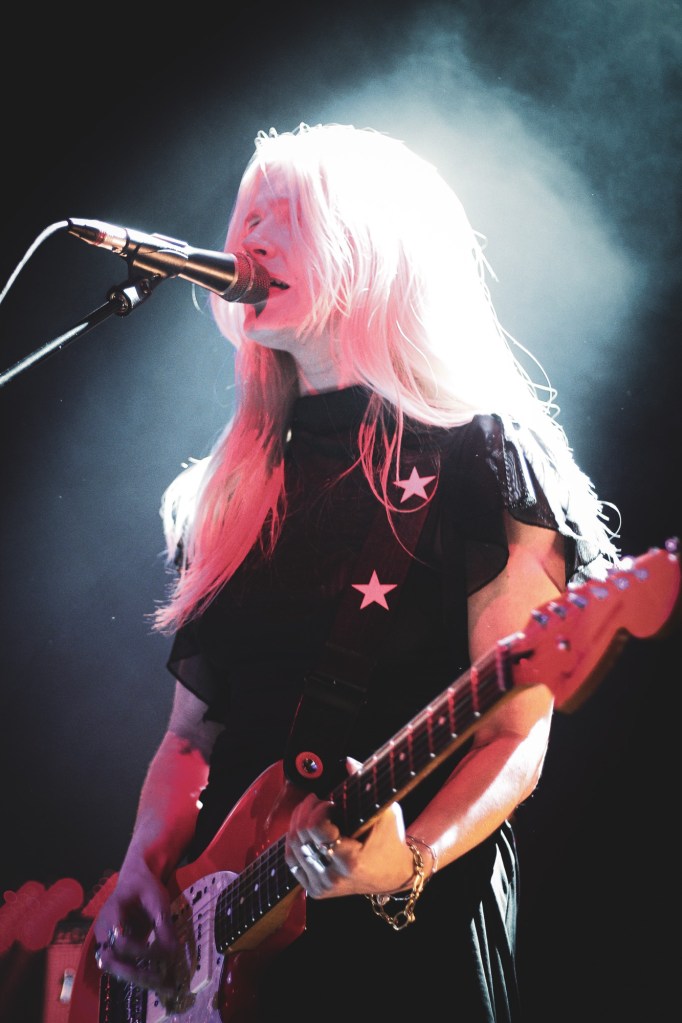
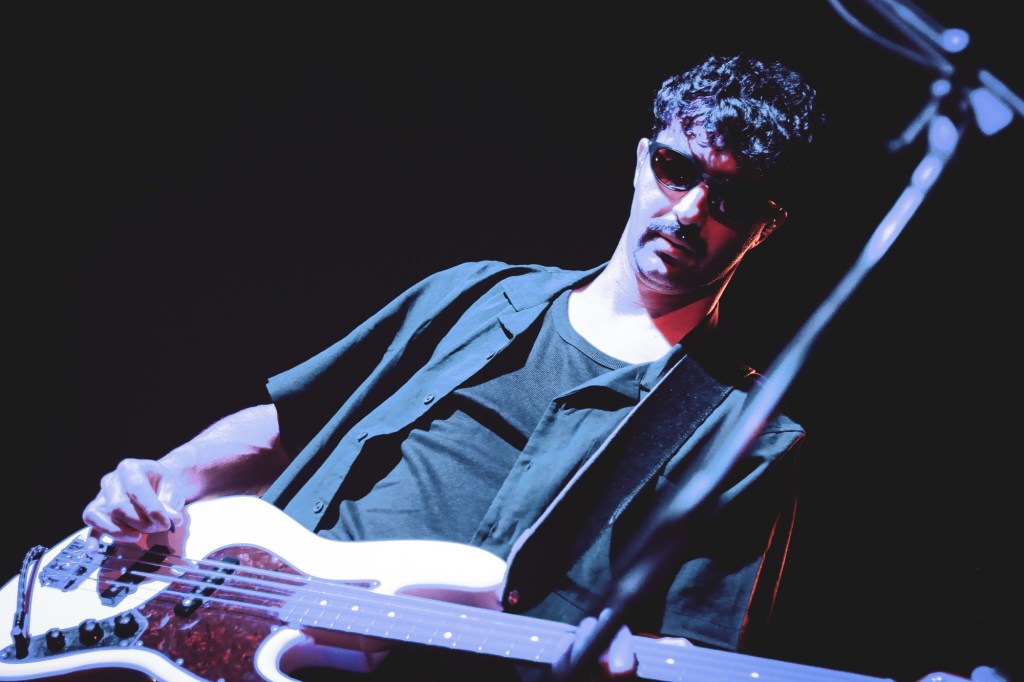
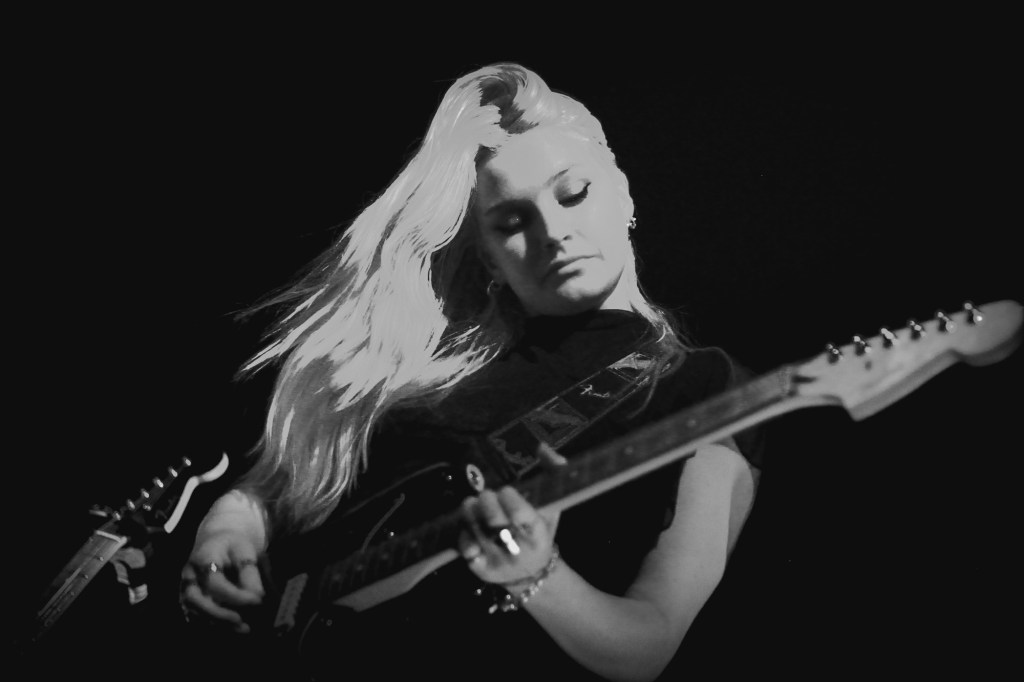
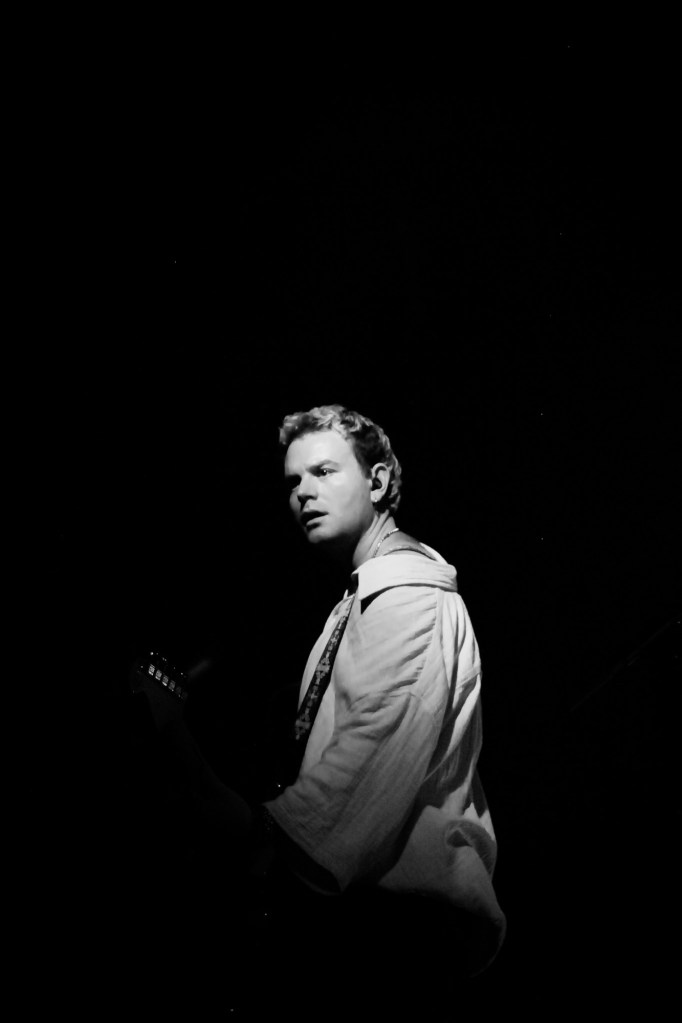
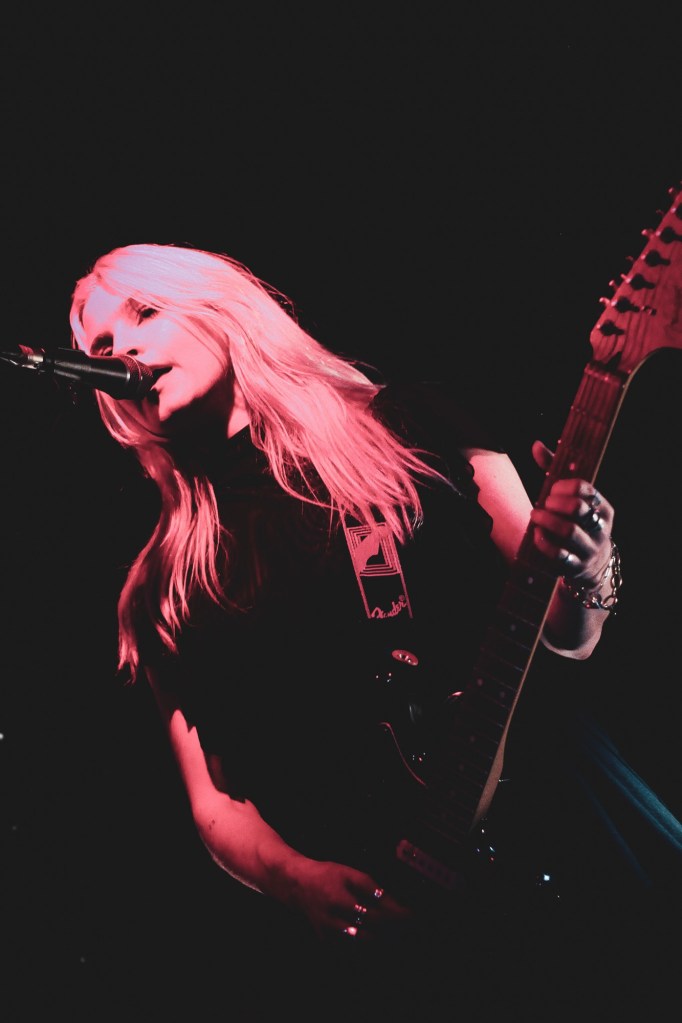
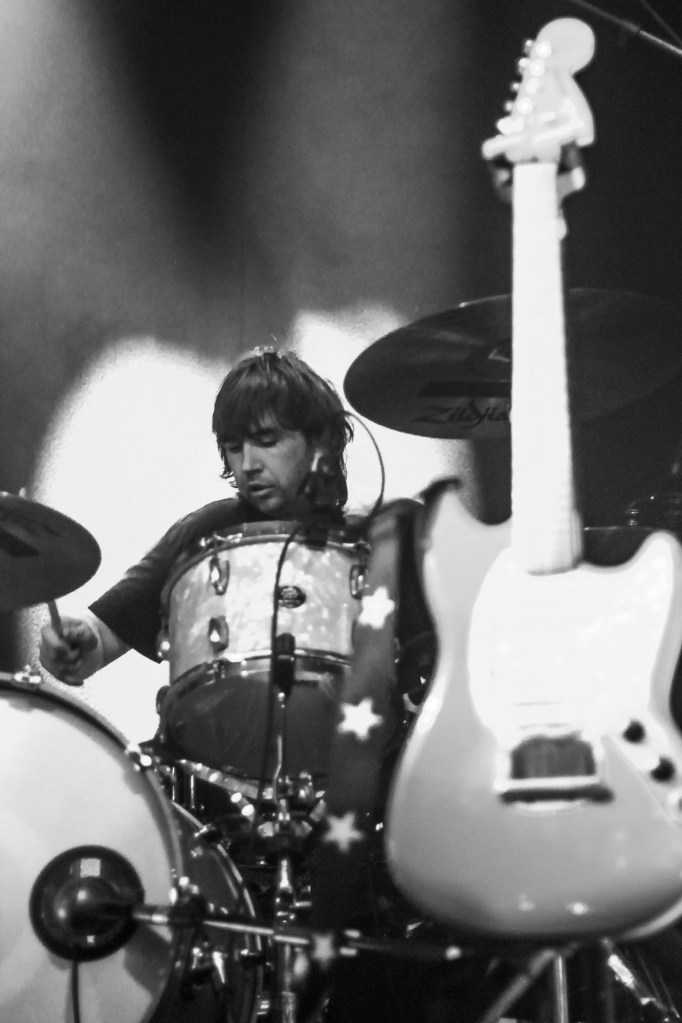
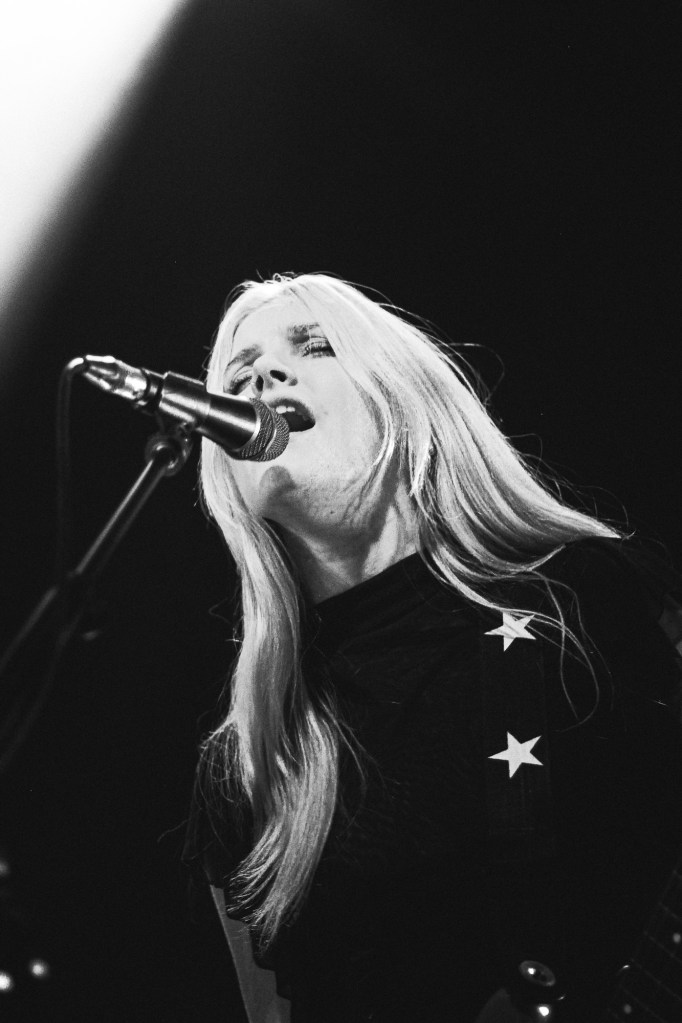
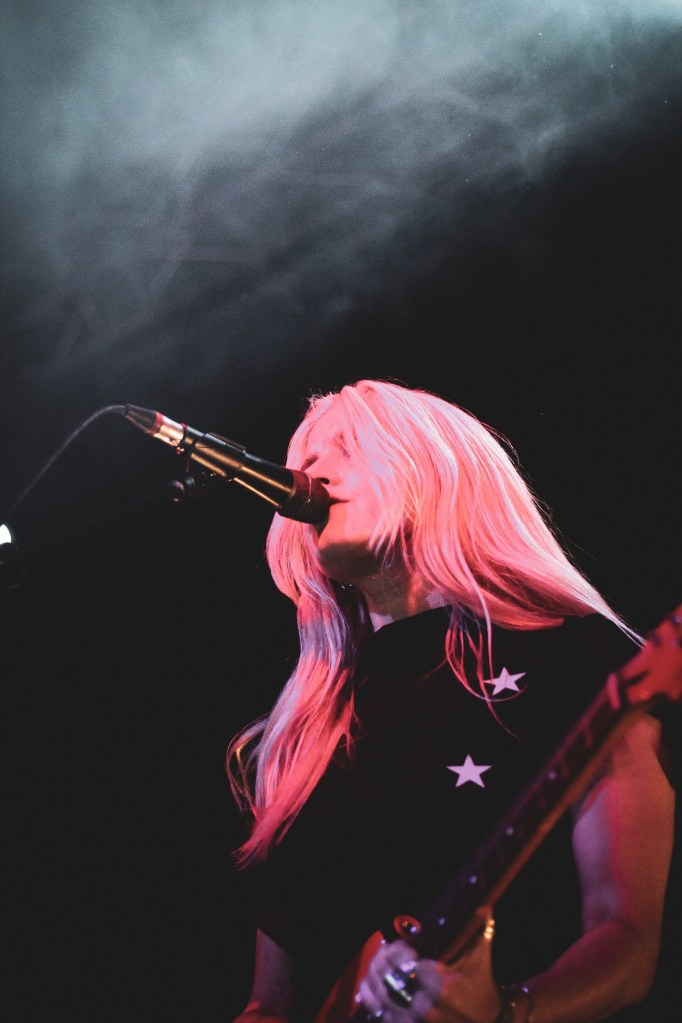
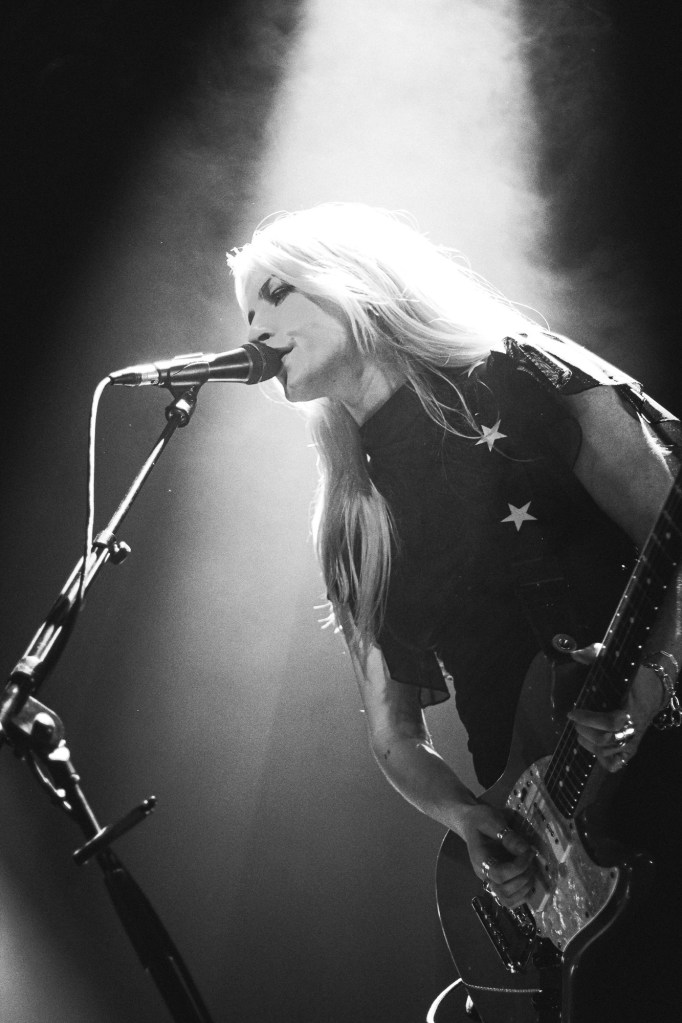
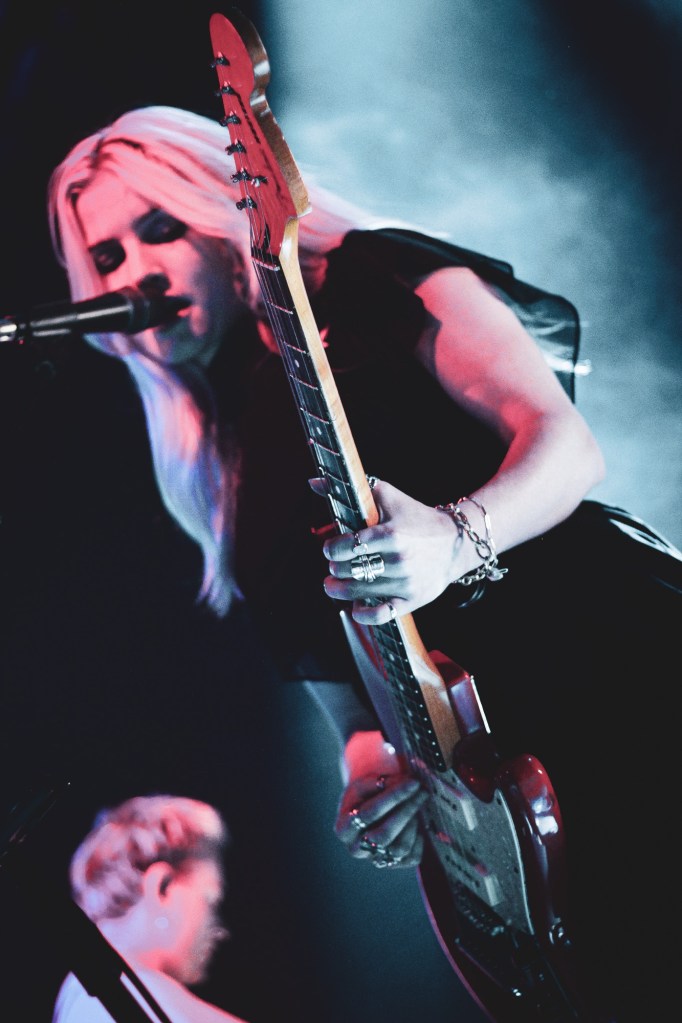
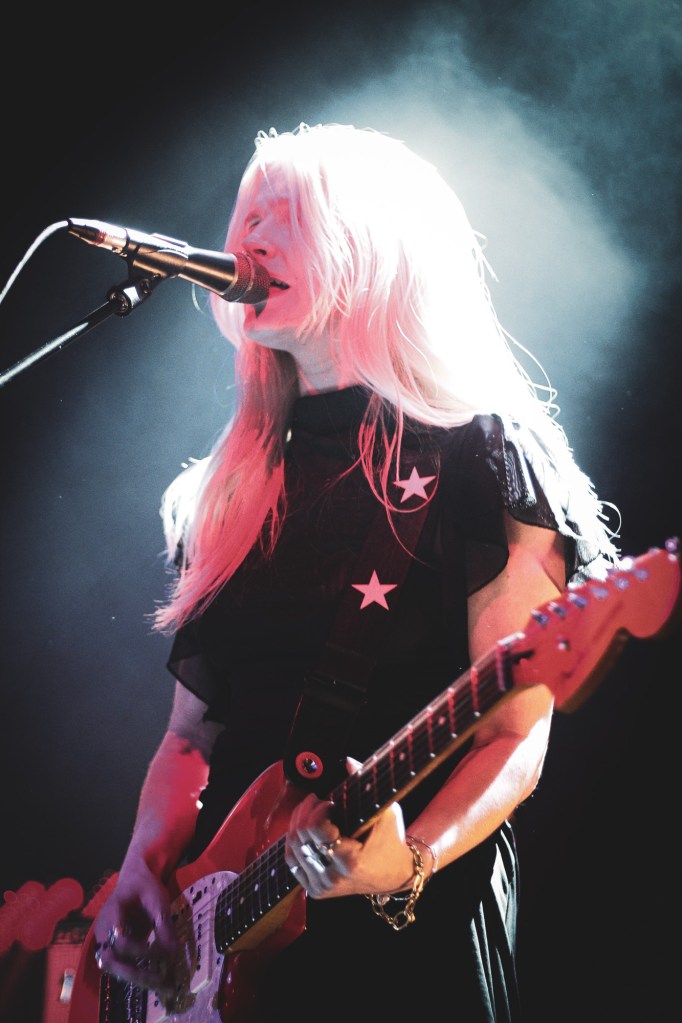
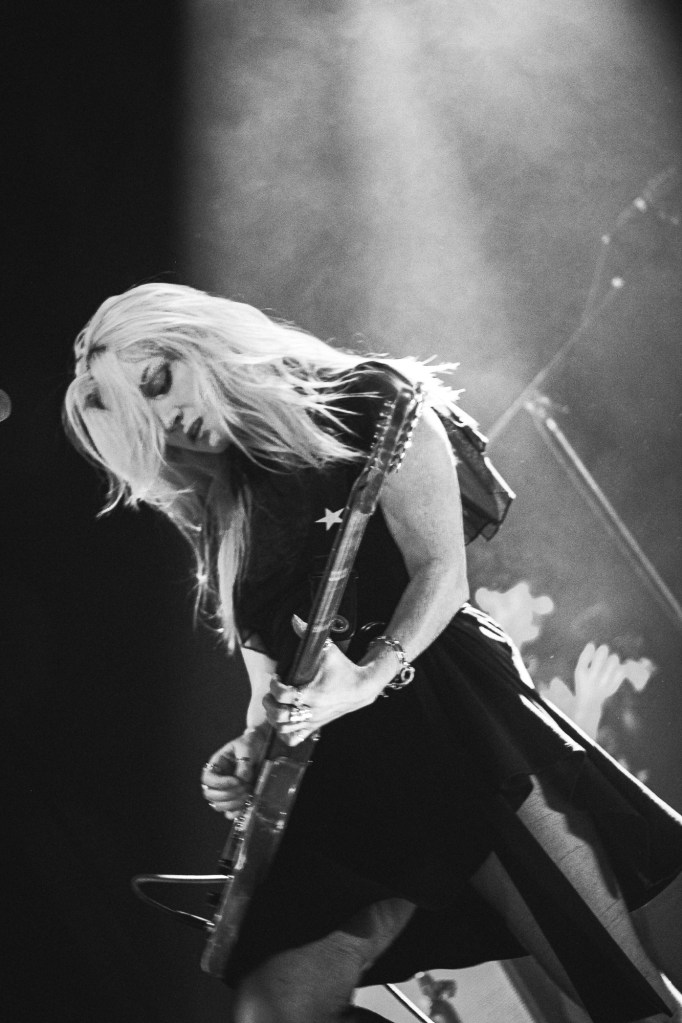
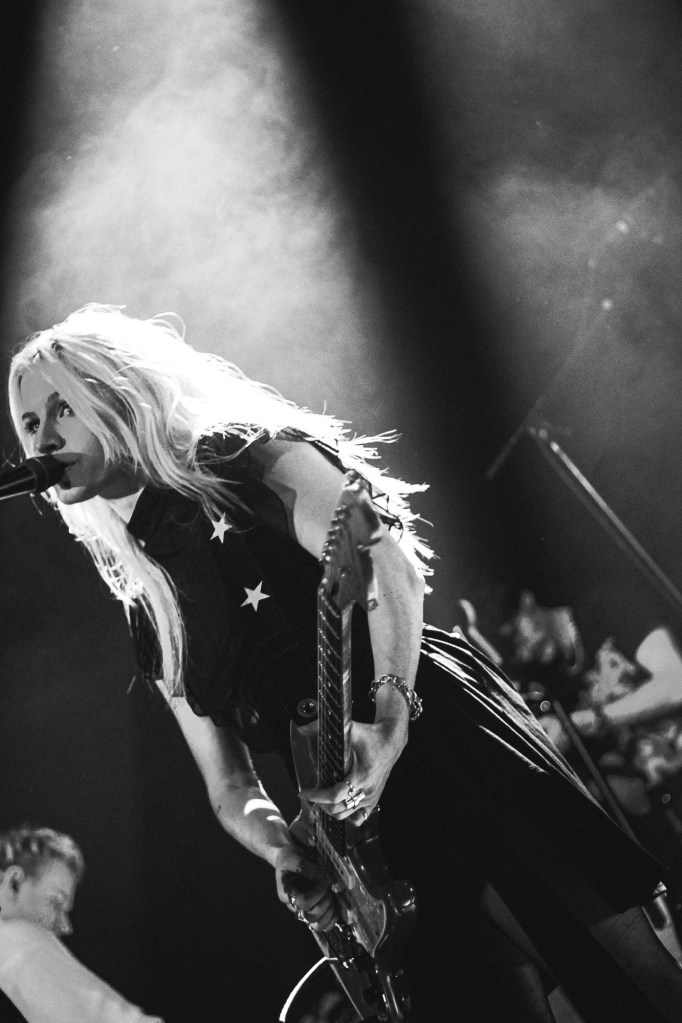
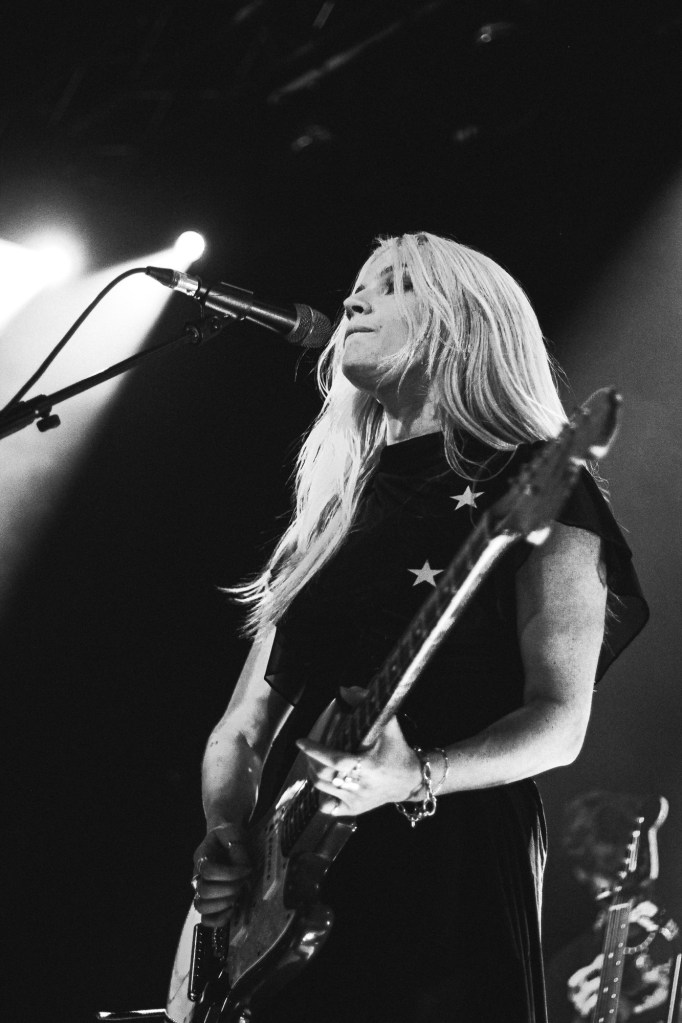
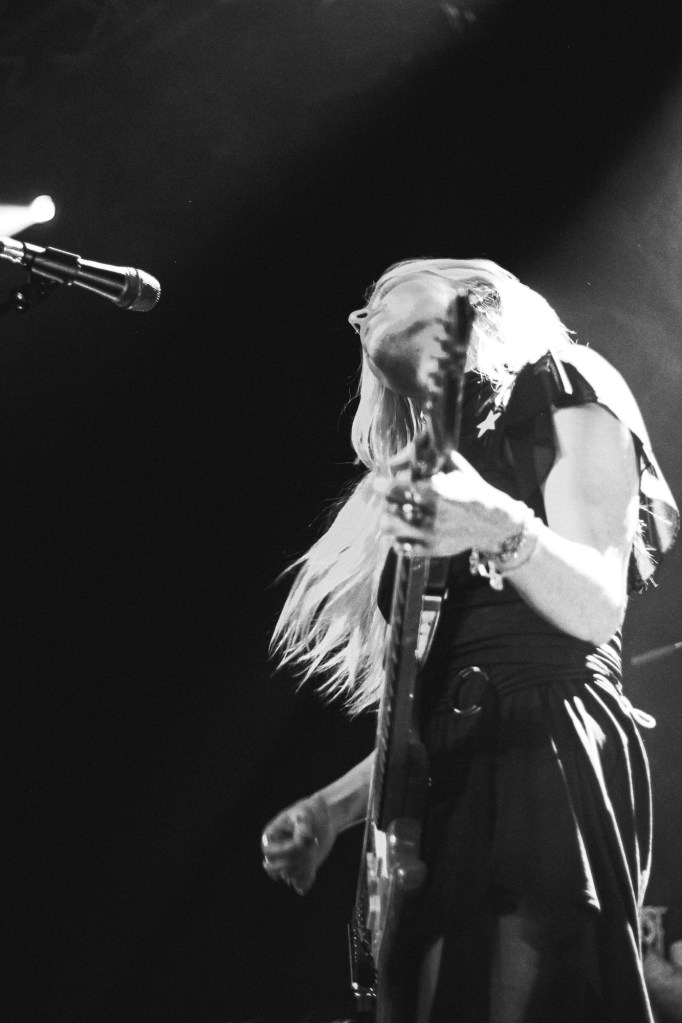
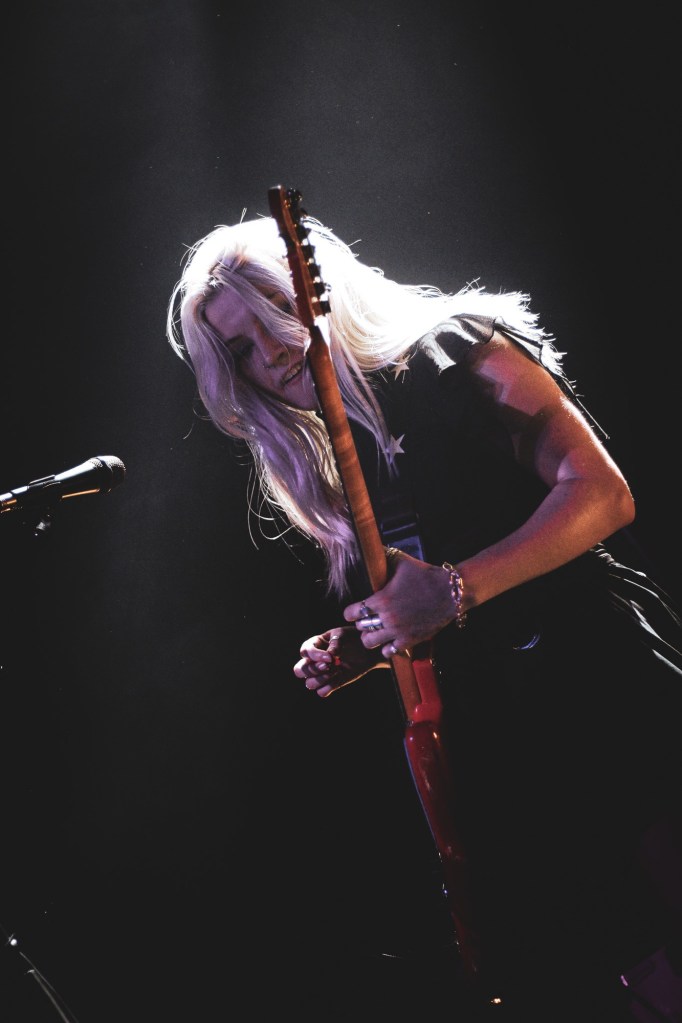
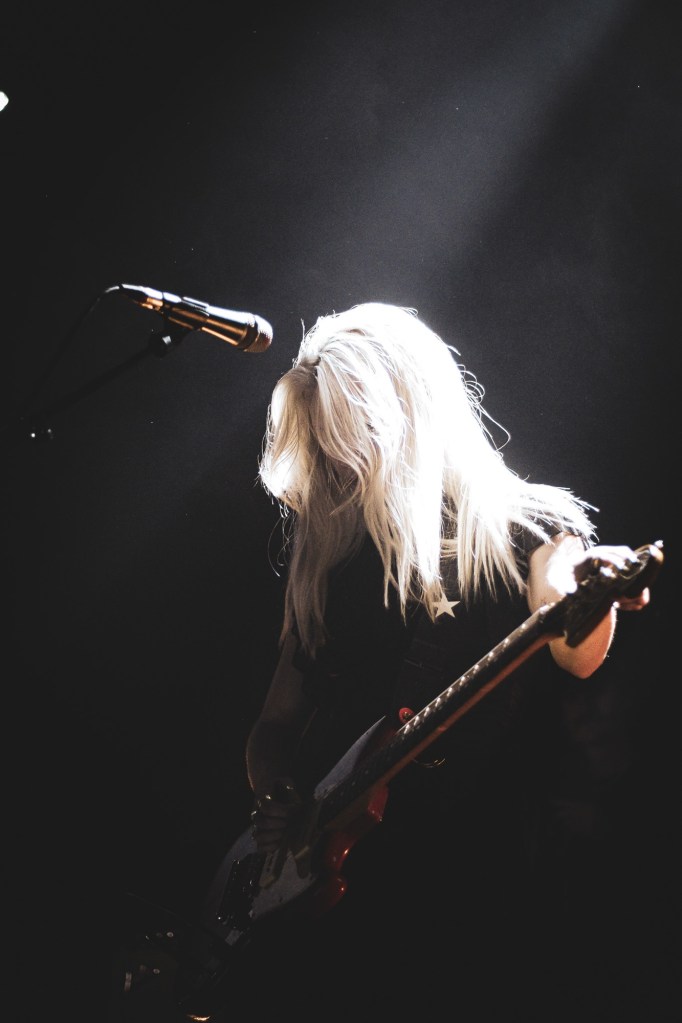
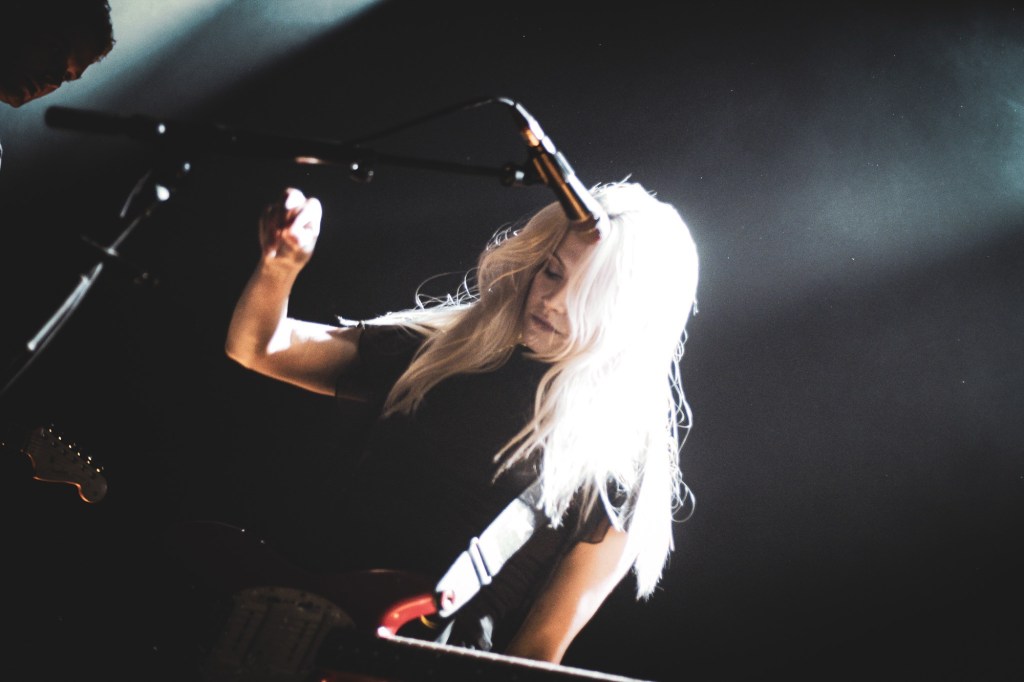
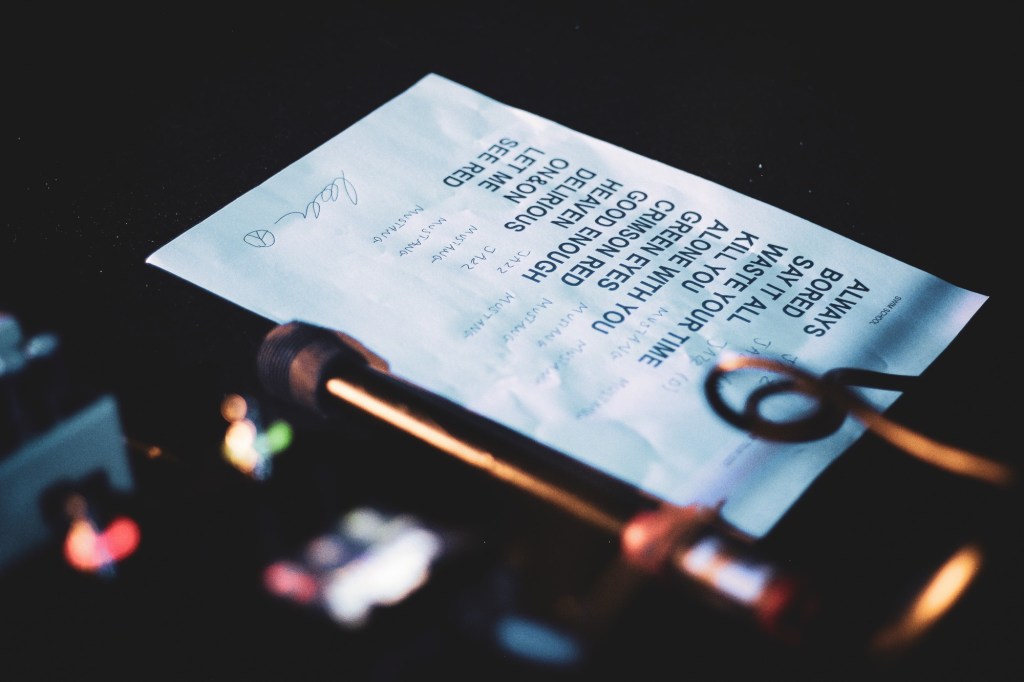
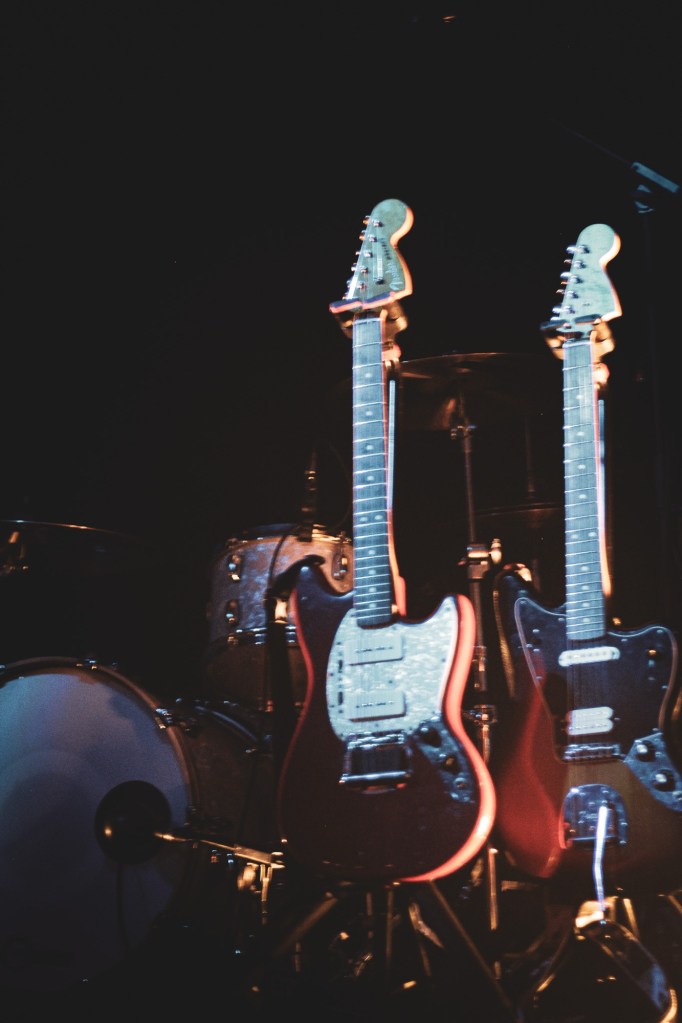
It’s a Sunday night on the eve of the autumn equinox, and I can think of no better place to see L.A. Witch than in the dark crypt that is Stereo. Yin and yang… sweet and sour… the fact that the band originally comes from a place so bright and sun-bathed in light makes me stop to consider how this music can come from such a place. Music seemingly made at night… made for the shadows.
Live, the music is hypnotic, entrancing and incredibly seductive. Dark layers of ethereal vibrations engulf your body like a shield protecting you from the barbs of life. Themes of love and desire that are at the same time precariously balanced on the edge of disaster.
In their earlier form, L.A. Witch very much reminded me of Mazzy Star,The Brian Jonestown Massacre and other garage-psych outfits such as Kurt Vile.
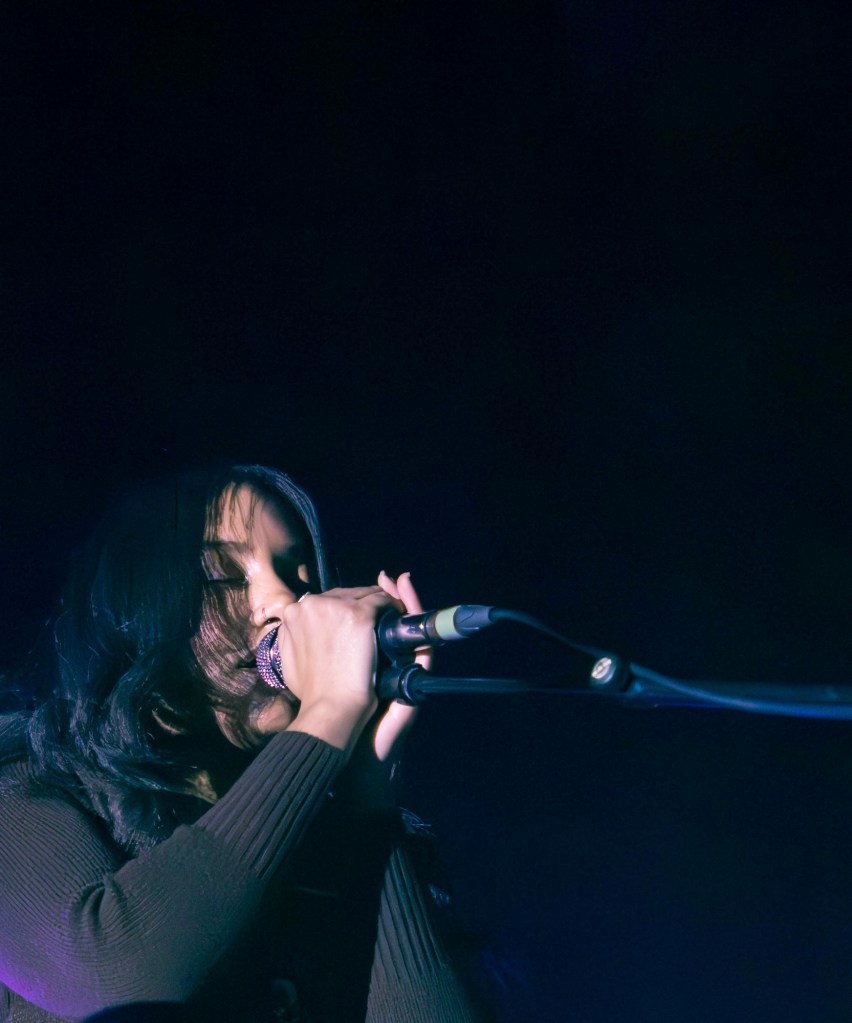
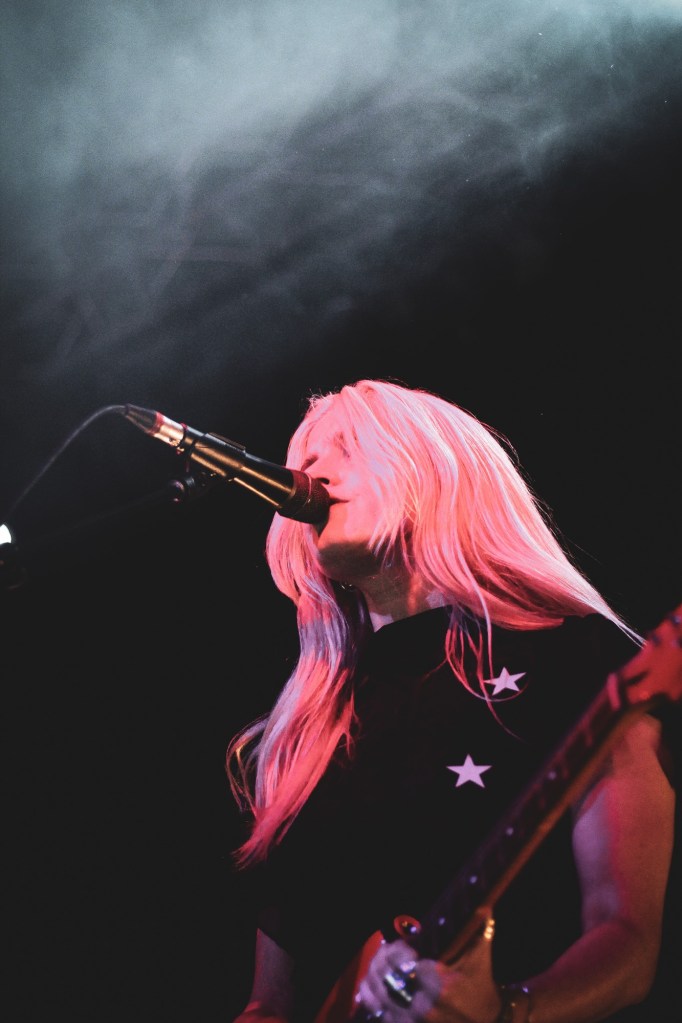
The new album DOGGOD is different, and that reflects directly in this incredible gig scenario. Uniquely individual, intense and yet laid-back. Heartfelt, behind-the-beat vocals that are euphoric and yet almost accusatory… romantic storytelling… yet almost pleading.
The evolution of the band is no doubt due to Sade Sanchez now being based in Paris and all that that may mean in terms of her life and environment. It may also be due to the five-year gap between albums. Whatever the reason, the transformation is arresting.
As you would expect, the magnificent new album features in its totality and yes, thankfully, there is still space for older tracks like I Wanna Lose, which remains an essential milestone. To hear that riff live is almost a devotional experience.
New songs Icicle, 777 and Lost at Sea are huge. SOS is just incredible—listen to the lyrics and you will understand: such desire and pleading cloaked in confused optimism.
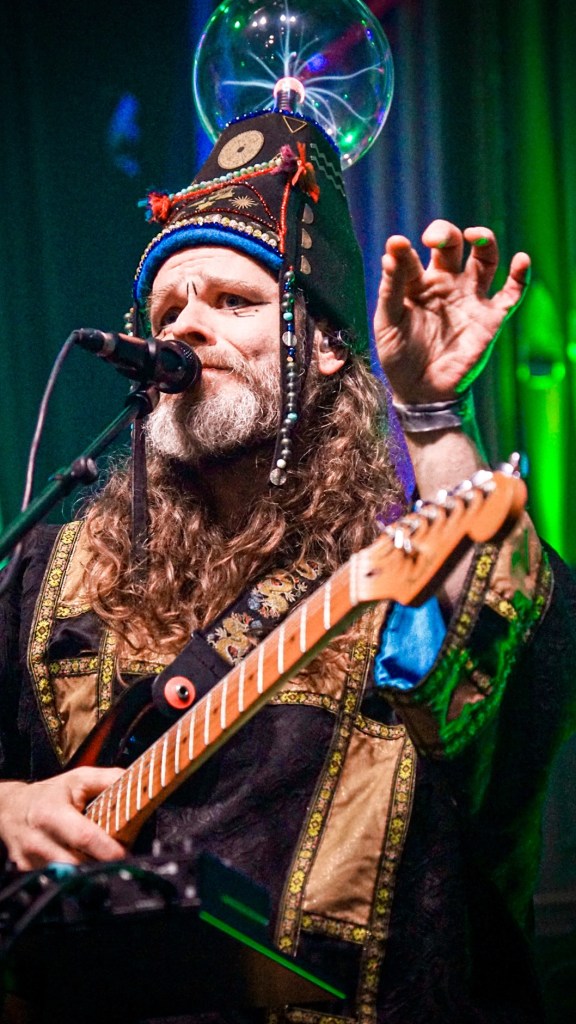
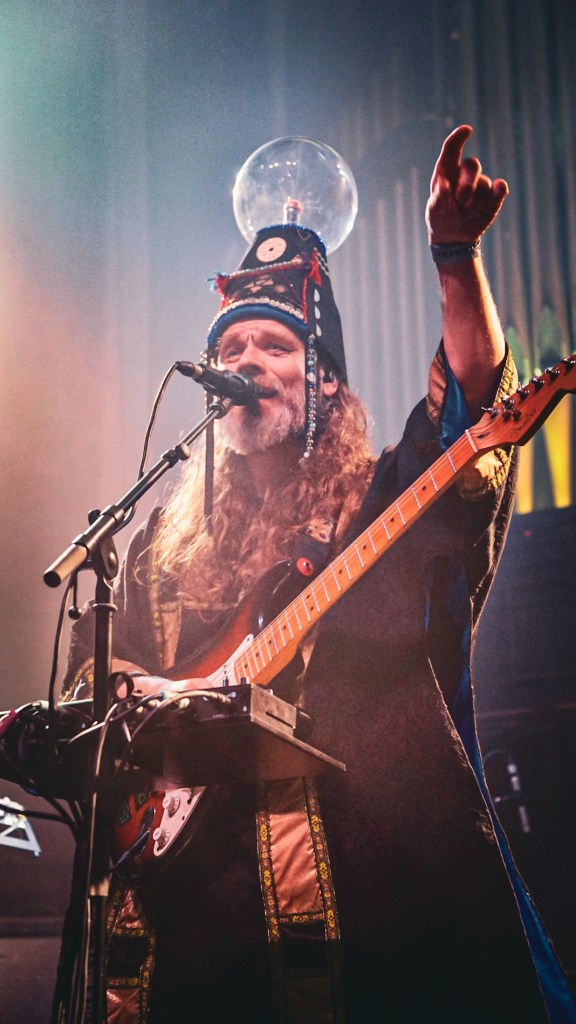
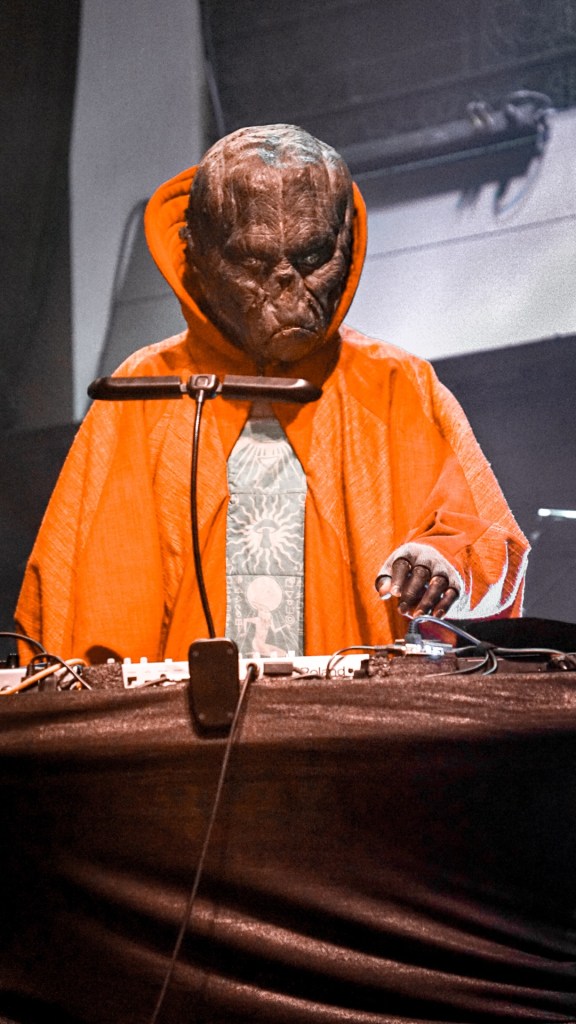
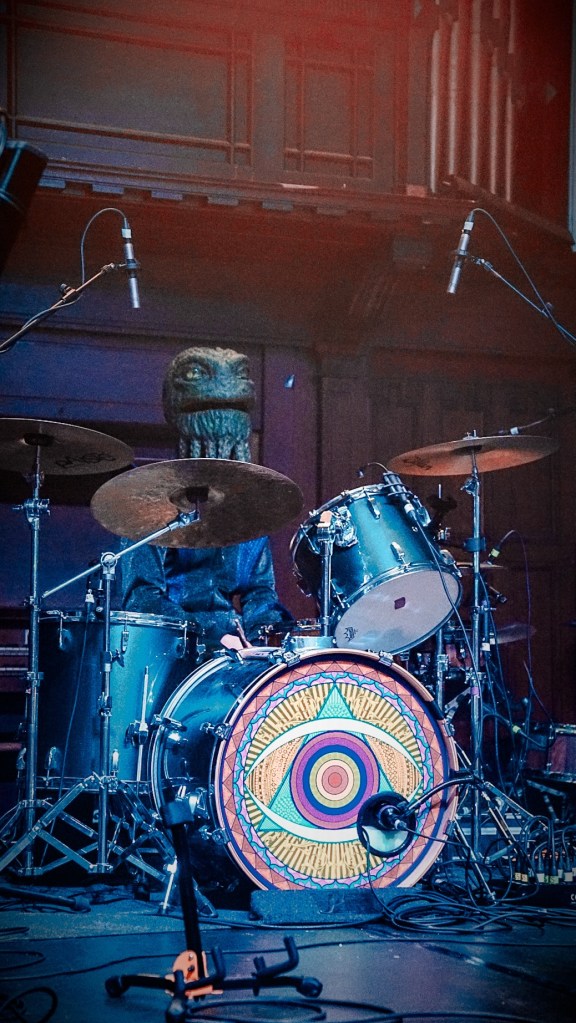
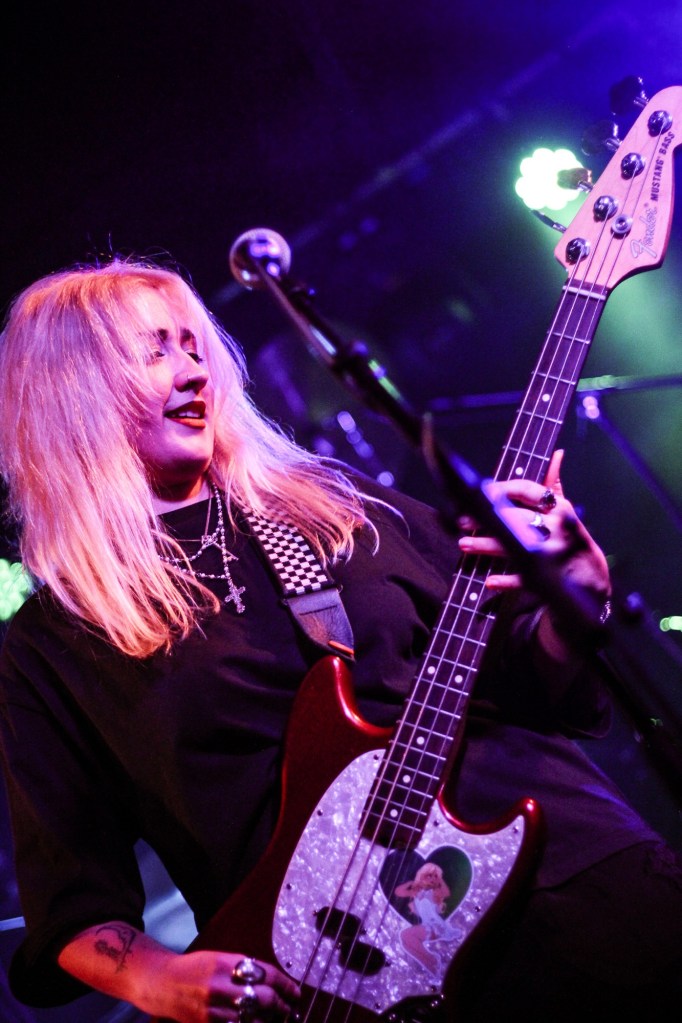
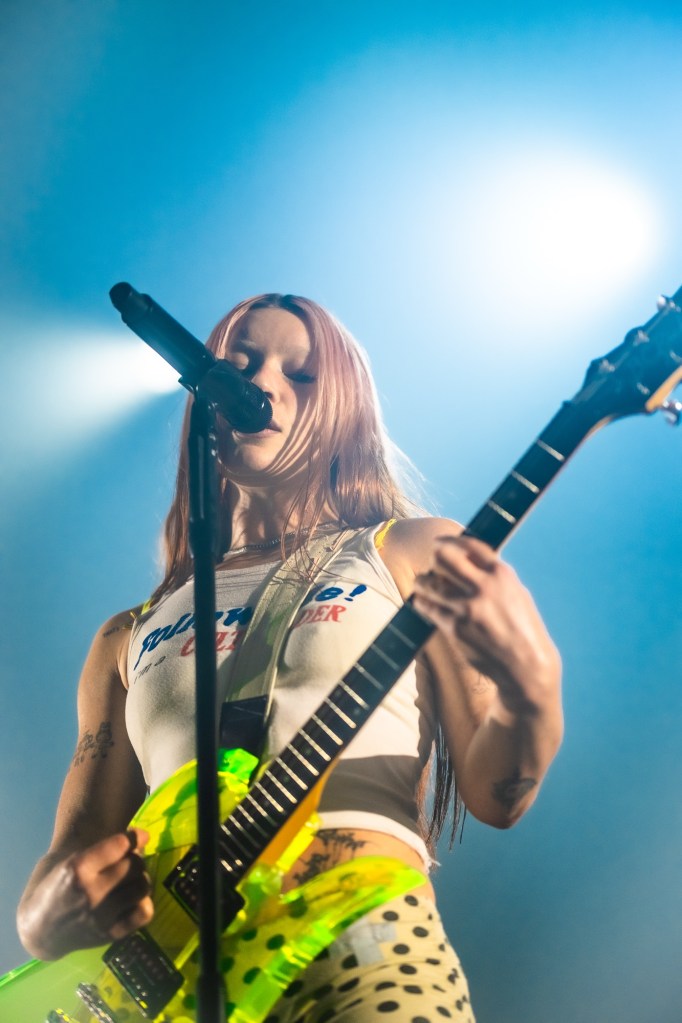
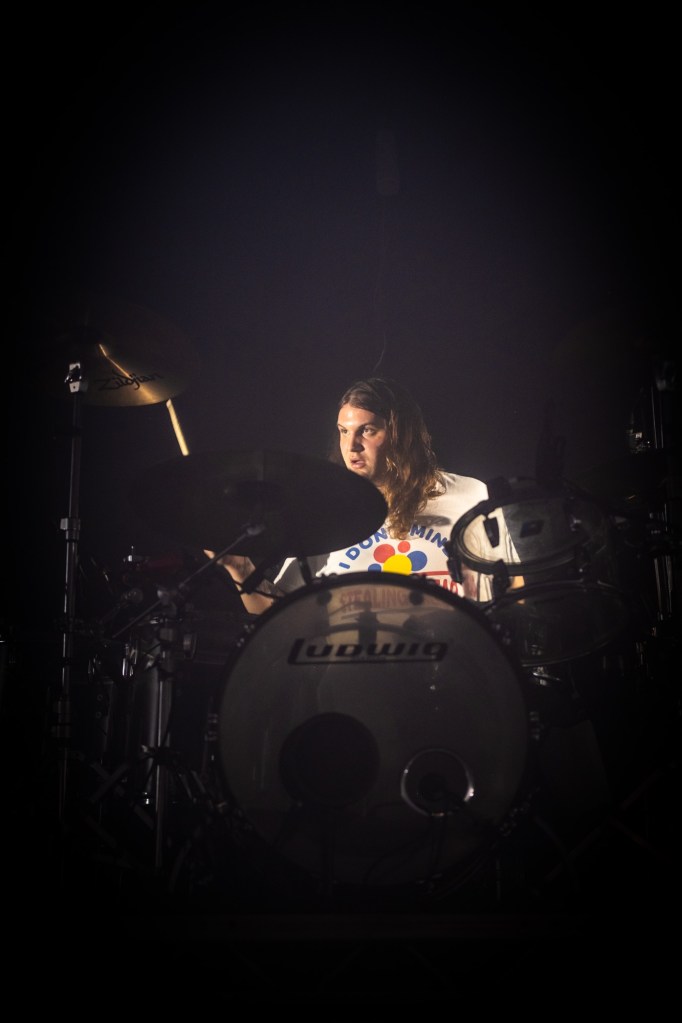
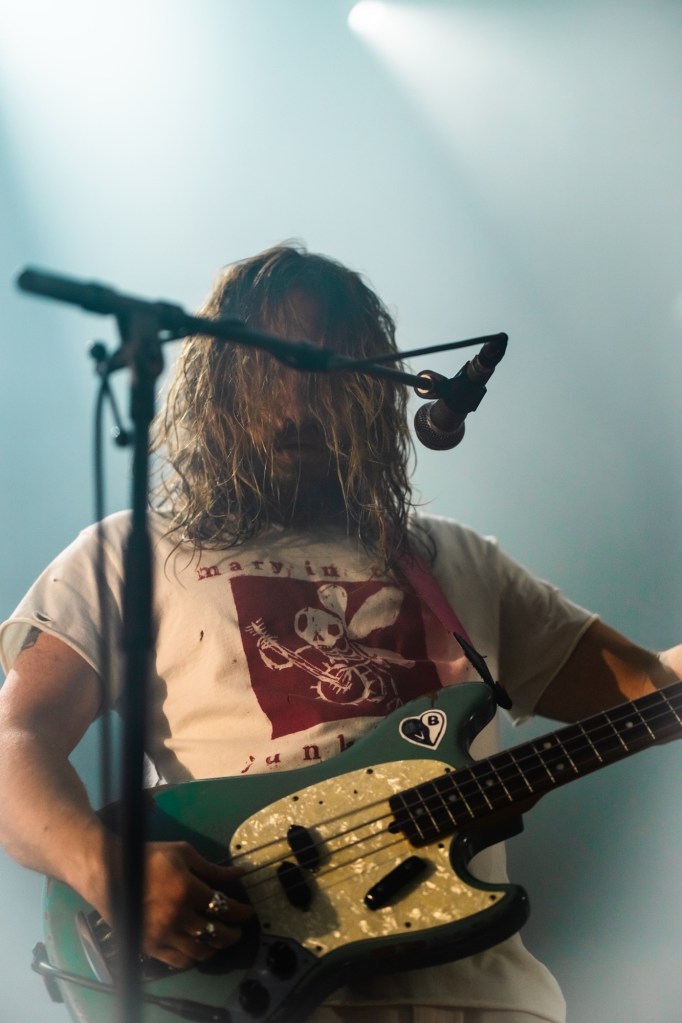
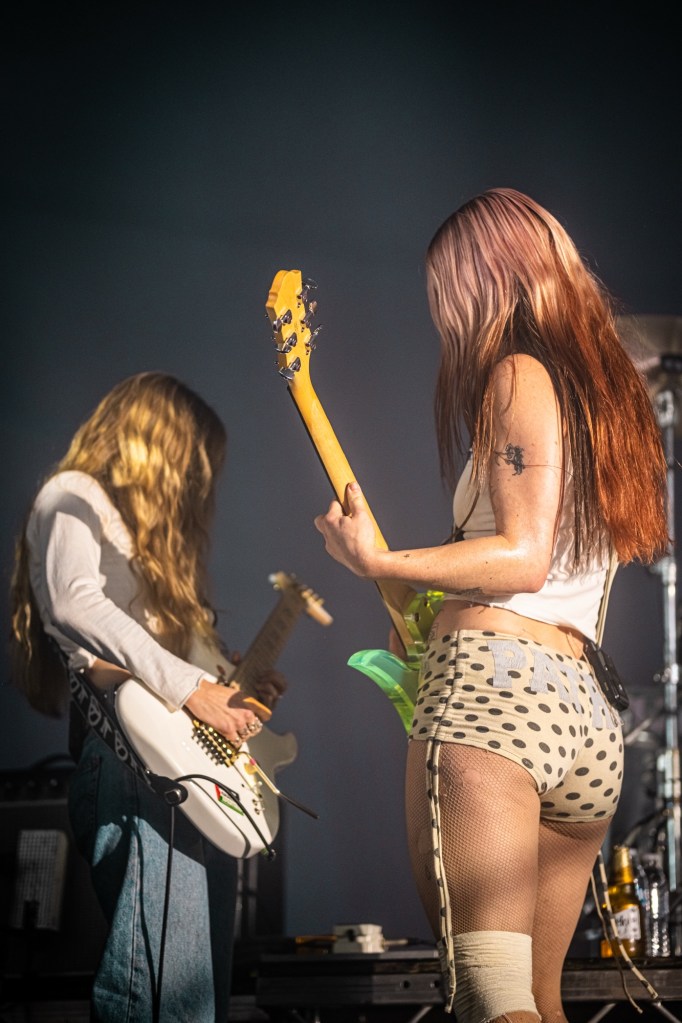
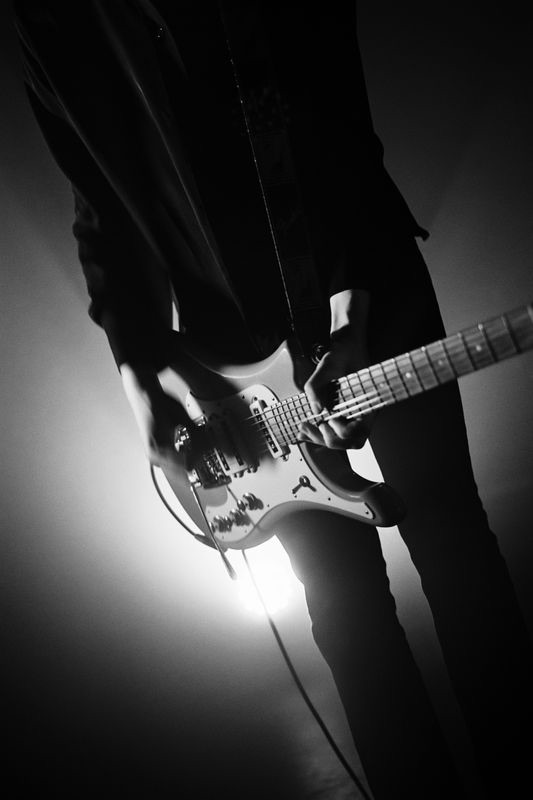
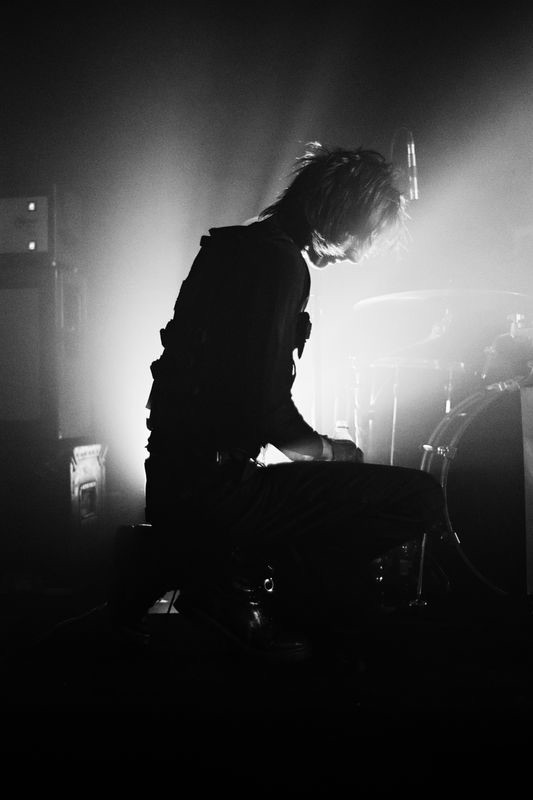
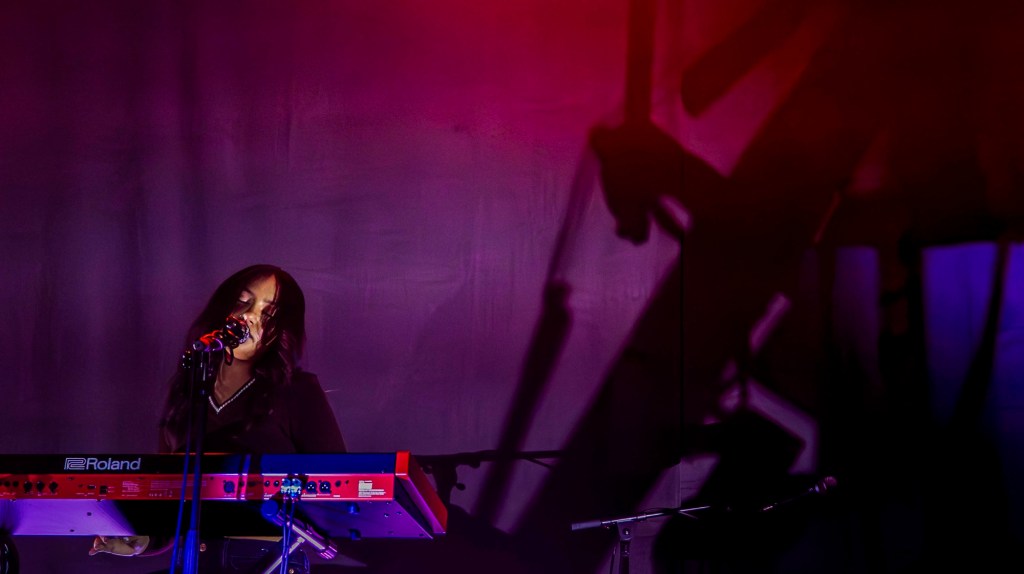
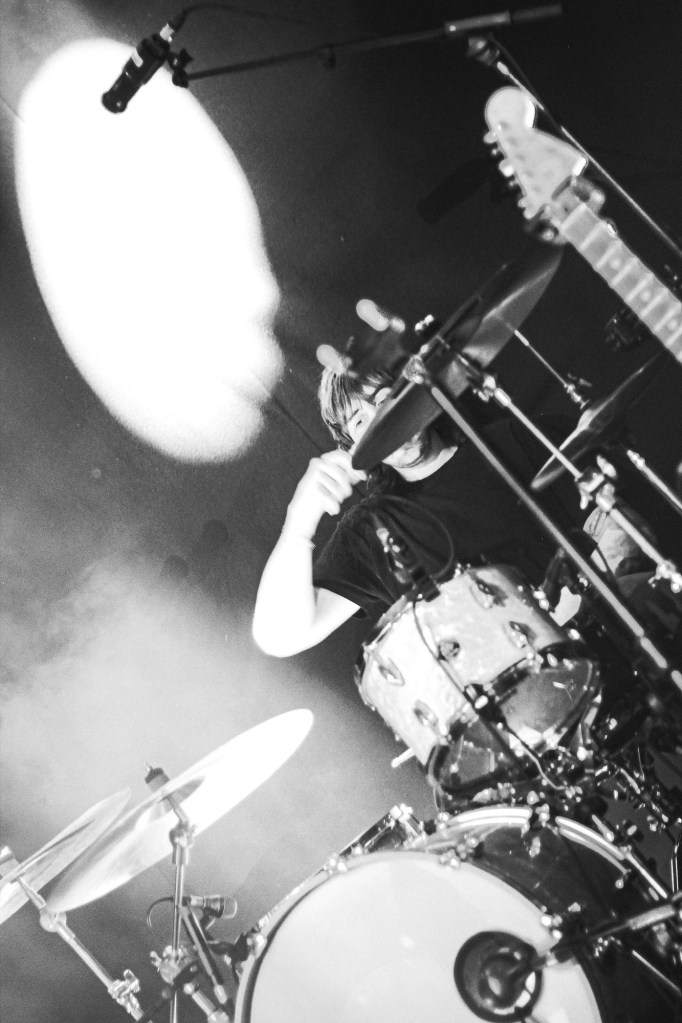
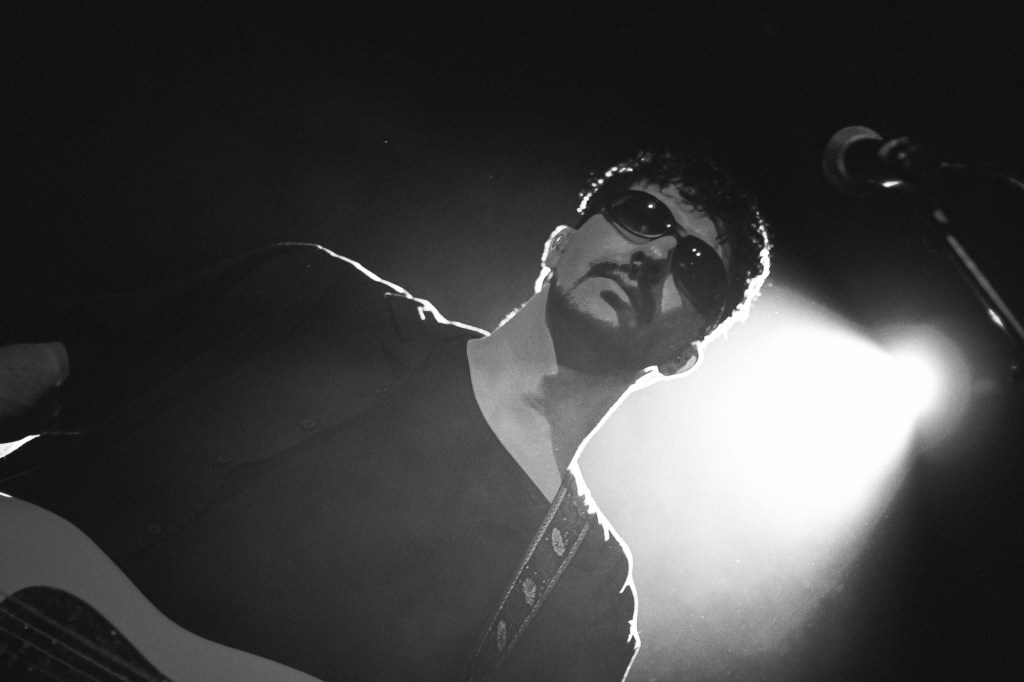
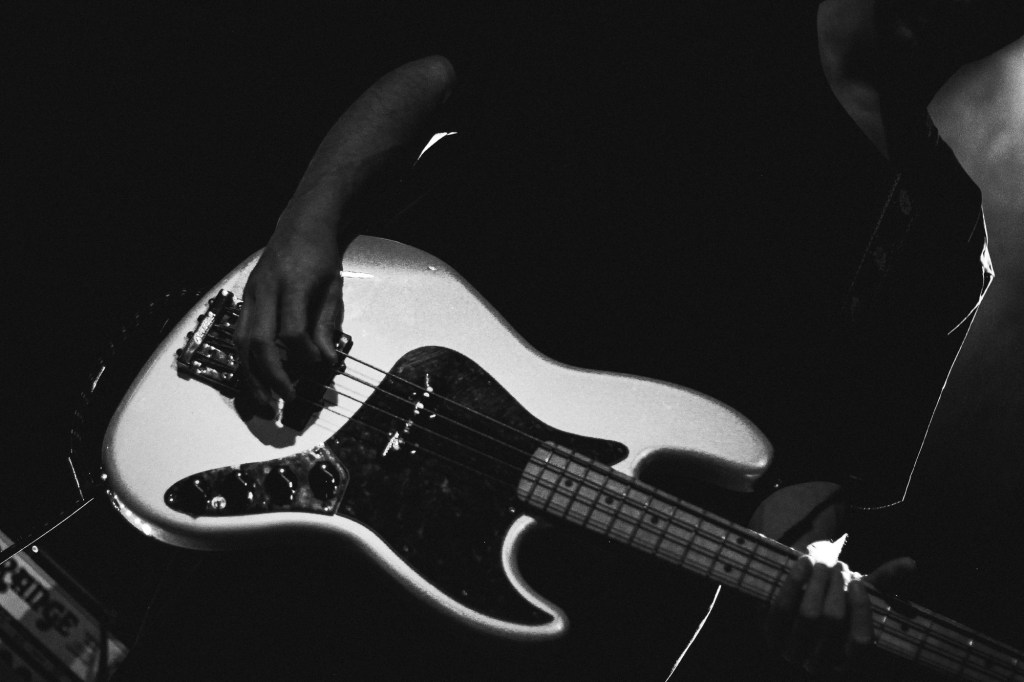
The mainly back-lit stage at Stereo surprisingly lends itself perfectly to the shadowy, gothic feel of tonight’s show, and the mix of very minimal instrumentation fills the room with waves of sound that have space, intensity and menace. Sade’s seductive Vox rig is perversely bewitching and the riffs created timeless. Ellie’s singular drumming and Irita’s bass are not only a lesson in how to play but also when to play. All of this is augmented with shimmering synth and guitar provided by tour buddy Tara. Such an incredible performance… utterly mesmerising.
The palindrome title of DOGGOD sums up the whole experience and is without doubt explicit in its intent. An extraordinary gig from start to finish, challenging human themes of life, love and ever-present tragedy.
As one of the lines goes: “I’m not alone or afraid to die.”
SWG3’s Galvanizers was already packed when I arrived for this massive show. Three supporting acts and a long-awaited return to Glasgow: Basement. The night promised to be long, full of great music, and plenty of fun.
Opening the night, Midrift delivered a set that worked perfectly as a prelude to what was to come. Their tracks eased the crowd in gently. Though still a relatively young band, they drew the audience into the right atmosphere and set the tone well.
After a short break, Dynamite hit the stage and the energy shifted immediately. Launching straight into hardcore intensity, they pushed the pace with aggression, physicality, and a raw, visceral sound. Their set was loud, urgent, and had the pits going early.
The final support, Anxious, came on with Bambi leaning into emotion and powerful guitar hooks. They poured life into their songs, and their stage presence made it clear they wanted to leave a lasting mark. By the end of their set, the audience felt more than ready for the main event.
From the moment Basement emerged, it felt like a homecoming. Their setlist wove through the band’s discography — early favourites, highlights from Colourmeinkindness, newer tracks, and big singalong moments. They opened with Are You The One, Promise Everything, and Aquasun — leaping across the stage and instantly pulling the crowd into mosh pits and waves of crowd surfing.
Songs like Earl Grey, Spoiled and Crickets landed with real force. The set had a sense of structure: starting with familiar reassurance, building into heavier and louder moments, easing off for breathing space, and closing with huge singalongs.
Basement even previewed a couple of new tracks. Both were warmly received, suggesting the band are evolving while holding on to what makes them special. That communal feeling was there throughout, but when Covet finally arrived it became more than just a song — it was a shared celebration.
Basement’s headline show with Midrift, Dynamite and Anxious at SWG3 felt like more than a concert — it was an affirmation. After years away, Basement aren’t just returning; they’re reminding people why their music matters, supported by acts that both complemented and contrasted them brilliantly.
At the sold out Barrowlands, Black Country, New Road strode on like a troupe of misfits who’ve stolen the keys to a medieval carnival and refuse to give them back. They stride confidently on stage to “Downtown” — a Petula Clark bauble turned funereal dirge, like your nan’s favourite 45 dragged down an alley and taught how to swear. From there the night lurched gloriously onwards: “Two Horses” as a runaway carriage, “Salem Sisters” hissing like a coven in the wings, “The Big Spin” rattling as if the Whacky Races had been restaged at a wake.
What’s striking is not the theatre — we already knew this lot could stage-manage their own apocalypse — but how far the theatre has metastasised. Once upon a time you could call them folk-jazz with delusions of grandeur. Now it’s as though the grandeur has eaten them alive. They’ve become a full-blown masque: operatic, grotesque, gleefully excessive. The harmonies, so precisely timed, are less sweet than sinister — a lullaby sung by siblings who’d gladly sell you to the wolves but would never sell out each other.
The absence of Isaac Wood — remember him? the band’s one-time talisman who fled just as the world anointed him their saviour — has become their greatest gift. No more messiahs, only conspirators. Tyler Hyde on bass, May Kershaw behind piano and accordion, Georgia Ellery wielding violin like a whip, Lewis Evans coaxing beauty and bile from his sax and flute, Charlie Wayne battering the kit into submission, Luke Mark on guitar stitching the whole thing together. No leaders, just a crooked parliament of sound. And thank Christ for that — the monarchy nearly killed them.
The new record, Forever Howlong, provides almost the whole set. They’ve torched the back catalogue; nostalgia is for the weak. Instead we get “Besties,” where a line like “Don’t waste your pulse on me” manages to feel like both a plea and a warning, a hymn to friendship as the last currency when everything else collapses. “For the Cold Country” howls like grief driven on a sleigh. And right in the middle they dare a cover: Big Star’s “Ballad of El Goodo,” announced with a shrug and played with such aching reverence that even the Barras, usually more interested in their pints, stood still. “It’s one of the greatest songs in rock and roll history,” they muttered — and for once no one in the room thought otherwise.
The night ended with “Forever Howlong,” a finale so stark it felt like watching your own pulse stop. The band layered flutes, accordion, whispered harmonies, until the whole room seemed suspended between prayer and panic. Then silence — heavy, stunned. This isn’t just a band playing songs. It’s six people refusing to die of heartbreak, and dragging us with them.
There’s a temptation to call this Black Country, New Road’s final form, as though they’ve completed some video-game level. In truth it’s better: they’ve burned their own blueprint and rebuilt from the ash. They are not who they were, and they never will be again — which is why they’re so bloody vital now. It’s friendship through fire, beauty wrung from disaster, a Normal People soundtrack played by demons in mourning dress.
If you want comfort, look elsewhere. If you want proof that music can still cut you open and make you grateful for the wound, this is it.
The annual fest of noise, CORE, lived up to expectations. A weekend of headbanging, two-stepping and crowd surfing along to a large variety of bands across the two venues: Woodside Halls and The Hug & Pint. I went along to capture and enjoy the Friday and Saturday.
Friday started with a bang at The Hug & Pint, the venue packed in anticipation for God Alone from Cork, Ireland. Their math-rock melodies brought the high energy needed to kick off the fest.
Over at Woodside Halls, the main stage began with doom metal outfit OMO, who are no strangers to the CORE stage. The vocalist, dressed in a striking bright red habit, was a comedic juxtaposition to their damning sound, making for one of the most memorable sets of the weekend.
The melodic three-piece Helms Alee followed, their complex and hypnotic compositions entrancing the crowd. With vocals shared by all three members, the result was a rich sound blending harsh and soulful moments.
Stoner rock legends Torche closed the evening on an upbeat and ferocious note, returning after a three-year hiatus. This was met with a joyous reaction from the crowd, with many fans leaving with big smiles on their faces.
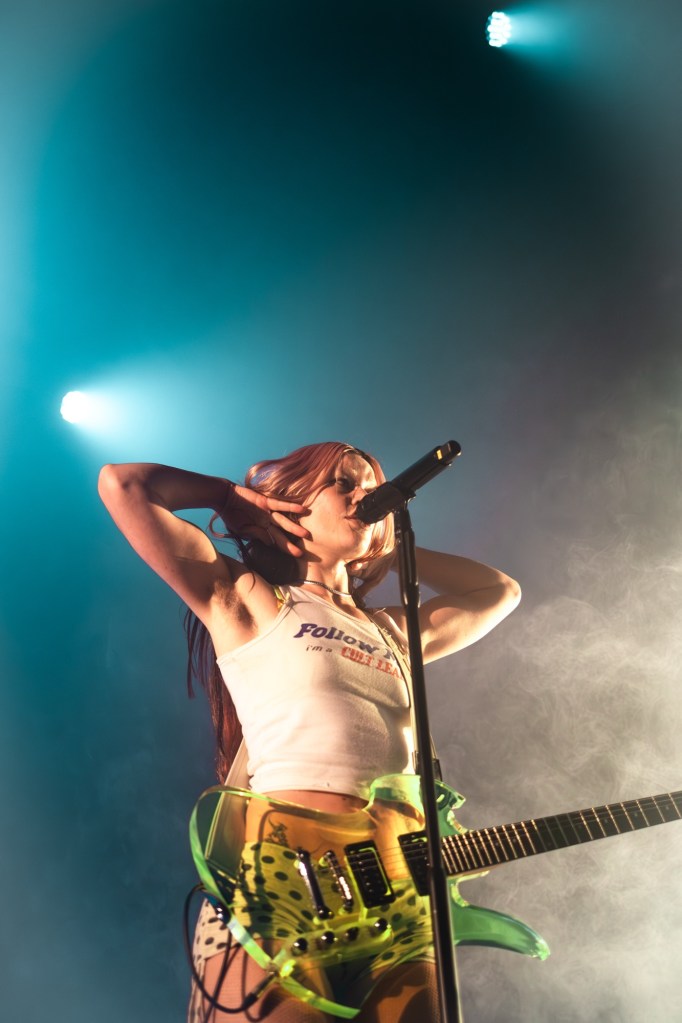
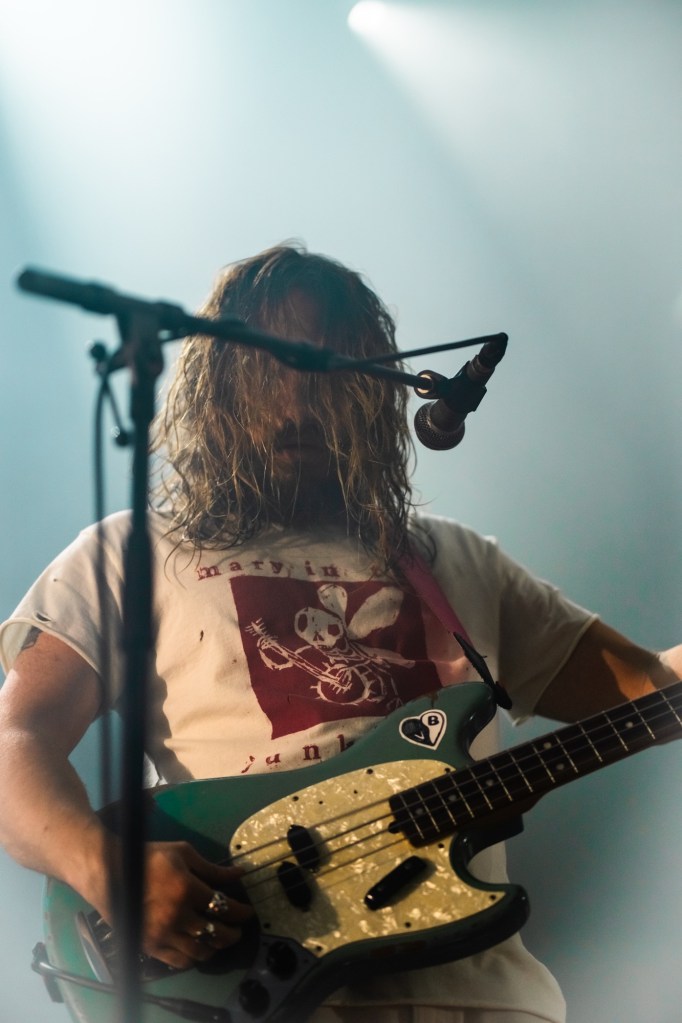
Day two brought an eclectic mix of noise, with artists from Glasgow’s hardcore scene taking the forefront early in the day. Gout delivered a particularly deafening and angry performance at The Hug & Pint, setting a high bar for the following acts.
Shooting Daggers brought the energy to Stage 2, flying the flag for female and queer fans. Their hardcore riffs and beatdowns, combined with punk-like vocals, fuelled a frenetic set. Encouraging women and queer fans to the front to dance, this was not men’s time.
The two-piece hardcore noise band Moni Jitchell opened the main stage with their eccentric performance style and ferocious guitar work. A highlight of the set came when vocalist Grant Donaldson left the stage to perform among the crowd.
One of the most unique performances came from noise-rock band Ditz, a personal highlight on Stage 2. Turning off the main lights and letting only dim natural light in from above set the mood for a noisy yet emotional performance. The vocalist casually swung the hanging pendants and wandered through the crowd as if they weren’t even there, keeping everyone on the edge of their metaphorical seats.
Leeds hardcore favourites Pest Control kept the momentum alive on the main stage, following a strong and powerful set from fellow female-fronted band Roman Candle. Two-stepping and side-to-side pits carried on throughout Pest Control’s set, with fans grabbing the mic and crowd surfing from the stage. This energy perfectly set up melodic hardcore heavyweights Defeater, who closed the main stage with the ideal mix of singalongs and headbanging.
Saturday was a packed day, with a variety of artists across the two venues and three stages—many of whom I didn’t manage to catch at The Hug & Pint.
Overall, the two days had something for everyone. The energy across the weekend was fantastic, with many people reuniting with familiar faces and meeting new friends. The array of merchandise and vendors was impressive—there was even a vegan bake stall. Next year can only be bigger and better, with the exciting news of possible new venues. We’ll see what’s to come!
From the minute the first note is struck, the stage is laid bare.
A black hole, a rollercoaster ride with seatbelts firmly off.
Sublimely savage synth-punk outfit The Scaners beamed down to Sleazy’s from intercontinental space station Dept. 69… that’s Lyon, France to you, mes amis.
What a band. What a night. Utterly spellbinding and all-consuming. A full-throttle, intergalactic shot between your eyes – a musical extravaganza. Iggy × Devo. The Rezillos × early Roxy. Alien Nosejob’s long-lost sibling. Do you get the idea?
Ignore any preconceptions you may have regarding French music and their ability to “do” punk, or any variant of it. All but a few songs are sung in English, with the Gallic swagger adding an extra element of je ne sais quoi and Tabasco that is almost unrivalled.
The energy and drive of this band are impossible to describe or do justice to. Tonight’s standouts are without doubt newer songs such as Brutal City, Satellite Rain and No Return. So fast, so frantic, so brilliant.
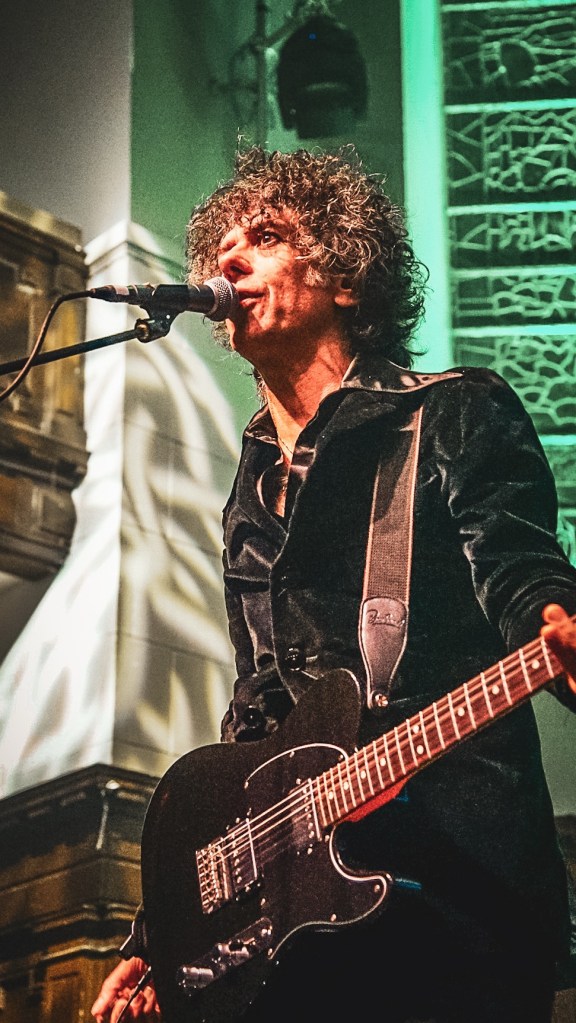
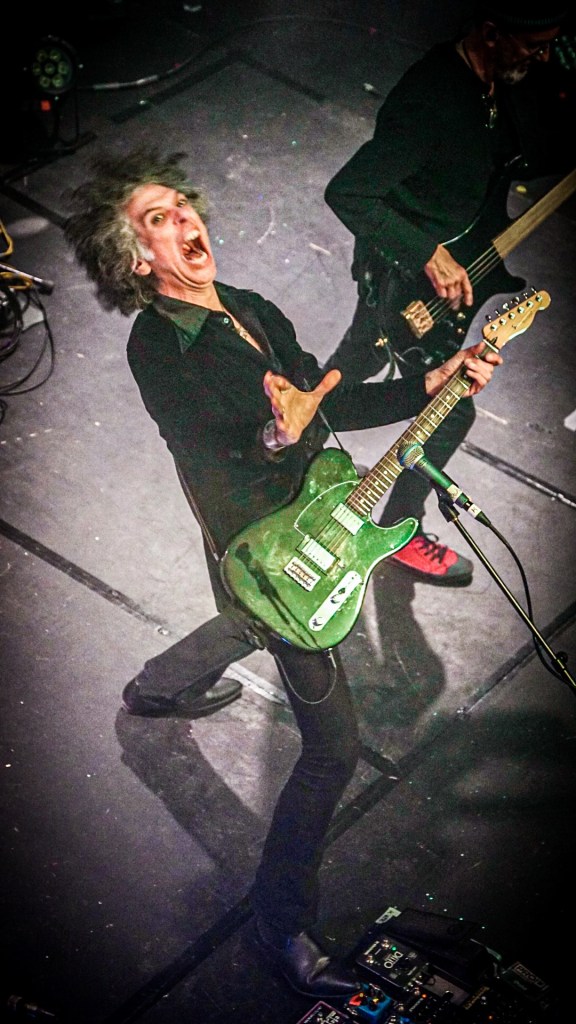
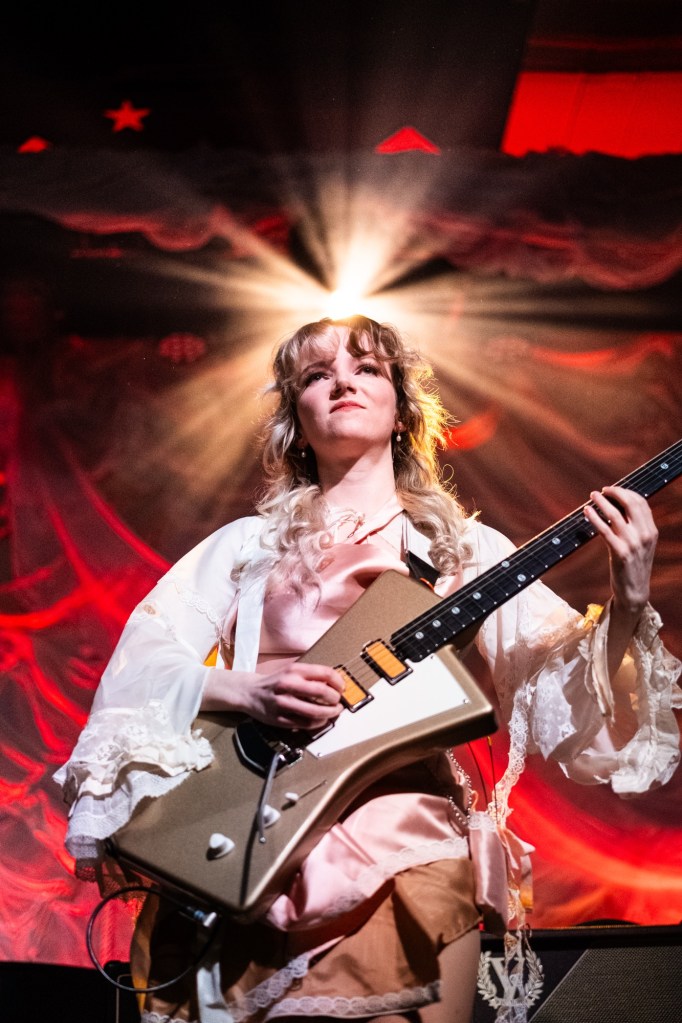
Pierre Scaner, wearing Captain Sensible-esque blue sunglasses and a single black glove, leads from the front – a frenetic and mesmerising theatrical attack. The synth and effects add multi-layered depths to the booming bass supplied by Nick Scaner, alongside the snarling, sparkling gold Telecaster (actually a Sordocaster) played by “gun-for-hire” Lou. All of this is held together by the cool Pierrick Scaner, hitting the skins like Tommy Ramone – hard, fast, and unflustered.
Being in a band is almost like being in a gang or a tribe – togetherness, bonded by a shared aesthetic or belief. The Scaners, clad in black and white denim, wear their hearts and manifesto firmly on their sleeves. The Ramones it is not… and yet you know what it is. It is understood. You are drawn in because, although the thread that links all those punk bands and electronic pioneers to this band might be invisible, the connection is tangible and real. The Scaners are not copyists; they are an evolution of the bands you love – with an added hard-hitting sci-fi synth aesthetic that truly sets them apart.
The Scaners didn’t come from outer space, but they had come a long way to be with us. Tonight’s crowd didn’t need to be won over. Most were there because they already knew how good it would be – and, like them, I believed!
Another night at a sold-out SWG3 Galvanizer, and Scene Queen is poised to kick off the first date of her Hot Shows In Your Area tour. But before her candy-coated chaos takes hold, the evening opens with a pair of acts who waste no time turning the venue into a pressure cooker.
Brighton duo Lake Malice burst onto the stage with a relentless fusion of metalcore, hyperpop, and nu-metal. Their sound is volatile but razor-sharp—bristling with intensity and impossible to ignore. The performance feels like a jolt of electricity: dynamic, high-voltage, and consistently on the verge of collapse in the best possible way. Audience engagement is instant, with every breakdown drawing roars from the floor. By the time they close with the blistering “Bloodbath,” the hunger in the room is palpable, as though the set ended too soon.
A few minutes later, London’s GIRLI flips the atmosphere on its head with a kaleidoscopic blast of cyber-sugar pop laced with garage beats, J-pop inflections, and a kawaii gloss. Her set radiates attitude and humour in equal measure, balancing youthful defiance with playful hooks. Tracks like “Nothing Hurts Like a Girl,” “Hot Mess,” and “Matriarchy” bounce between bratty and anthemic, carried by her sharp charisma. If Lake Malice left the crowd buzzing on raw aggression, GIRLI harnesses that energy and redirects it into pure, unfiltered fun.
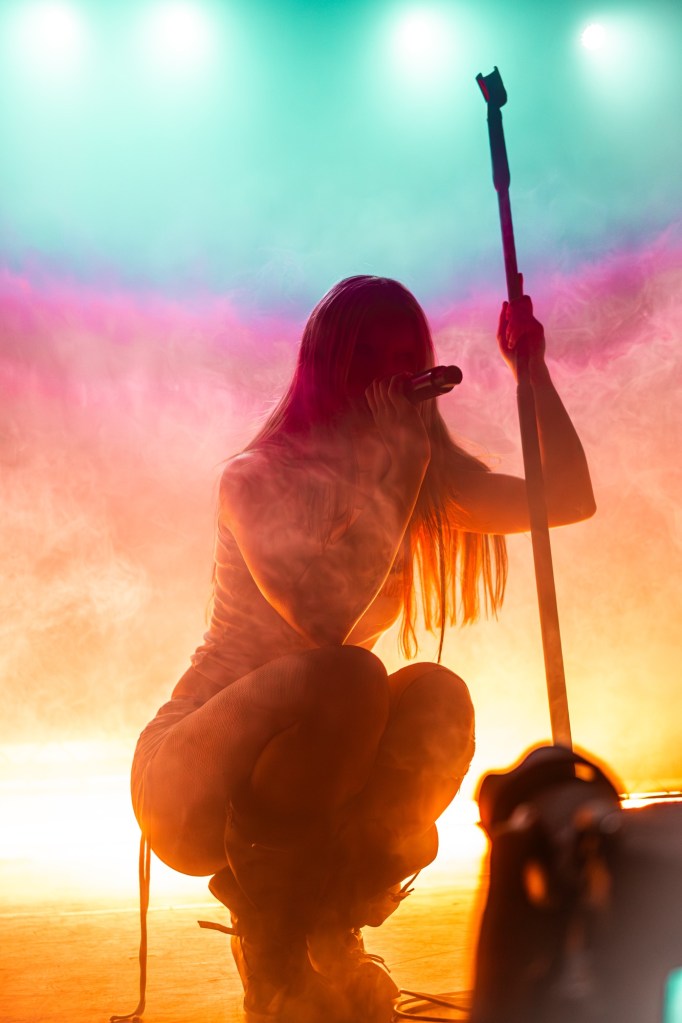
Then, the room transforms. When Scene Queen finally takes the stage, SWG3 morphs into a bubblegum-core fantasyland: a sugar-pink fever dream where hardcore breakdowns collide with unapologetic pop spectacle. It’s more than a gig—it’s a theatrical ritual of provocation, empowerment, and communal release.
Scene Queen’s Bimbocore aesthetic threads through every moment of her set, from the neon visuals to the feral breakdowns that send the floor into chaos. Tracks like BDSM, Finger, Pink Hotel, MILF, and the newly released Platform Shoes hit with equal parts gloss and grit. Anthems like Pink Panther, Mutual Masturbation, Barbie & Ken, Pink Rover, and 18+ aren’t just played—they’re lived, each one a weaponised blend of pop hooks and feminist fury.
But what elevates Scene Queen beyond theatrics is her insistence on community. She doesn’t just perform to the audience—she folds them into the show, inducting fans onstage into her mock “sorority,” a tongue-in-cheek ritual that doubles as genuine collective bonding. The crowd responds in kind: screaming, moshing, and belting every lyric as if the songs belong to them.
SWG3’s industrial intensity provides the perfect backdrop, amplifying the contrast between sweetness and savagery. The night rides high on the friction of extremes: aggressive riffs and candy-pink aesthetics, snarling breakdowns and glittering choruses. By the end, it feels less like a concert and more like a neon-lit power surge—one fuelled by joy, rage, and the radical promise of pop spectacle.
MasterPeace kicked things off with crowd-rousing indie-rhythm tracks, flirting with rap, dance, and soulful hooks that got bodies moving and hearts pounding. Their layered refrains and infectious bounce set the stage perfectly, engaging the crowd and raising anticipation for the main act.
Then, the silhouette of Ecca Vandal exploded into view—her presence instant and undeniable: blue hair, bright yellow stockings patterned with tattoo-style graphics, and the clear intent to tear the place down. From the first chord, she wove between funk grooves, pop anthems, hip-hop cadence, and punk grit, opening with major hits such as Bleed But Never Die and Your Orbit.
The audience felt every beat, every lyric; she rode the crowd, smashed the stage, and wrapped the room in her energy. Transitions were sharp and the intensity relentless through tracks like Future Heroine, Battle Royal, and End of Time, which brought the house down.
After thanking the crowd for being part of the show, Ecca closed on a triumphant high with an encore—powerhouse songs like Cold of the World and Broke Days, Party Nights. She jammed among the audience, leaving everyone breathless, sweating, and buzzing.
This night at Audio Glasgow was a collision of raw talent and communal intimacy. MasterPeace brought contagious verve, while Ecca Vandal blew the roof off with her genre-defying performance and fearless connection to the audience. For anyone there, it wasn’t just a gig, but a true musical moment—one that embodies what small-venue concerts are meant to be: electric, personal, and unforgettable.
There is something quite otherworldly stepping into Summerhall’s main beer garden area where instantly artists and patrons are mingling with each other laughing over beer and pizza. It’s a niche vibe for a micro festival and it works incredibly well in the hodgepodge remnants of the old surgical school.
First up we head to the Main Hall where Linzi Clark, hailing from Edinburgh, unveils her set like an old Polaroid dissolving at the edges—her voice a gelid cascade of theatrical rustle and cello-polish, soaked in Kate Bush drama but with a tender, modern Americana undercurrent. When she conjured “Woot Woo,” the lone word looping in the vaulted space felt like some half-remembered lullaby suddenly lodged in your ear for eternity, the evening’s unofficial anthem of spectral heartbreak.
At Queen’s Hall,South London’s Honeyglaze turned the packed auditorium inside-out with lo-fi reverie and math-rock pulse, anchoring their sound in haiku-minimalism and post-punk scrawl. Their trio—Anouska Sokolow, Tim Curtis, Yuri Shibuichi—construct melodies that wobble like dominoes of emotion, melodic yet fractured, echoing English Teacher’s absurdity through a warped fun-house mirror. When their track “Pretty Girls” unfurled, that neon-tinged hook slithered through the crowd like honey laced with cyanide.
In the claustrophobic electro-scent of Summerhall’s Dissection Room, Crocodiles—San Diego’s murky psych-surf envoys—surfaced jagged, caramel-coated feedback that sounded like The Jesus and Mary Chain tripping on sun-bleached lounger cushions, closing the set with their raucous Plastic Bertrand cover in an act both mocking and affectionate. “Mirrors,” drove a sense of warped nostalgia-soft serve that never quits your ear.
Heartworms followed at Queen’s Hall, the audience packed out the former church, conjuring a set that sounded like a haunted boarding school cassette recorder run through a ghost-factory—drum machines pulsating through spectral synth fog, the closer arriving like the last boss in a 90s video game—unsettling but utterly hypnotic. Not to mention some of the coolest playing of a theremin we’ve ever witnessed utterly spectacular. This combined with the spontaneous shadow dancing made for quite a dreamy show our favourite track was, “Jacked”
Swiss Portrait, rooted in Edinburgh, trod onto Summerhall’s Main Hall stage one member short—fresh from a baby’s birthing suite—but still managed to burn with the precision of barn-clockwork, each note wound tight and exact, even under duress; their simplicity felt defiant, like minimalism pushing back against chaos. With whimsical simplicity they held the crowd in the palms of their hands with each note. “Cassette” was our favourite track.
Over in the Dissection Room, Do Nothing appeared fifteen minutes late on stage after struggling to get their vocals amped up to the desired levels and rightly so as bands playing previously at times came across as barely audible. As if waiting for their moment to align with the room’s humidity, then unleashed a powerful set em yes with gritty new tracks like “Stars” and “Act Natural,” two new-wave shards polished until they gleamed like neon constellations reflected in rain-slick cobbles, affirming that standing your ground sometimes breeds brilliance.
Getdown Services— burst on stage and firmly planted in the Queen’s Hall psyche—ushered in a (in the words of our friend” a “Butlins-style romp through some DMA’s sound at The Hacienda,” and the image nails it: plastered-bang-on-acid house riffs meet psych-pop swirl. Satire at its best tracks like; “Dog Dribble” it sounds like graffiti-bright, sticky-floored joy.
Then Deadletter exploded the night into fragments—frontman Zac Lawrence hurled himself shirt-bare into the crowd as though publicly jettisoning shame, turning the set into sweaty performance-art feral grandeur, like someone rewiring glam-rock with industrial sledgehammers. We’ve had our eyes on these North Yorkshire buys for some time but this performance is by far one of our standouts of the day. Tracks like “Mere Mortal” and “Madge’s Declaration” are strung out epistles on modern life and the grit of everyday grind.
Twenty minutes later, we forced our way into Sneaky Pete’s for Glasgow’s own Cowboy Hunters, a two-piece punk dynamo (Megan Pollock and Desmond Johnston) raised on snark, slash-pop wrath, and pub-riot momentum. Their most-streamed Spotify thumper “Mating Calls” felt like a sideways punch—fiery, hilarious, impossible to shake—and when they launched into it live, the packed room convulsed with primal glee.
Finally, La Sécurité closed us out at The Mash House with a French-tinged hush that felt like drifting into a jazz-noir reverie. They carried off continental cool like a whispered poem in velvet night, their understated elegance the perfect punctuation to a day that swaggered, stumbled, and burned brightest when it was most beautifully askew.
As the echoes of the Edinburgh Psych Festival fade and we head for the train back to Glasgow what lingers is not just the music but the reminder of how vital independent venues like Summerhall are to the cultural fabric of the city. These spaces do more than host gigs—they nurture creativity, take risks on emerging artists, and give independent bands the chance to find new audiences. In an era where grassroots venues face increasing pressure, their role in sustaining scenes like this is not only invaluable but essential to keeping music vibrant, diverse, and alive.
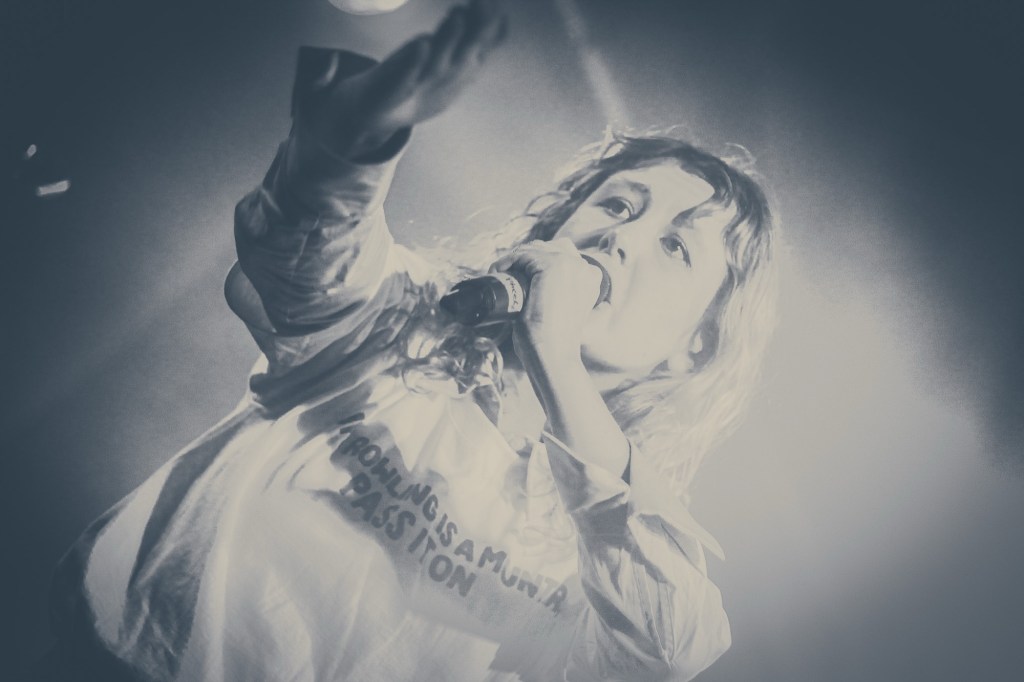
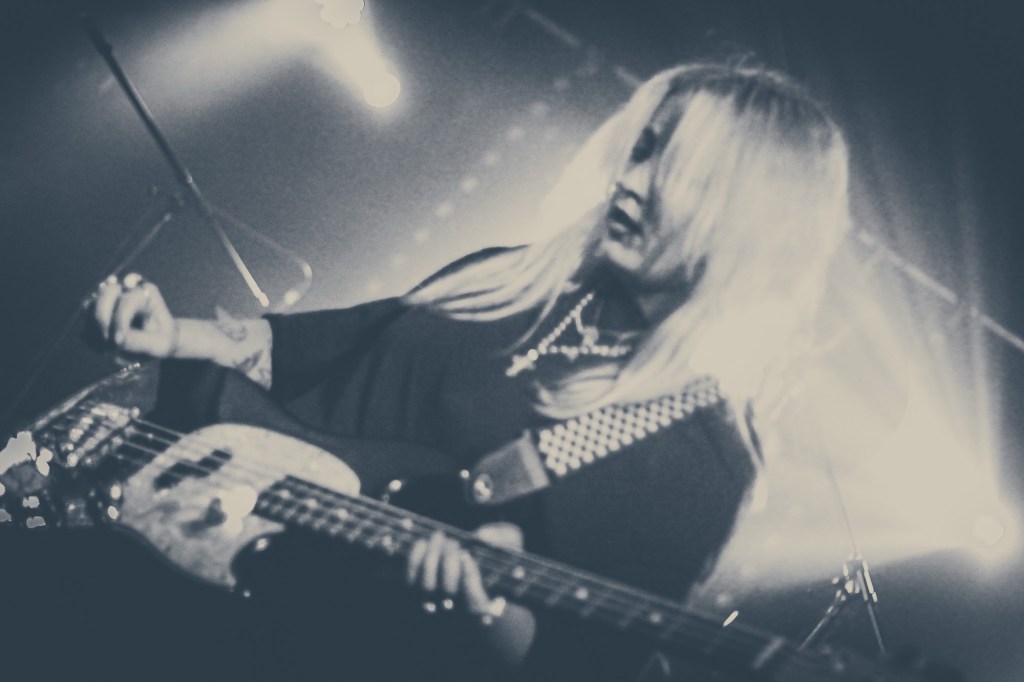
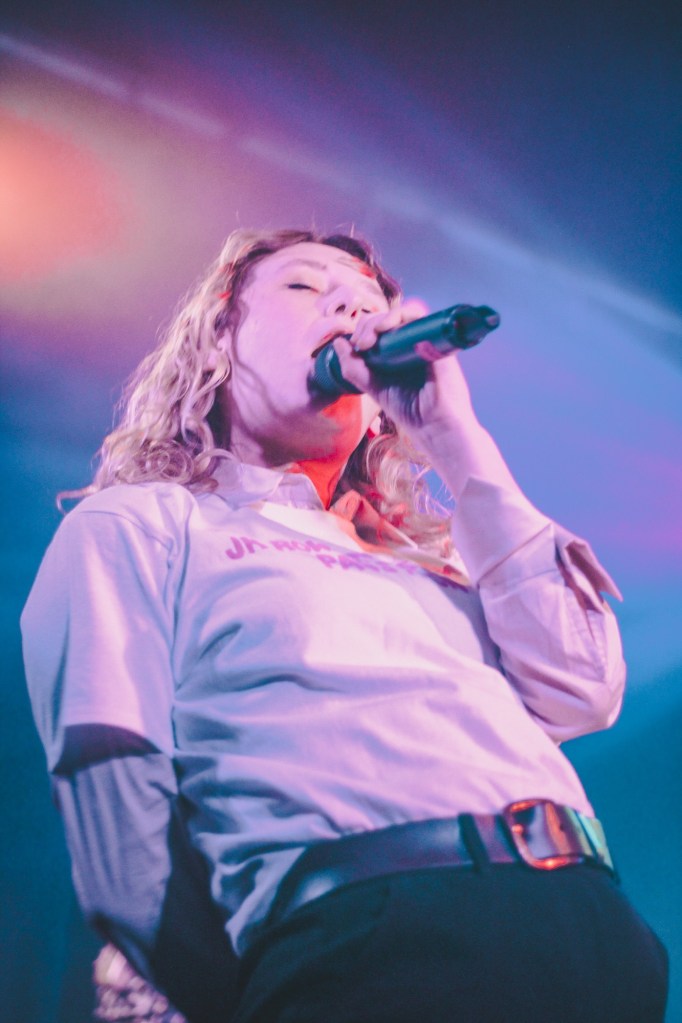
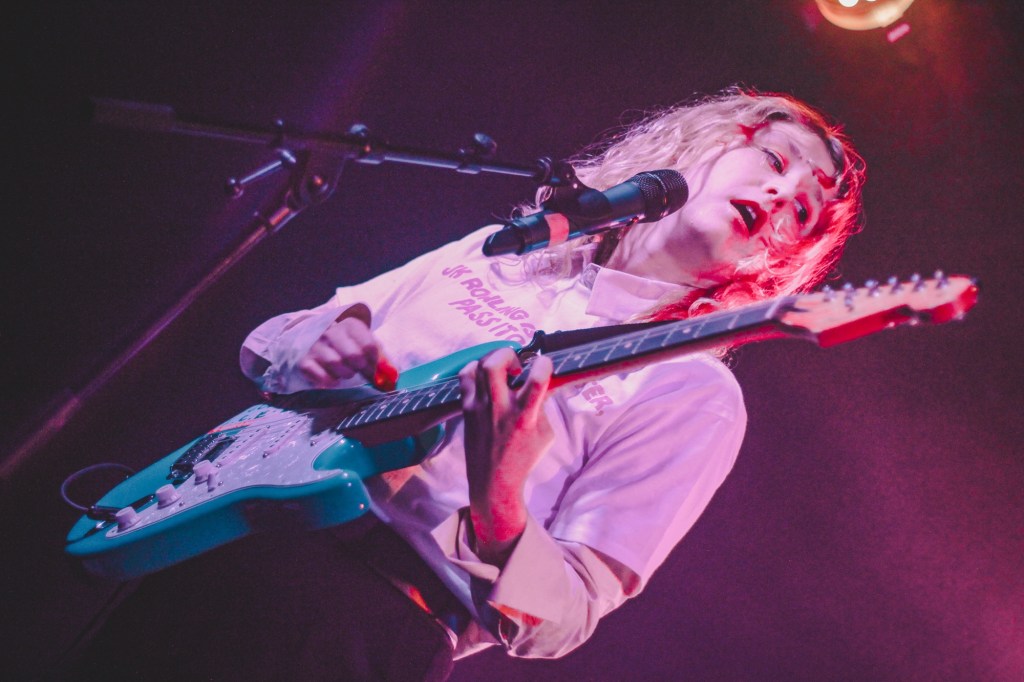
Milk teeth have been shed and it is obvious that since recording their last album, The Linda Lindas have matured into a West Coast Punk phenomenon with razor-sharp teeth. A real take-no-prisoners live act that can mix it with the greatest on earth.
As diminutive as they may be, their presence is huge. Catchy, almost familiar songs, mixed with a frenetic energy and breathless banter, unite to create an uplifting, seamless feeling of joy.
Apart from coming on stage to the strains of Ozzy Osbourne they perform without fanfare or fairy tale backdrops. The Linda Lindas are an endless, authentic, kinetic ball of infectious energy.
They are cool and relaxed, humble and inquisitive, and not afraid to laugh at themselves. There is an obvious paradox between the band and the content of the songs and their titles, but isn’t that the nature of growing up? The mind-bending transition from teen to adult. All In My Head, Racist Sexist Boy, Growing Up and set opener No Obligation are the greatest examples of this.
It is possibly down to the shared vocals and lack of an absolute front person that makes the continual vocal exchanges between the band and the audience so personable. It is incredibly difficult not to join in. Yes, it’s true that Glasgow is in the vicinity of Spain … if you are going that way … and to Americans it may seem ‘just down the road!’ The novelty of rain to The Linda Lindas makes everyone laugh, and the laughter continues when someone has to explain that the chant ‘Here We F’ing Go’ is a term of ultimate affection and not the opposite.
The Linda Lindas are without doubt The Go-Go’s, The Runaways, Paramore, Rage Against the Machine and Motörhead rolled into one explosive unit – and that’s a good thing. The floor in Tut’s bounced tonight … more than I have ever felt Barrowlands bounce … much more!
It is impossible to know what the future holds for them. They chat fondly about songs only five years old, and to hear OH! live was an absolute highlight. The band already has so much experience under their belts and yet they are only in their mid-teens. It is obvious they are having the time of their lives, and we were lucky to be a part of that tonight.
Exuberance, beauty and positivity personified.
They are not brilliant because of their age or gender.
Sofia Isella doesn’t so much enter a room as she colonises it — like Boudica with better eyeliner and a microphone instead of a chariot. At SWG3 in Glasgow, her first Scottish headline show felt less like a debut and more like a declaration: the kind of night that makes you believe you’ll be bragging in ten years about seeing her “back when she was still playing clubs.”
She began with “Hot Gum”, a pop sucker-punch that fizzes like a mouthful of sherbet and bites like broken glass. It’s the sort of song that makes the walls sweat, and the crowd screamed as though it were already a greatest hit. Later, when she returned to it for the encore — literally swallowed by her audience, singing fully submerged in their arms — it was transformed from a playful opener into a victory lap, a ritual re-birth.
Isella knows when to strip everything back. “Josephine” arrived in an almost-whisper, a cowboy hat and guitar perched like props from another century. The hush she conjured felt borrowed from folk clubs long gone, but with a distinctly modern twitch — Lana Del Rey if she weren’t addicted to irony, Cat Power if she’d grown up scrolling rather than chain-smoking.
That quiet was shattered by “Dogs Diner”, snarling and sleazy, her voice oscillating between coo and curse.
By the time she slid to the piano for an unreleased ballad, drawn from the darker waters of “Numbers 31:17–18”, had her piano, wringing beauty out of Biblical carnage. It was the sort of moment that reminded me of early Tori Amos — but if Amos had been raised on TikTok, Roe v. Wade rage and a diet of feminist zines.
Isella doesn’t tiptoe around politics; she confessed that, as a teenager, she was told to stay quiet to avoid “dividing an audience.” Then Roe was overturned, and she realised silence was complicity. Cue a generation-defining battle hymn whispered by 500 Glaswegians as though in a single conspiratorial breath. She mined biblical carnage for something fragile and furious, her voice arcing from pin-drop to possession.
She’s still new enough to blush about asking fans to follow her on Instagram — “I added people to invite them to my first shows” — but already adored with the kind of feverish devotion you’d expect for a Beatle, or at least a Bieber. From the front rows came banshee screams and posters begging her to fling so much as a T-shirt their way; if Sofia spat out her chewing gum mid-set, there’d be a riot to catch it.
And then, chaos: “Crowd Caffeine”, a song as manic as its title suggests, Isella used a Bugs Bunny metaphor to instruct the crowd how high she wanted the m to sing the chorus. “Louder!” she ordered, orchestrating the audience as though they were instruments she’d invented, wringing roars from their throats until the floor felt like it might buckle.
When she played “The Well”, she admitted it was the first time she’d heard her own words sung back to her. That small confession lit the room — suddenly 500 Glaswegians became co-conspirators, crooning her diary lines like hymns.
But reverence doesn’t last long in Sophia Izella’s world. “The Doll People” had her crawling and staggering as if possessed, witchy and unhinged, the crowd locked into her trance. If Florence Welch is a pagan priestess, Izella is the exorcist’s nightmare: joyous, grotesque, impossible to look away from. And with “Sex Concept,” she left the stage altogether, carried aloft by her audience in a great circle, saint and siren all at once, rewriting the rules of what a pop star’s body can do in the hands of her believers.
The night closed on “Future”, its last bars dissolving into the fever of an encore. And then “Hot Gum” again, but louder, bigger, messier, her voice rising above a mass of bodies that seemed ready to tear the ceiling off.
Sofia Izella isn’t waiting patiently for her coronation. She’s already here, devouring stages with a sound that flickers between the whisper of a matchstick and the snarl of a swamp witch. At SWG3, she proved she can hold an audience like a secret — or like a hostage. Either way, they’ll follow her anywhere.