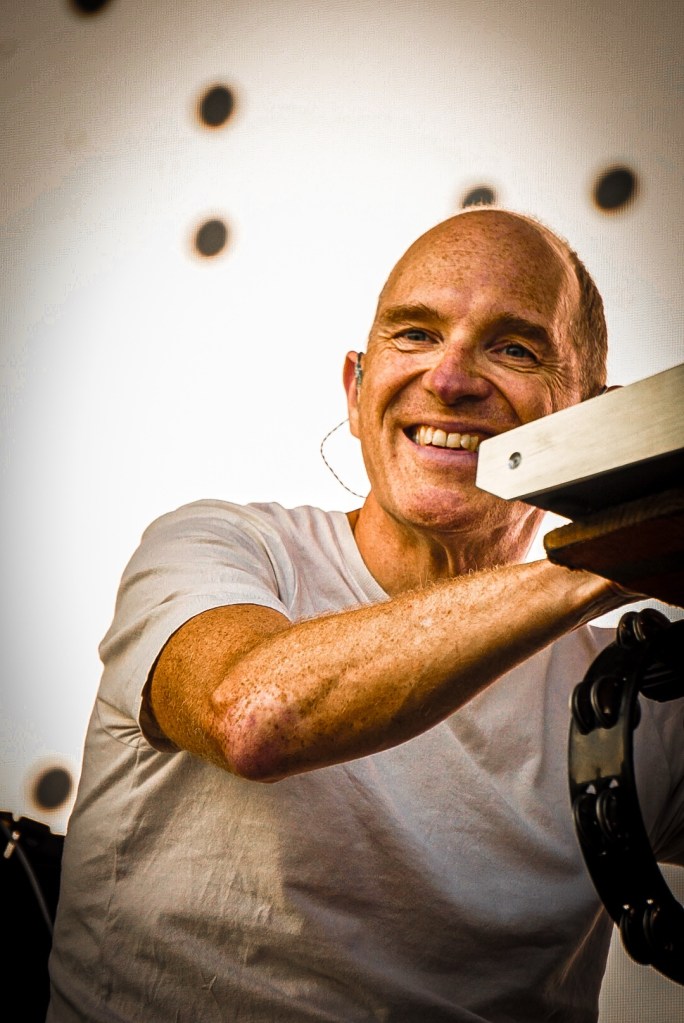
There is a contradiction at the heart of Caribou. Dan Snaith makes music that feels as though it was engineered for the small hours, for blacked-out rooms where the outside world dissolves into pulse and repetition. Yet here he was beneath an amber Glasgow sky, the last of the evening sun hanging over the Clyde like a streetlamp that had forgotten to switch itself on. It was beautiful, certainly. It just wasn’t quite the right lighting.
Electronic music is funny like that. Some artists thrive in daylight. Caribou belongs to the nocturnal species.
That slight mismatch between atmosphere and setting was the evening’s only real flaw. Everything else landed with astonishing precision.
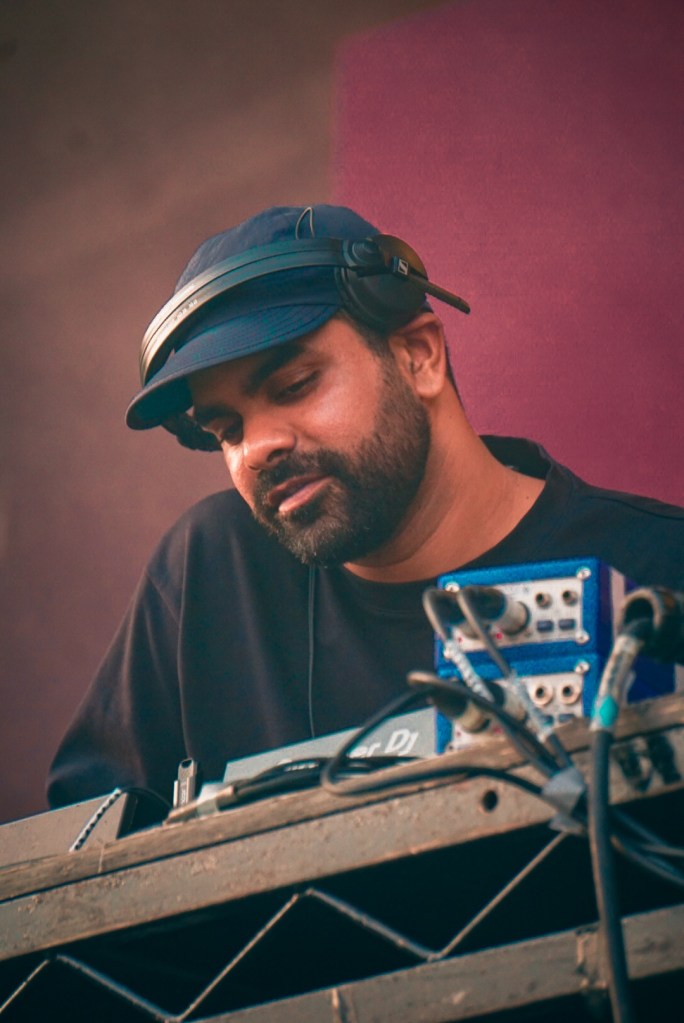
The show, billed as part of an all-day event, felt less like a festival than a waiting room. People milled around politely enough for the earlier acts, but the tide unmistakably turned once Caribou’s equipment appeared. I had assumed Snaith’s club alias Daphni might provide the warm-up, particularly given the set’s affectionate nod to that project with Waiting So Long. Instead it was AHADADREAM, whose buoyant, disco-infused selections kept bodies moving without ever pretending to be the main event. Good DJs know when to lead; great ones know when to get out of the way.
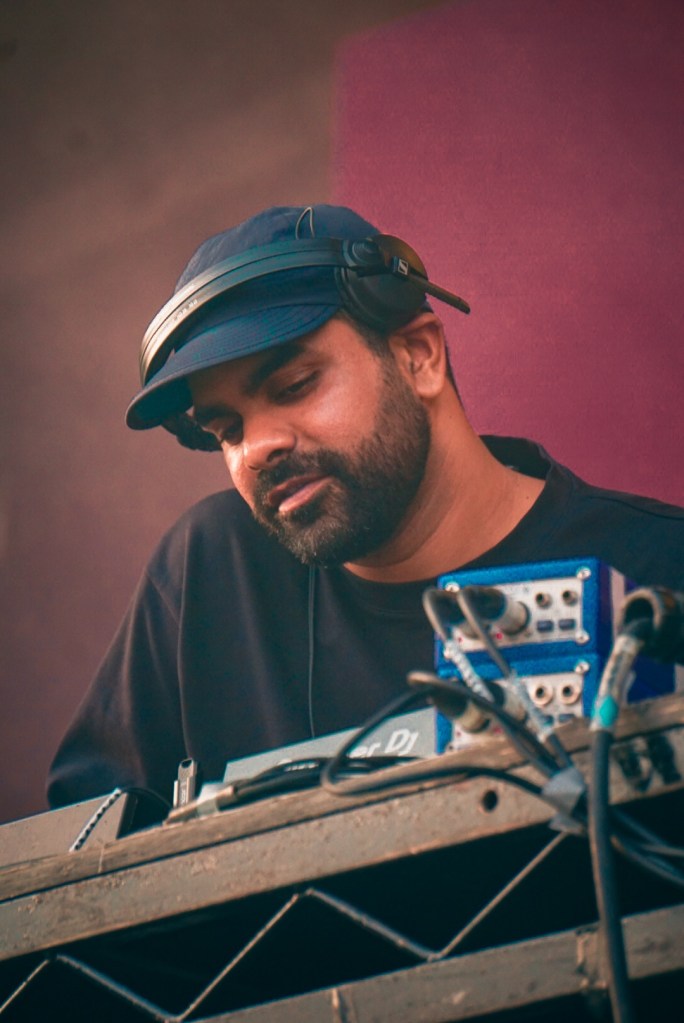
By the time the band emerged, Galvanizers Yard was close to capacity, the sort of crowd that doesn’t merely applaud songs but has quietly woven them into the soundtrack of its own life.
Caribou has always occupied a rare space in electronic music. Since emerging in the early 2000s, Snaith has refused to choose between the laboratory and the dancefloor, blending psychedelic rock, house, krautrock, IDM and pop into records that somehow satisfy both headphone obsessives and festival crowds. Albums such as Swim, Our Love and the recent Honey have earned him a reputation as one of electronic music’s most inventive composers, while his Daphni project indulges the more club-focused instincts that occasionally bleed back into Caribou’s work.
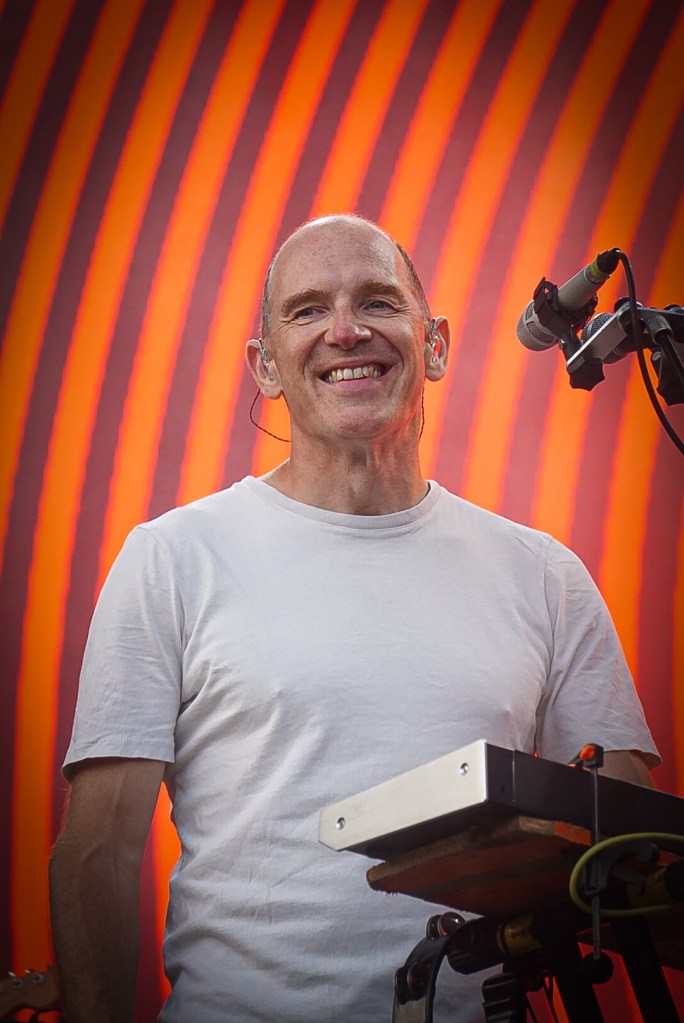
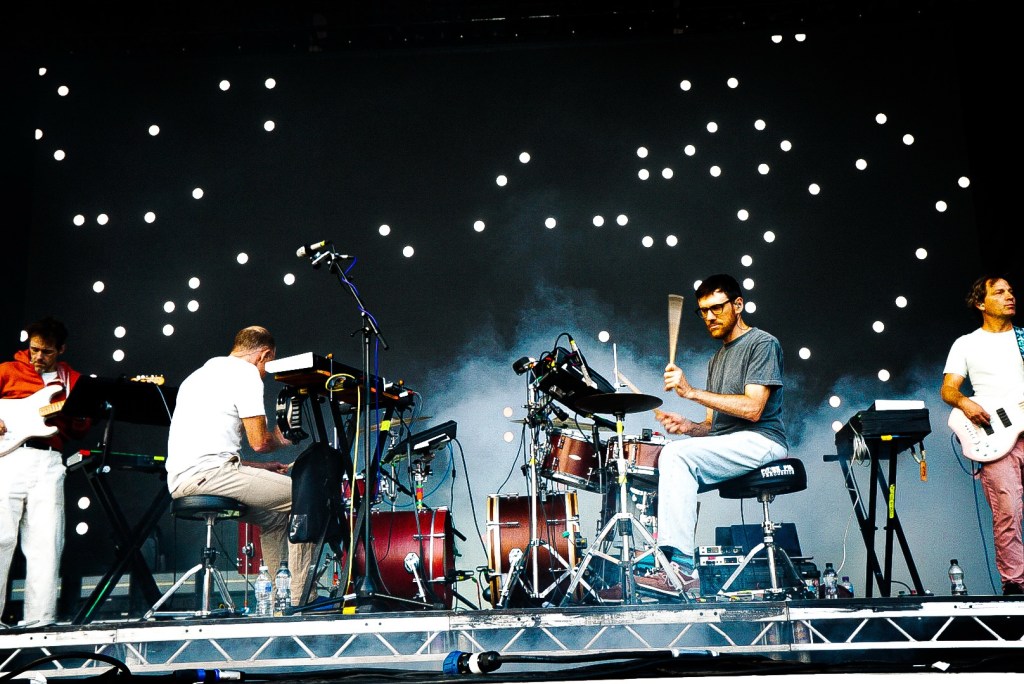
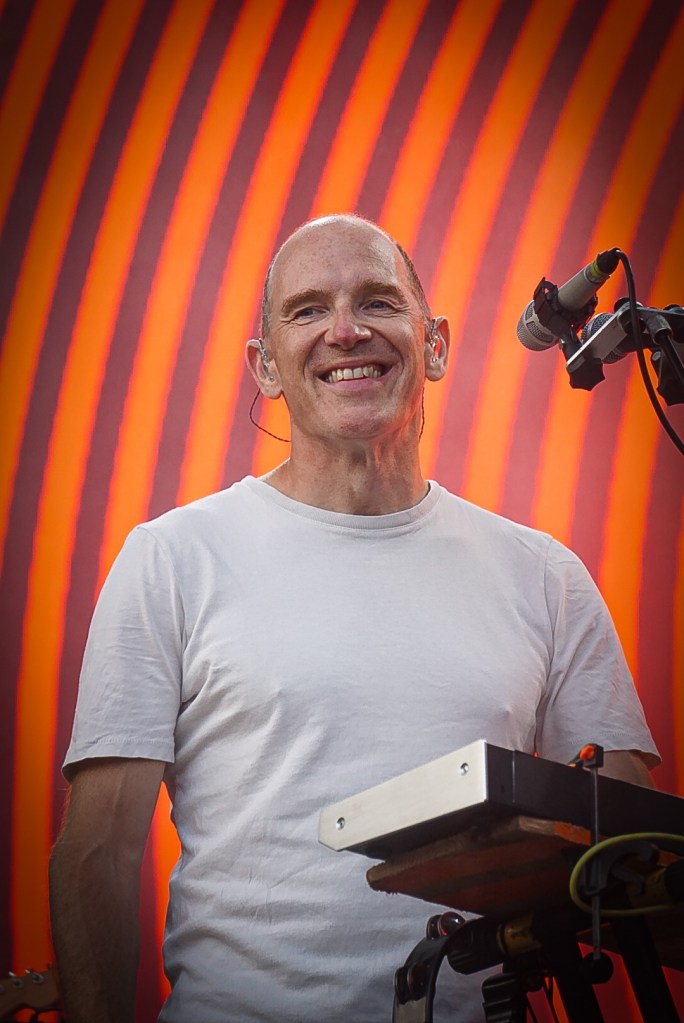
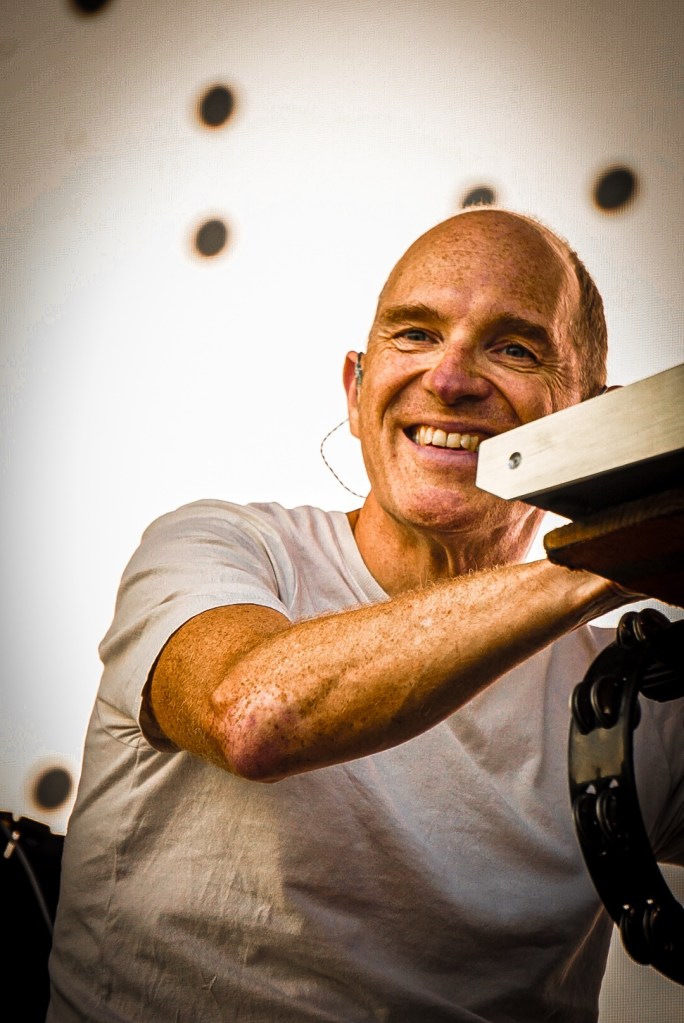
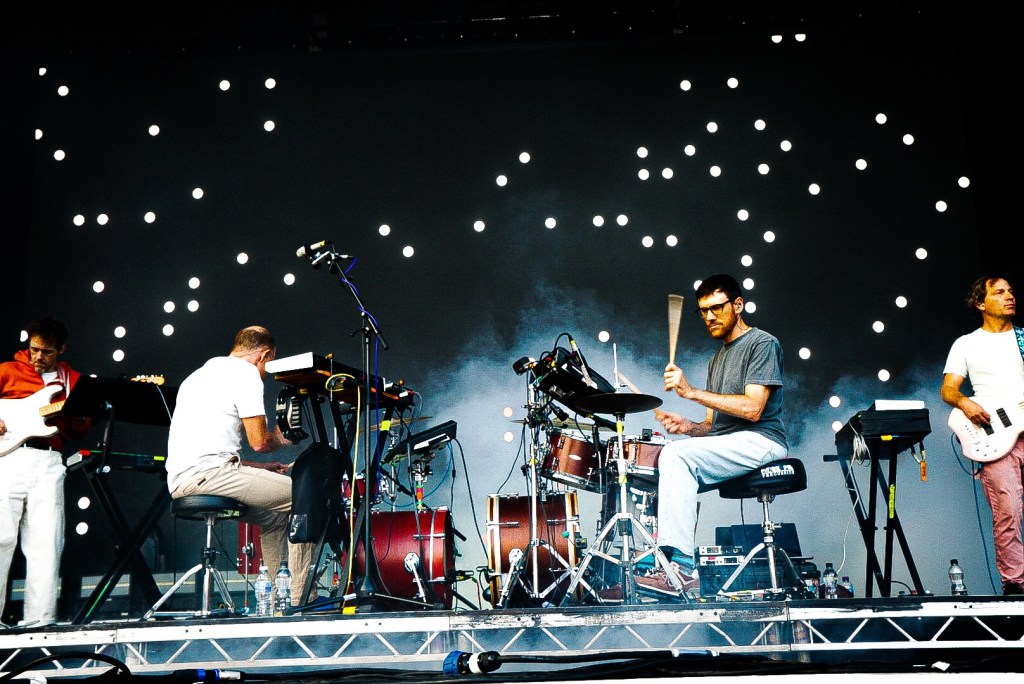
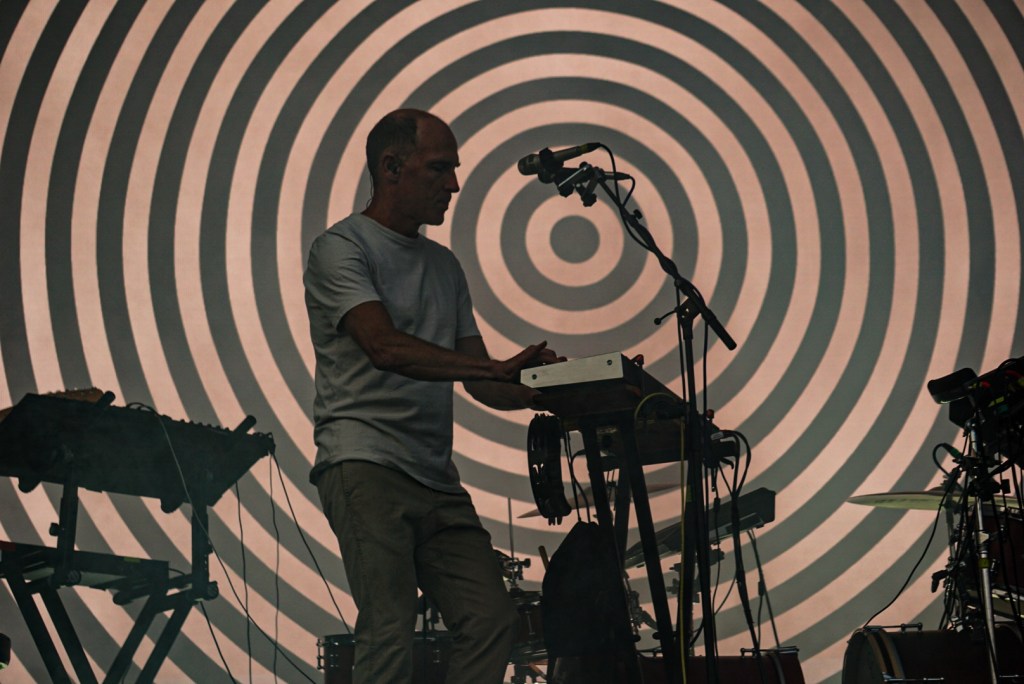
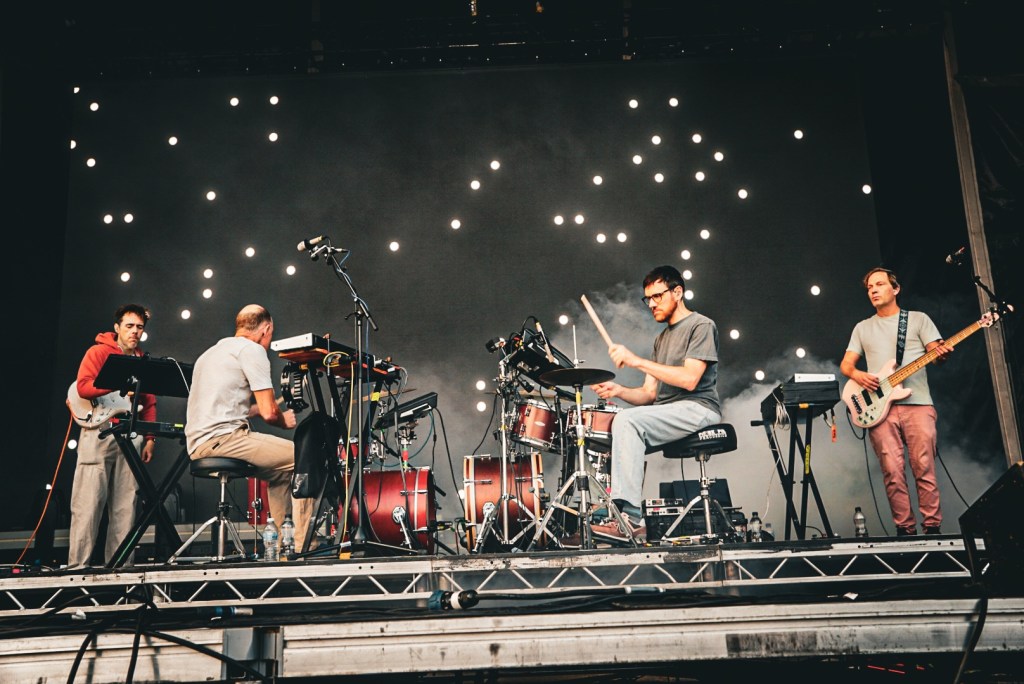
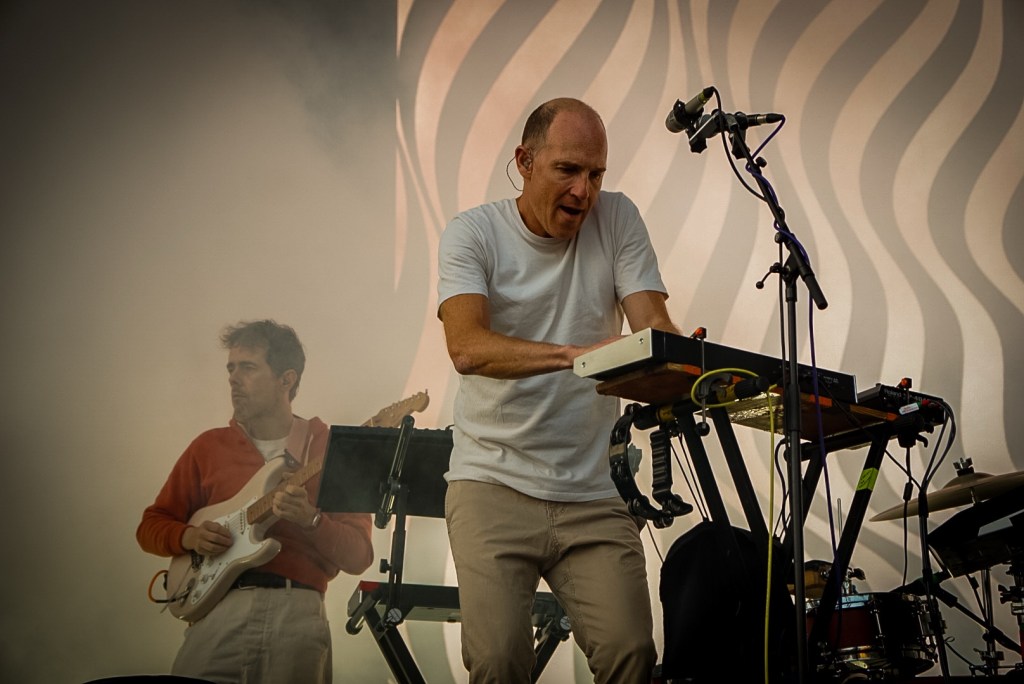
The live band remains one of the finest arguments for seeing electronic music performed by humans rather than laptops. Alongside Snaith were Ryan Smith, John Schmersal and Brad Weber, whose interplay has been refined over years of touring.
Special mention belongs to Weber. Watching him was like watching someone negotiate with time itself. His right hand darted between acoustic drums and electronic pads with metronomic certainty while the beat machine fired underneath, the two systems locking together so tightly they seemed less like man and machine than identical twins separated at birth. Every fill landed exactly where your body hoped it would before your brain had time to ask.
The setlist barely paused for breath. Volume and Climbing established intent before Bowls rolled into the night’s first eruption with Odessa. Few songs have travelled through Glasgow quite like that one. Long before it echoed around Galvanizers Yard, Odessa had already become a familiar visitor to dancefloors courtesy of countless sets from Glasgow institution Optimo. It was impossible not to smile at the sea of Optimo T-shirts dotted throughout the audience. One in particular read, “There’s no DFA without Optimo,” a slogan that felt less like fashion than local history stitched into cotton.
It was a reminder that scenes matter. DJs matter. The reason so many Glaswegians already carried these songs somewhere in their bones wasn’t streaming algorithms. It was years spent in dark rooms where Keith McIvor and Jonnie Wilkes patiently educated dancefloors one impeccable record at a time.
By the time Sun arrived, its ecstatic repetition became exactly what great repetition should be: not monotonous but medicinal. Like waves against a harbour wall, each cycle stripped away another layer of self-consciousness. Later came Never Come Back, Dear Life, Broke My Heart and Can’t Do Without You, each one provoking the sort of communal release that electronic music achieves at its best—not euphoria as escapism but euphoria as temporary citizenship.
Caribou’s songs rarely shout. They persuade. They accumulate. They circle the listener until resistance feels pointless.
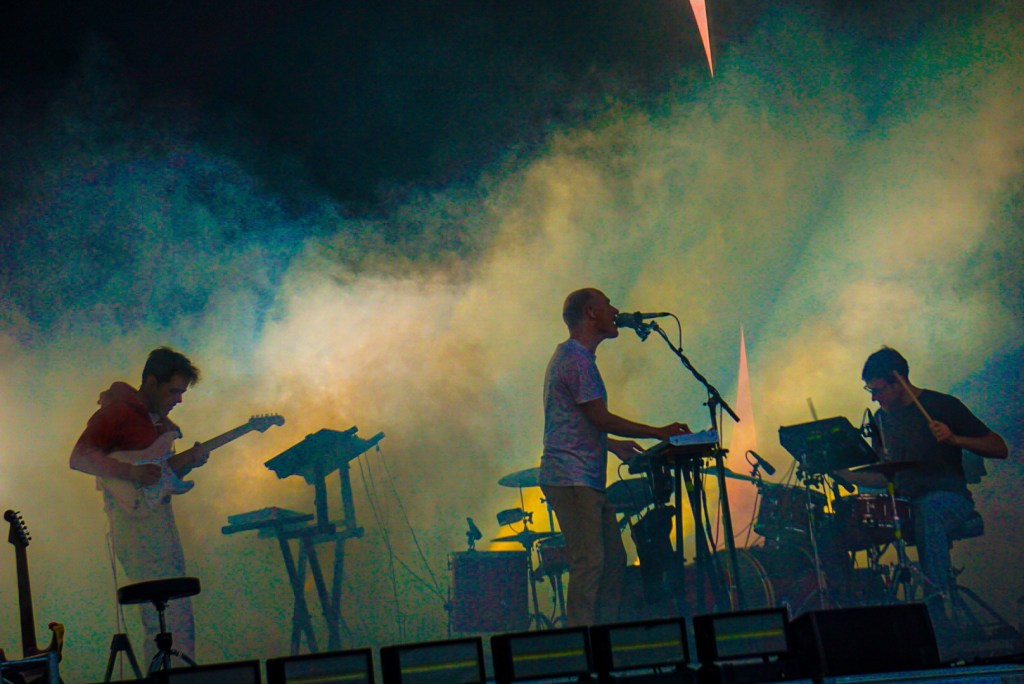
As darkness finally crept across the Yard, the music seemed to expand into the space it had been waiting for all evening. You could almost hear the show becoming itself.
Had this concert happened two hours later, beneath genuine darkness rather than Glasgow’s lingering amber glow, it might have been transcendent. Instead it settled for being magnificent.
And hearing Odessa and Sun performed live, surrounded by thousands of Glaswegians who have spent well over a decade dancing to them in clubs across the city, felt less like attending a concert than finally meeting old friends in person. It was, quite simply, a privilege.


Article: Angela Canavan

