The art of falling back in love.
There is something rather peculiar about the business of becoming a rock star. One minute you’re playing free shows to less than 100 people in BLOC, cutting your teeth in front of an audience who might have wandered in looking for the cheap pizza and a pint deal; the next you’re standing in front of a sold-out OVO Hydro, with thousands of people hanging on your every syllable. Somewhere between those two destinations lies the curious transformation of Fontaines D.C. Tonight, however, this feels less like a band enjoying the spoils of success and more like five musicians who have finally worked out exactly who they are.
Opening tonight’s show are Golden Bough favourites Chalk. There are some bands you discover and promptly forget, and then there are those who get under your skin and refuse to leave. Chalk belong firmly in the latter category.
I first caught the Belfast duo supporting Sprints in Glasgow, and from the moment they appeared onstage I was completely sold. I have followed them ever since, making a point of catching them again when they subsequently played King Tut’s. There is something wonderfully unhinged about Chalk, an energy that feels less like a conventional live performance and more like witnessing a particularly deranged street preacher deliver the sermon of his life. Imagine the ghost of Ian Curtis being chased through an industrial estate by a malfunctioning synthesiser. That is Chalk.
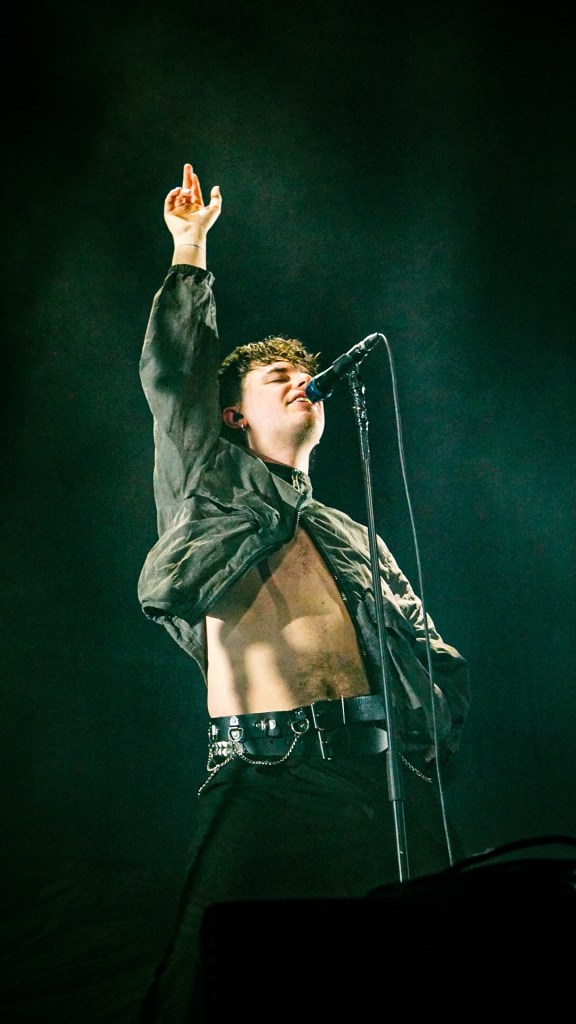
Tonight, they are every bit as compelling.
Ross Cullen and Ben Goddard, the Belfast duo, have developed a sound that is part industrial panic attack, part post-punk exorcism. Their music is cinematic, muscular and gloriously uncomfortable. It is the sort of noise you don’t simply listen to; you sink your teeth into it. Cullen, with his commanding presence and almost evangelical vocal delivery, has an intensity that occasionally brings Grian Chatten to mind. Perhaps he could even be his younger cousin, although one who has spent considerably more time in the company of electrical appliances.
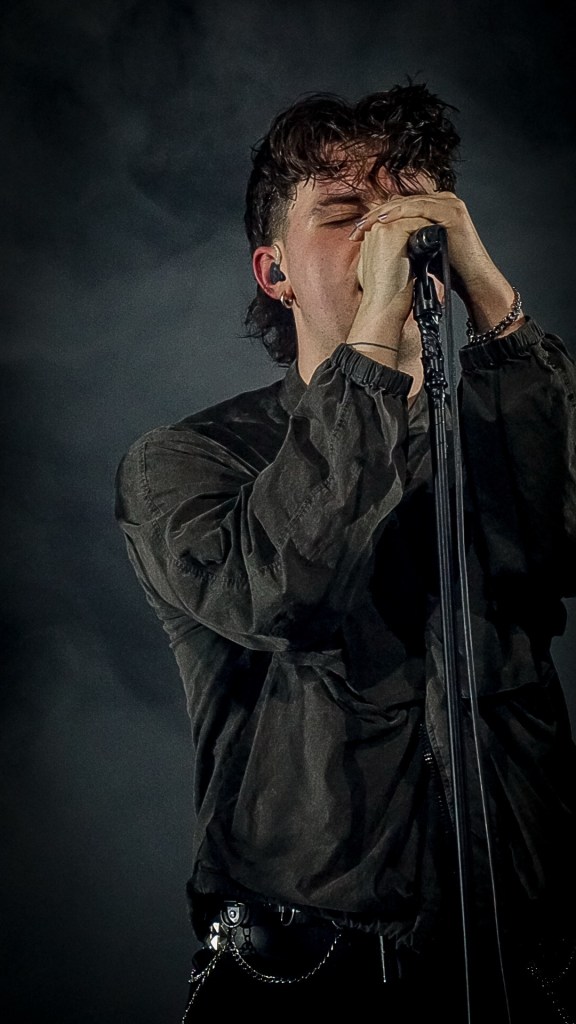
With their touring drummer adding another layer of physical violence to the arrangements, Chalk tear through a set that demonstrates just how much they have developed. ‘Static’ is a particular highlight, alongside ‘Heaven’ and ‘Conditions’. The combination of pounding rhythms, industrial electronics and Cullen’s extraordinary stage presence makes for an intoxicating opening performance.
There is a deliciously sinister quality to their music. The synths seem to be having some sort of nervous breakdown, the guitars sound as though they have been dragged through a skip, and Cullen delivers his vocals with the conviction of a man who has something extremely important to tell you but has perhaps forgotten that not everyone is prepared to receive the message.
Dressed in the baggiest shorts imaginable and loose-fitting shirts, Chalk look entirely at home. They aren’t attempting to dress themselves up as something they are not. They simply get on with the business of making a magnificent racket.
And I cannot overstate how good it is to see them here. There is a particular pleasure in watching a band you have followed from the beginning step onto a stage of this magnitude, knowing that the audience in front of them is about to discover what you have known for some time.
I have been a fan since that first encounter with Sprints, and tonight is another reminder of why. Chalk are not simply a support act filling the time before the headliners arrive. They are a band with an identity, a purpose and a considerable amount of unfinished business. If tonight is anything to go by, they will leave the Hydro with a considerable number of new admirers.
I have to confess to having something of a love-hate relationship with tonight’s headline act, mostly love though… Not because I doubt their ability, nor because I begrudge them their success, but because there have been moments throughout their evolution when I’ve wondered whether the things that first made them so compelling were in danger of disappearing altogether.
Their debut, Dogrel, released in April 2019, remains, for me, a magnificent document of youthful discontent. It was a record that sounded as though Dublin itself had been dragged into a recording studio, given a microphone and told to get everything off its chest. There was poetry in its frustration, romance in its ugliness and an unmistakable sense of place. It was the sound of a band who had something to prove and absolutely no interest in being polite about it.
Their journey since then has been an interesting one. A Hero’s Death (2020) took that restless energy somewhere darker, before Skinty Fia (2022) delivered a more expansive, emotionally complicated examination of identity, displacement and belonging. Then came Romance in 2024, the record that opened the doors to an altogether bigger world.
I understand the appeal. I really do. There are enormous songs on Romance, and its more accessible, sometimes almost euphoric production brought a whole new generation of listeners into the Fontaines universe. But I did find myself wondering whether the group were moving away from the poetic balladry and post-punk anarchy that had initially captured my imagination.
There were moments when I worried that the band might follow the same trajectory as Kings of Leon: a group who once sounded gloriously dangerous before becoming so enormous that the danger itself appeared to require a marketing strategy.
Thankfully, tonight puts those fears to rest.
Their fifth album, Dopamine Chamber, feels like a band stepping into uncharted territory without entirely abandoning the instincts that brought them here. It is a wonderfully strange, unsettling record, built around the idea of pleasure, obsession, escapism and the increasingly fragile relationship between human beings and the world around them.
It is almost a concept album about the intoxicating and potentially destructive nature of devotion. Love, in this particular chamber, is not necessarily a beautiful thing. It is obsessive, codependent, occasionally sinister and capable of swallowing the people who believe themselves to be in control of it.
There is something deliciously uncomfortable about that premise.
Musically, the band have moved into a territory that brings to mind Echo and the Bunnymen, The The and the darker corners of eighties synth-pop. There is a cinematic quality to the arrangements, with electronics and guitars circling one another like two animals deciding which is going to make the first move.
I was reminded of this recently while record shopping with a friend at Blitzkrieg on London Road. The new Fontaines record was playing, and I found myself wondering whether I was listening to a new direction for the band or something by Boy Harsher, the fabulous American darkwave duo. There is a similar fascination with repetition, atmosphere and the strange emotional possibilities of electronic music.
That is not a criticism. Quite the opposite. It is a sign that Fontaines are still listening, still absorbing and still willing to take risks.
The five-piece are now a very different proposition from the band who first emerged from Dublin’s underground scene. Grian Chatten remains at the centre, but the musical architecture is built around Carlos O’Connell and Conor Curley on guitars, Conor Deegan III on bass and Tom Coll on drums. Together, they have become an extraordinarily cohesive unit, capable of moving between post-punk aggression, atmospheric electronics and something approaching grand cinematic romance.
The evening opens with ‘Six Shot Morning’, and it is an immediate statement of intent. A brooding, mechanical beast of a song, it establishes the mood before the band have even had the opportunity to settle into the evening. The synths and percussion create an almost apocalyptic atmosphere, and when the guitars finally arrive, the whole thing feels like a building coming down in slow motion.
Then come ‘Here’s the Thing’ and ‘Nabokov’, before the familiar opening of ‘Boys in the Better Land’ sends a jolt through the arena.
And then there is Grian Chatten.
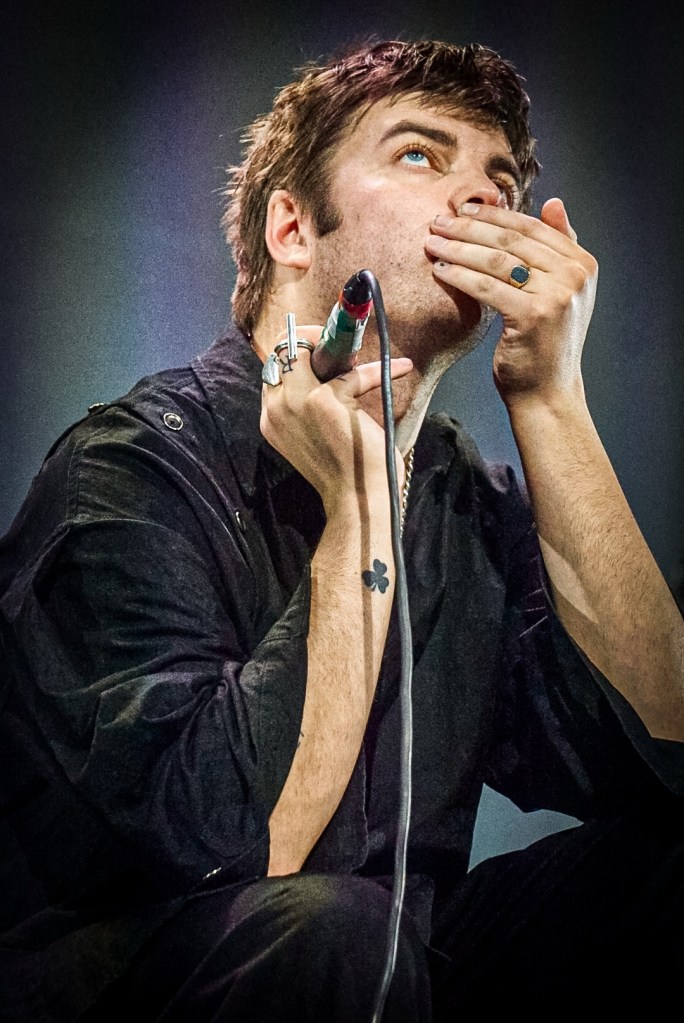
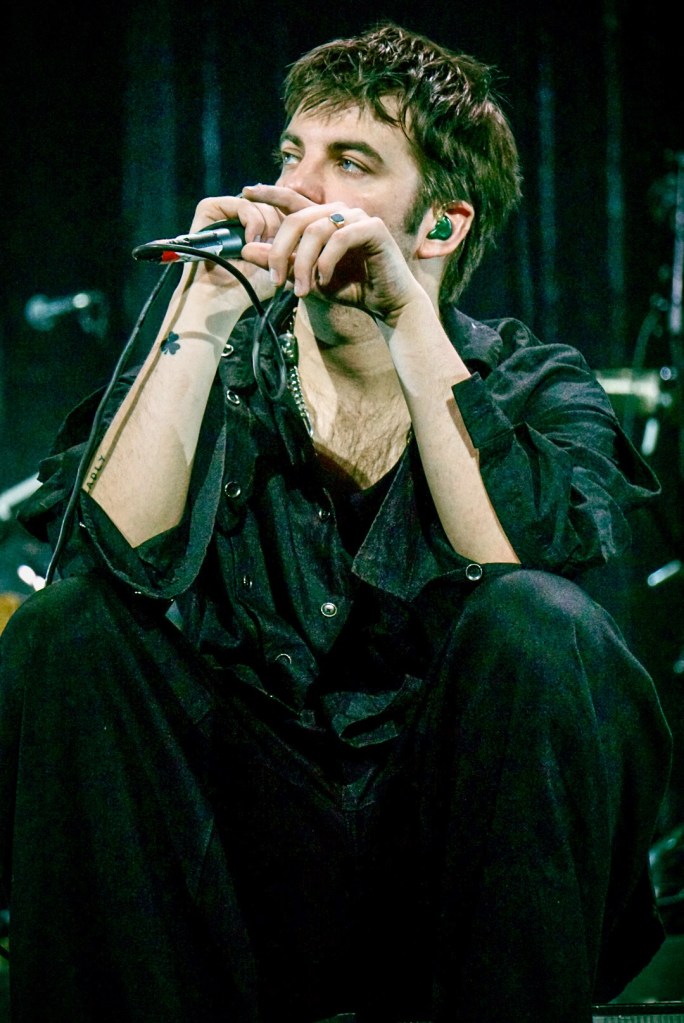
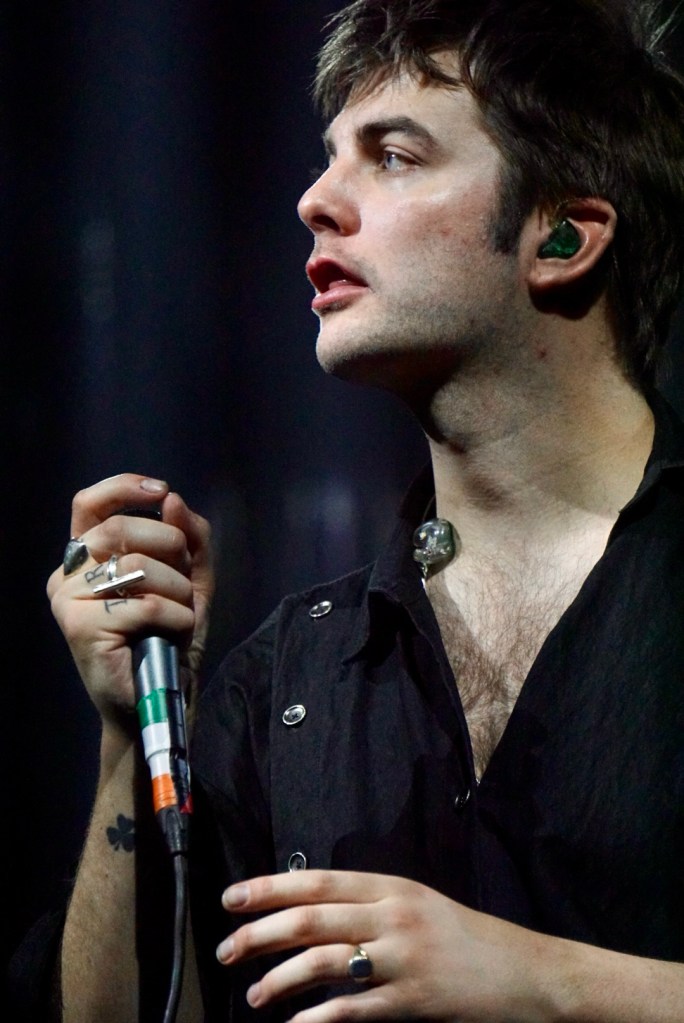
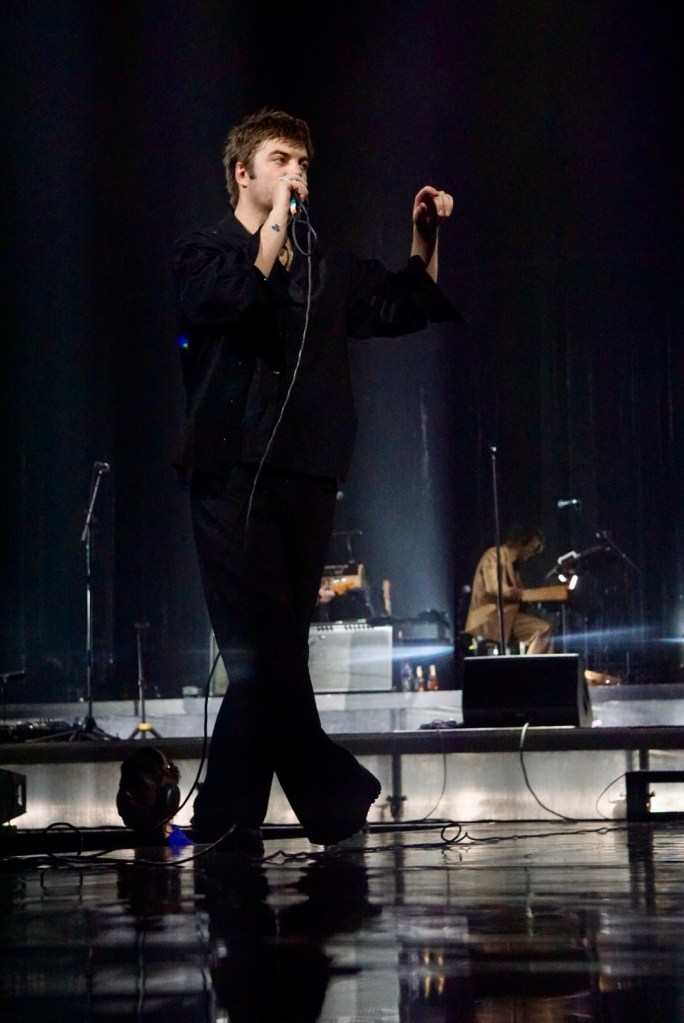
Dressed head to toe in black, with the rest of the band occupying their positions behind him, Chatten has become a formidable frontman. The last time I saw Fontaines, at SWG3 on 2021, there was a certain nervous unpredictability to their performance. It was part of their charm. Tonight, that nervous energy has been replaced by something much more assured.
Chatten understands the space he occupies. He knows how to command an audience without having to resort to the usual theatrics of a frontman desperate to prove he is the most interesting person in the room.
He has the presence of a preacher, albeit one whose congregation has been assembled for rather more questionable reasons.
‘Marianne’, fifth in the set, is one of the evening’s most beautiful moments. It has a strange, almost hallucinogenic quality, with its sweeping cinematic textures and hypnotic rhythm. There is something of a dark romantic film soundtrack about it, as though David Lynch had been asked to direct a love story in which nobody can quite remember who is supposed to be saving whom.
Its melody is deceptively inviting, but beneath the surface there is an unsettling sense of surrender. It is a song that seems to float somewhere between tenderness and melancholy, and I find myself completely absorbed by it. I cannot get enough of this track.
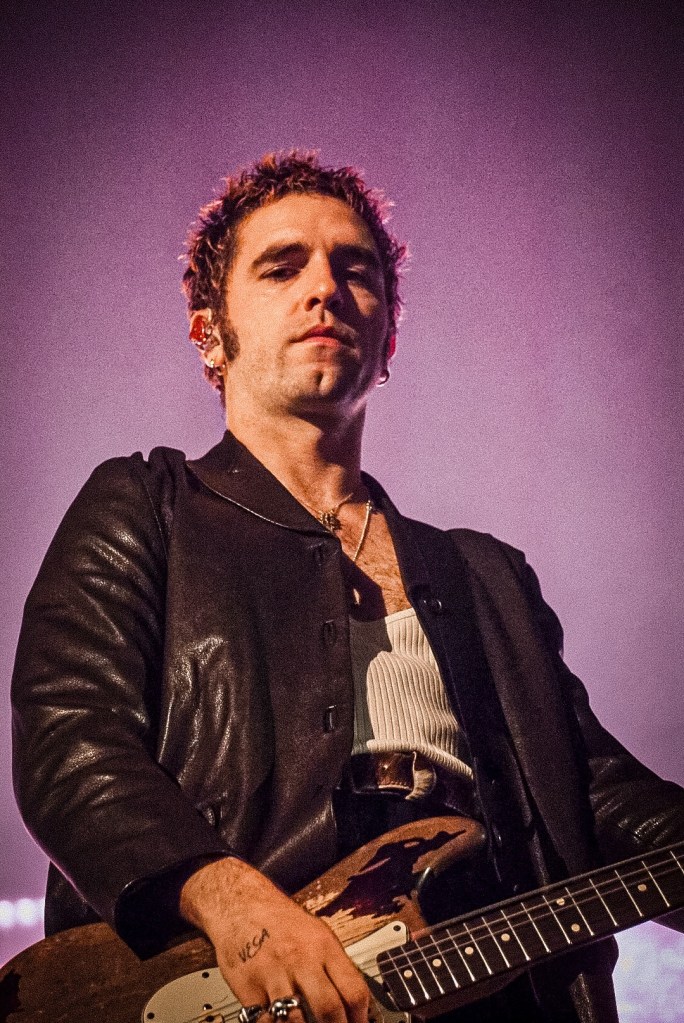
‘Jackie Down the Line’ and ‘You Miss Me’ follow, before ‘Roman Holiday’ and ‘A Hero’s Death’ remind us of the band’s earlier incarnations. The latter remains a particularly effective piece of songwriting, its bleakness and restraint providing a welcome counterpoint to the enormous production surrounding some of the newer material.
There is something rather wonderful about hearing these older songs in an arena of this size. They have not lost their intimacy, even when surrounded by thousands of people. In fact, their darkness seems to become more pronounced.
‘In the Modern World’ and ‘Happy for You’ allow the evening to breathe before ‘Big Shot’ and ‘Tongue’ take us further into the band’s strange, electronic landscape.
There is a genuine sense of confidence in the way these songs are performed. Nobody appears to be trying to recreate the sound of Dogrel. Nor should they. That record exists, and it will always be there. The question is whether a band can move forward without becoming a pale imitation of their former selves. Tonight, Fontaines demonstrate that they can.
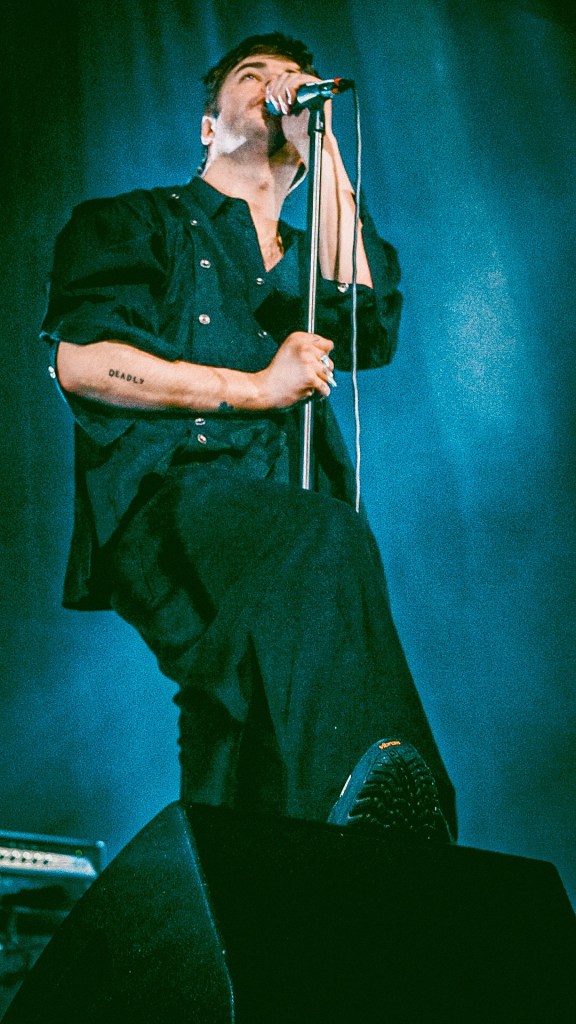
The political and personal sensibilities that have always informed the group are also never very far from the surface. Earlier in the day, the band had visited Celtic Park, a connection that feels entirely natural given their shared pro-Palestinian sympathies with sections of the Celtic support, including the Green Brigade.
When a young supporter, perched on a friend’s shoulders in a Celtic shirt, appears on the arena screens, the reaction is enormous. It is one of those moments when music, football and collective identity briefly become the same thing.
And perhaps that is what makes Fontaines such an interesting band to watch. For all the stylistic experimentation, the carefully considered imagery and the increasingly elaborate production, there remains an understanding that music is ultimately about people finding something of themselves in the noise.
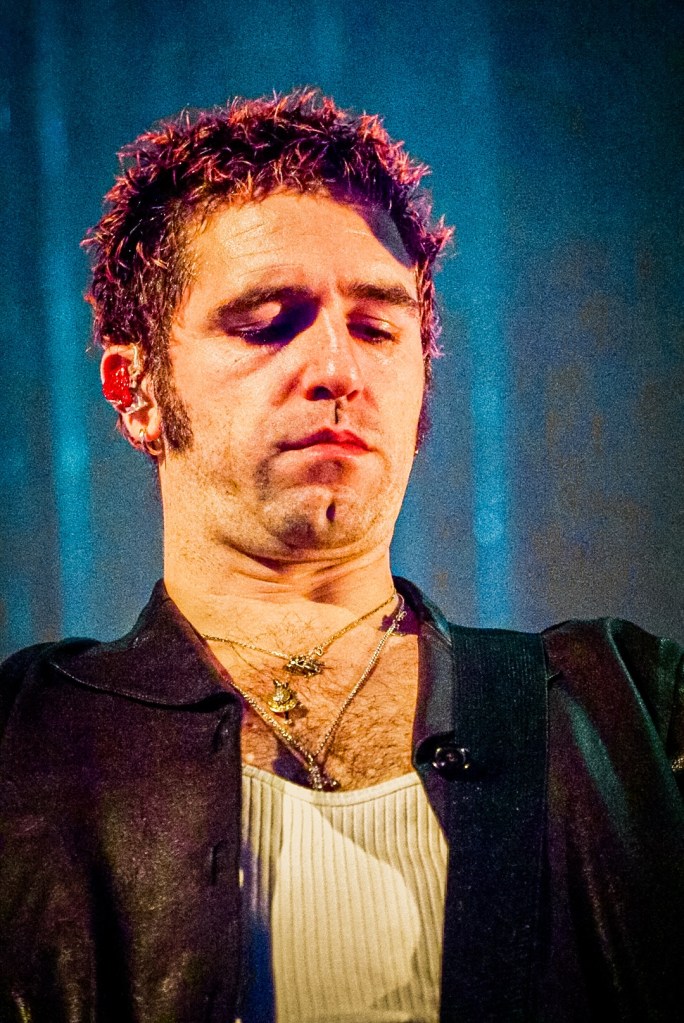
‘Favourite’ is a reminder of just how far the band have travelled into more melodic territory, while ‘Starburster’ remains an extraordinary piece of controlled chaos. Its gasping, fractured vocal delivery sounds like somebody having an existential crisis in the middle of a particularly busy roundabout. It is wonderfully unhinged, and the audience responds accordingly.
But the encore is where the evening really comes into its own.
‘Japan’ is an obvious highlight, its strange, restless atmosphere perfectly suited to the band’s current direction. There is a hypnotic quality to the song that makes it feel almost otherworldly, and it is one of my personal highlights of the night.
Then comes ‘I Love You’.
If ever there was a song that demonstrated the ability of Fontaines to turn political anger into something approaching spiritual communion, this is it. A furious, deeply personal love letter to Ireland, it is simultaneously an expression of devotion and profound disappointment. It is a song about loving something enough to be heartbroken by what it has become.
In the Hydro, it feels gargantuan.
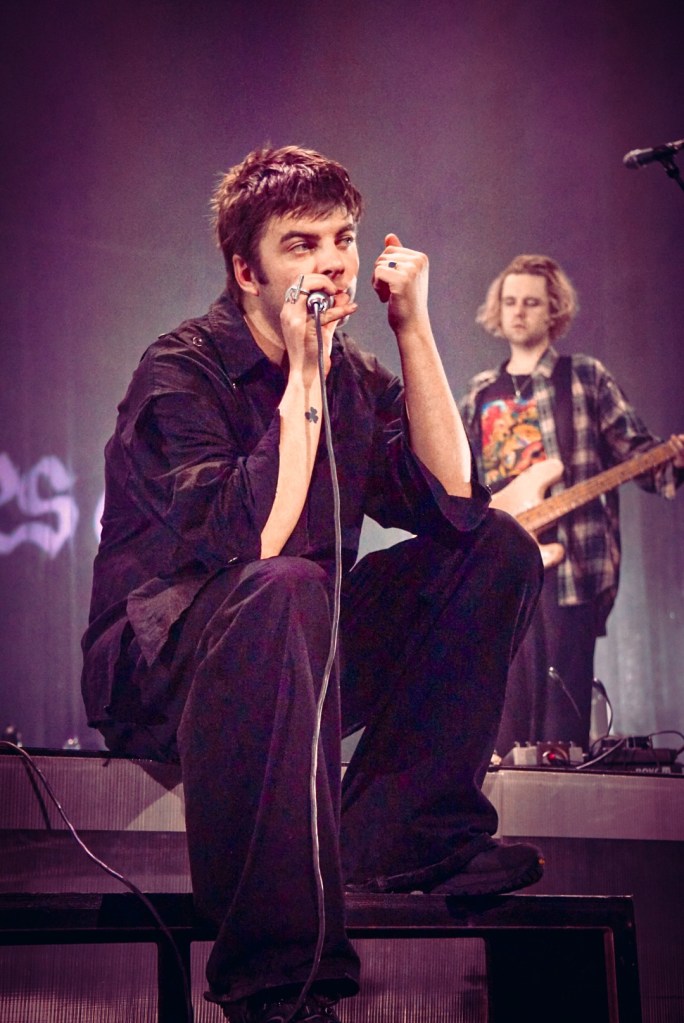
Finally, ‘Where Is Gone?’ brings the evening to a close, an intriguing final chapter that underlines just how far the band’s musical ambitions have travelled.
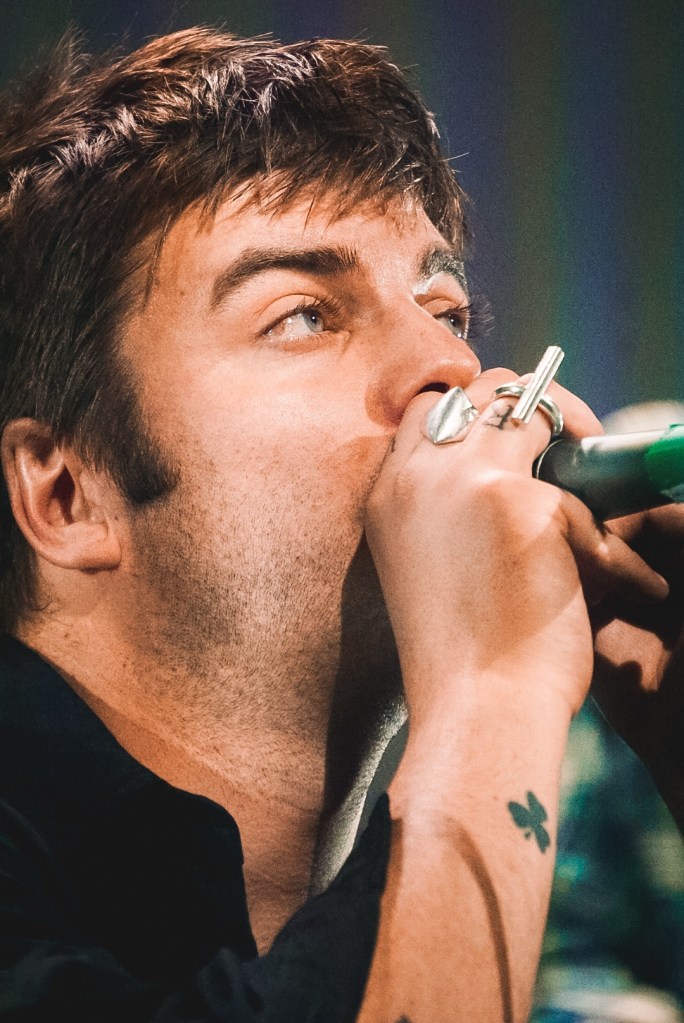
There is something quite remarkable about watching Chatten perform with such passion. He has developed into a frontman who can hold an arena in the palm of his hand without sacrificing the intensity that made him so compelling in the first place. There is no sense of a band simply going through the motions, dutifully delivering the songs that have accumulated enough streams to justify the hire of an arena.
And that, ultimately, is what makes tonight such a success.
I have no difficulty admitting that Romance briefly left me wondering where Fontaines D.C. were heading. I worried that the band might become so preoccupied with the mechanics of international success that they would lose the strange, poetic intensity that made them special in the first place.
There is always a danger when a band reaches a certain level of fame that the machinery begins to dictate the music. The stylist, the lighting designer, the arena production, the carefully choreographed photographs. Before long, you can end up with a very expensive corpse wearing a vintage leather jacket.
But Dopamine Chamber suggests something altogether more interesting.
Rather than retreating into the comfort of their past, Fontaines have found another way to make music that feels uncomfortable, challenging and emotionally complicated. It is a record that understands the seduction of darkness without necessarily celebrating it. It feels like a band exploring the consequences of love, obsession and modern existence while refusing to offer any particularly reassuring answers.
I would also be doing the band a disservice if I didn’t mention one of the most tender moments on Romance. On ‘Horseness Is the Whatness’, the heartbeat of Carlos O’Connell’s daughter is woven into the track. It is a beautiful and almost unbearably intimate gesture, a reminder that beneath the noise, the ambition and the increasingly enormous stages, there are still human beings trying to make sense of the world around them.
It is these moments that make Fontaines so interesting. For all the talk of evolution, reinvention and commercial success, they have not entirely abandoned the vulnerability that made their earlier music so affecting.
What is not subjective is the quality of tonight’s performance.
Fontaines D.C. have come an extraordinarily long way from that free show at BLOC in 2018. They have gone from being a band with everything to prove to one with the confidence to take an audience of thousands somewhere unfamiliar. And rather than simply playing the hits and collecting their applause, they have brought a new record to the stage and allowed it to occupy the space it deserves.
There is a difference between a band becoming successful and a band becoming comfortable with its own identity. Tonight, Fontaines D.C. manage both.
And perhaps that is the real beauty of the evening. Chalk have reminded me why it is so important to keep following the bands you believe in, to watch them grow and to see them find their audience. Fontaines, meanwhile, have reminded me that sometimes the bands you think you’ve fallen out of love with are simply waiting to give you a reason to fall back in.
For all my previous reservations, this is the best I have ever seen them. Not because they have abandoned the band they once were, but because they have finally worked out how to become the band they are now.
The congregation has been converted. Even the heathens at Golden Bough are leaving the building believers.
A genuine return to form. And quite possibly Fontaines D.C. at their very best.
Article: Angela Canavan

